





- Context
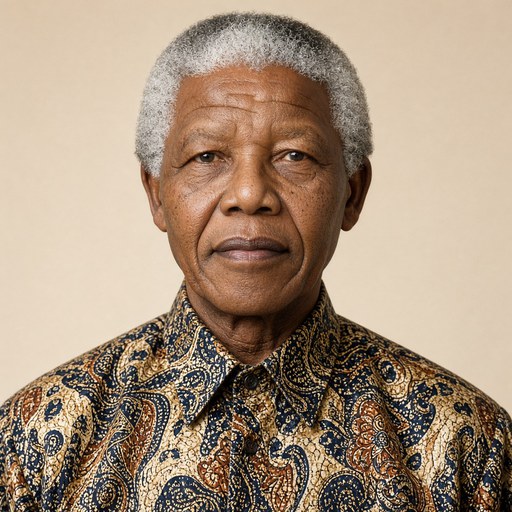
- Mandela addressed the audience at the ceremony honouring recipients of the Rothko Chapel Awards and the Carter-Menil Human Rights Prize on December 8, 1991, urging continued pressure against apartheid and linking human rights to human dignity.
- Main themes
- Carter-Menil Human Rights Prize and Rothko Chapel Awards, human rights and human dignity, role of the church in opposing apartheid, prophetic tradition of faith, tribute to the six murdered Jesuit priests, Bartolomé de las Casas, Oscar Romero and Martin Luther King Jr, struggle for a democratic non-racial non-sexist South Africa, continued pressure against apartheid, US governments and Latin American human rights abuses, common humanity and solidarity
- Duration
- ~9 min
- Words
- 1,128
- Sentences
- 43
- Readability
- 50
- Grade
- 12.8
- Syntax
- 3.10
- Vocabulary
- 2.29
Source: GitHub DRChivers/Nelson-Mandela-Speeches-Sentiment-and-Topic-Modelling-Analysis ↗
The broad sphere of national life a sentence belongs to. Every sentence has an Arena, so it is the denominator the other indices are read against.
Other43 sentences in 30 paragraphs
Master of Ceremonies, Mr Peter Wood,
Governor Ann Richards,
Mrs Dominique de Menil,
President Jimmy Carter,
Friends, Ladies and Gentlemen:
We stand here today to join in a salute of those who because they were not afraid to sacrifice, make it possible for us all to be proud of being human.
We stand here today to pay homage to you, dear friends, who are recipients of the Rothko Chapel Awards and the Carter-Menil Human Rights Prize. We bow our heads in respectful deference to you who are with us today and to the six Jesuit Fathers who, though they are no longer alive, yet continue to live.
Conscious of the fact that your work, like ours in South Africa, is not yet done, we stand here today to say victory will be your reward. Your esteem in the hearts and minds of millions of people throughout the world will outlive the memory of the pain you had to endure at the hands of small tyrants as you struggled to defend truth, freedom and human dignity.
One part of the church in our country did, in the past, choose the wrong road when it proclaimed God’s approval for apartheid and remained silent when those who are made in the image of God were treated worse than the savage beasts of the forest.
But we are happy to report that there was and there is another part of the church in our country which remained loyal to the true prophetic tradition of the church as well as other faiths.
That tradition speaks of God as the God firmly and without apology on the side of the oppressed. That tradition proclaims that the church is not at liberty to endorse injustice, but must in the practice, take up the cause of the oppressed against injustice.
That tradition confesses that the church is not free to remain aloof from the struggles and the suffering of the people, but must itself be passionately involved in those struggles until justice is done.
We are honoured that there are those in our country, including non-believers, who followed this glorious tradition and can today associate themselves and, by that token, our people as a whole, with the esteemed honourees we have met to celebrate.
In this tradition stands such a man as Bartholomeus de las Casas who, in an age when the church in Latin America made common cause with slave drivers and the merchants of human flesh, took it upon himself to be the voice of the voiceless and to act against these evil practices.
In this tradition stand too our heroes, Archbishop Oscar Romero of El Salvador and the Rev Martin Luther King Jr, of the United States of America, both of whom were brutally murdered as an example to others who would dare speak up against injustice.
They, like the distinguished human beings who are being honoured today, knew how to speak the truth when it was so much easier to lie in order to survive. They knew that the truth should not only be spoken but lived.
Thus did their commitment transcend the spoken word to become a way of life, a vision of how society should be organised so that it fulfils the ends of justice; and thus did it come about that the truth they knew and stood for became the truth that sets the people free.
And they knew the truth which all who rule should know, that human rights are inseparably tied to human dignity and are therefore inalienable. Martin Luther King Jr used to say that their origin does not lie in human thinking but in the dim mist of eternity.
People have human rights because to deny them is to take away their humanity and to rob them of their dignity. They are not for governments to give, arbitrarily suspend or withdraw. They can only be recognised and protected.
This essential truth has taken root among the billions of people on all the continents. It is its power that moves them all to rebel against all tyrants, that empowers us all to overcome the fear of torture, imprisonment and death.
It enables us to reach into the deep wells of courage that are an attribute of human dignity and an affirmation of the nobility of the human soul. It stands at the heart of the glorious reawakening which is reshaping our world so that respect for human rights becomes the pivot around which all societies are organised and governed.
We are deeply honoured and humbled to be in the midst of men and women who, by their deeds, have set an example for millions and, by their courage, inspired millions to stand up for the truth and for justice.
Because the millions of our own people were thus inspired to oppose their oppression and super-exploitation, we can today say that our victory is in sight. The day cannot be far away when South Africa will become a democratic, non-racial and non-sexist country, committed to the respect and defence of the human rights of all its people.
As our people engaged in struggle, they knew that ours was not an easy walk to freedom. But with a certainty that reached beyond ourselves and with a hope that has no need of human words, we knew that we would walk that road surely and that freedom would not elude our people forever.
What is now required of us and those throughout the world who have fought side by side with us to bring us to this point, is that we persist and hold firm, applying all necessary pressures until the apartheid crime against humanity has been suppressed.
Let me close by paying tribute to President Carter and Mrs Dominique de Menil both for the invaluable contribution they have made to the cause of human rights everywhere, for the support they have extended to us in our struggle and for what they have done today to recognise the noble efforts of those who are being honoured in this ceremony.
This occasion is made even more historic by the fact that various governments of the country of which they are eminent citizens, have themselves been guilty of appeasing enemies of human rights in the countries of central and South America.
Our common humanity transcends the oceans and all national boundaries. It binds us together to unite in a common cause against tyranny, to act together in defence of our very humanity. Let it never be asked of anyone of us- what did we do when we knew that another was oppressed!
This solemn occasion provides us all the possibility to say together that none of us will rest until freedom reigns in all corners of our common planet.
Thank you.