





- Context
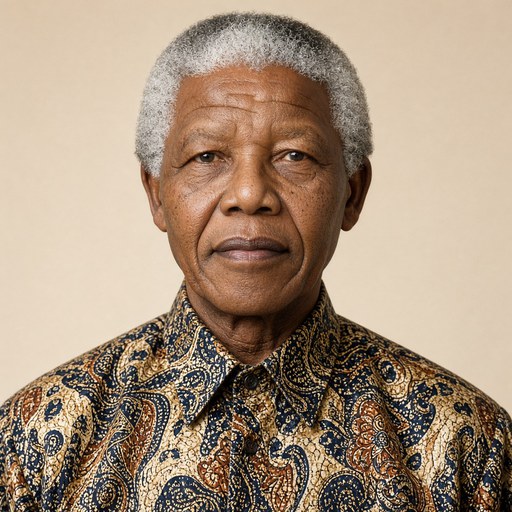
- Mandela, as ANC president, addressed the launch of a local government training and policy initiative in South Africa, dated January 1, 1993, urging new institutions and policies and thanking the IDRC for its support.
- Main themes
- Apartheid local government, restructuring of local government, training of professionals for a future dispensation, professional ethics beyond party politics, ANC local government policy development, Interim Measures for Local Government Act, lack of government political will, negotiating a non-racial democracy, International Development Research Centre support, Harare conference on local government, creativity and innovation in policy
- Duration
- ~8 min
- Words
- 984
- Sentences
- 44
- Readability
- 39
- Grade
- 13.3
- Syntax
- 2.98
- Vocabulary
- 2.11
Source: GitHub DRChivers/Nelson-Mandela-Speeches-Sentiment-and-Topic-Modelling-Analysis ↗
The broad sphere of national life a sentence belongs to. Every sentence has an Arena, so it is the denominator the other indices are read against.
Other44 sentences in 20 paragraphs
Ladies and Gentlemen, Distinguished Guests etc
It is both a very great pleasure and an honour to be speaking to you today on an issue that will be of major significance for the future of our nation.
I am going to open by making a few remarks on the state of local government in this country, which provides the context of the launch of this important initiative.
Ideally, local government should provide the most direct level of positive interaction between government and the citizens. It should also provide the political space for the expression of democratic ideals and practices, and for the exchange of ideas.
Now, it is true that local government has; indeed, provided for close interaction between citizens and government. However, this interaction has been characterised by anger and conflict, often resulting in the loss of life. Under apartheid, racially-based local government has been cynically manipulated, so that the local government institution has been used, not as a vehicle for democracy and citizenship, but as a crude and vicious instrument of control for, and by, Pretoria.
Local government, in its racial form, has not only been used as a means of creating distrust and ignorance between apartheid's races, but has also been a method of keeping the black majority in this country in an economically and socially subjugated position. It has, simultaneously, provided the white citizens of this country with a false sense of reality, where generalisations about 'blacks' serve as useful replacements for facts and knowledge.
This is the crime of apartheid local government in South Africa: its direct and very real contribution to poverty, racism, fear and violence.
The real danger to this country, as we negotiate a non-racial and democratic dispensation, is that we will take the past into the future. Without a comprehensive restructuring process, that positively changes institutions, policies, perceptions and people, local government will remain a discredited notion that is not understood for the possibilities it can provide.
The challenge, as with so many aspects of this tortured and tired society, is to turn fear and mistrust into hope and possibility. That is why I want to briefly turn my attention to the recent policies of the government. Having grudgingly accepted that their system of apartheid local government is a failure with no possibility of redemption, we have yet to see a new policy approach that anticipates a non-racial and economically just future.
Rather, we have seen a combination of attempts to superficially restructure local government in a manner that leaves the essential power relations intact. In many instances, at the levels of central, provincial and local government, we have witnessed cynical attempts to ensure that no substantial changes occur. The use of the interim measures for local government act is a good (or bad) example in this regard.
In short, we are still missing the political will necessary for a new and democratic direction. To repeat, we need new institutions, new policies and new thinking.
That is why this initiative today is of such importance to the anc. To create the future local government system of which I speak, a substantial effort to train people for a future dispensation is one of the highest priorities. This country will require a core of well-trained, committed professionals to be part of managing a new system of local government.
While much of this training will focus on issues of management and administration, I want to highlight the often neglected concept of professional ethics. Our professionals, be they in local government or elsewhere, must be trained to uphold an ethical approach that transcends narrow party politics. This implies the potential for conflict with their political masters.
To the extent that professionals are asked or expected to perform functions that are unethical, then conflict is both inevitable and necessary - indeed, it is desirable. It is a matter of national regret and shame that this approach has been noticeable in its absence under apartheid. Let our training programmes set new standards in this regard.
Linked to the need for a rigorous training programme is, quite obviously, the development of appropriate policies for the future system of local government. While the ANC has done a great deal of work in this regard, the task is by no means complete. The formulation of such policy options, while making use of appropriate examples from around the world, must also be creative and innovative.
Creativity and innovation were features of our struggle against apartheid - let them be at the centre of our approach as we prepare to govern. And if our policy options are not to be found in the textbooks, then let us rewrite the textbooks.
It is in this context of local government that I have the honour to address you here today. The lessons of a violent and bitter history of local government, which have been painfully experienced by the majority of this country, may actually provide the unlikely foundation for a better future.
An important part of that future will, doubtless, emanate from the very institution that we are launching here today. Such an institution must provide the vehicle for the better understanding of our past so that we can create a future of hope and democracy for local government.
The vision and support of the international development research centre has played a vital role in the support of local government policy and research within the democratic movement. In 1989, before the ANC was unbanned in South Africa, the IDRC supported important initiatives such as the harare conference on local government.
The IDRC is still with us today inside South Africa. As president of the African National Congress, I want to extend the sincere appreciation of the organisation for their vision and support. To those involved in this vitally important programme, I have a simple message: both the challenges and the possibilities are daunting - begin your work now!