





- Context
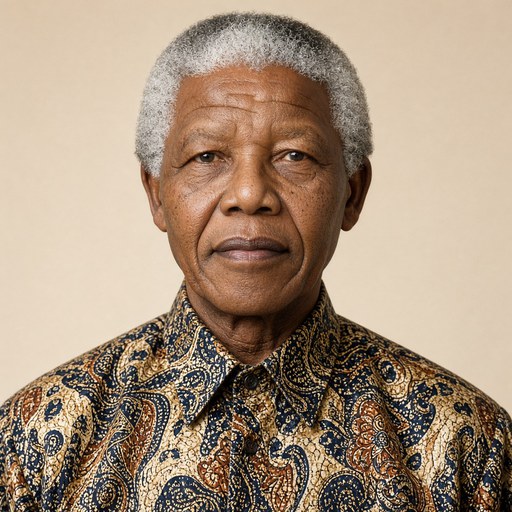
- Mandela, speaking as Chancellor, addressed the staff, students and administration of the University of the North on March 25, 1993, at the start of the academic year, urging unity, excellence and democratic transformation.
- Main themes
- Transformation of the University of the North, democratic University Council, appointment of Professor Ndebele as Vice Chancellor, role of the university in the new South Africa, equity in higher education, curriculum and research reform, call for academic excellence, skilled graduates and national development, unity among academic staff, students and service staff, wealth creation and political freedom
- Duration
- ~7 min
- Words
- 837
- Sentences
- 36
- Readability
- 37
- Grade
- 13.8
- Syntax
- 2.95
- Vocabulary
- 2.14
Source: GitHub DRChivers/Nelson-Mandela-Speeches-Sentiment-and-Topic-Modelling-Analysis ↗
The broad sphere of national life a sentence belongs to. Every sentence has an Arena, so it is the denominator the other indices are read against.
Other36 sentences in 10 paragraphs
It is my pleasure and privilege to greet members of the teaching staff, workers, the student body, the administration, the officers and all those who, each in their own way, are contributing to the life of our University.
The University of the North faces great challenges. Alone in the great northern region of our country and close to the fast-growing city of Pietersburg, it is poised to play a central role in the human and material development of the region. It has the enormous potential to become one of the great institutions of higher learning in the history of South Africa.
The current historic changes in our country offer significant opportunities for the University. The quest for democracy must be given concrete manifestation in the University's instruments of governance, in its struggles with the immense issues of equity, in its quest for innovative and relevant curricula, teaching and learning programmes, in its research and community out-reach programmes, and in its human resources development policies. In grappling with these issues, which embrace every aspect of University life, the University of the North is entirely in tune with the immense historic transformation that is taking place in the rest of the country. In this way, the University is definitively locating its role within the larger national arena.
We are beginning a new academic year with great expectations and high hopes. This is born of the knowledge that our university has crossed the Rubicon on the long and arduous road towards being a true people's university. In this regard, the constitution of a democratic and legitimate University Council, in the last days of 1992, stands out as a bench-mark without precedent in the turbulent history of tertiary education in our country. While we should take pride in being the forerunner, we should equally be aware that we have been cast in the difficult role of pioneers in this regard,
This places enormous responsibilities on all constituencies in the University. The eyes of South Africa and indeed the world are on us. Many are waiting to see if the Turfloop experiment will work or whether it will flounder in infancy. If we fail, for one reason or another, we shall have done irreparable damage not only to our institution but also to the cause of transformation in the country. This is the magnitude of the challenge before each one of us.
The three major sectors of the University community - the academic staff, students, and the service staff - are therefore faced with unique and formidable challenges of the kind that can only come once in the lifetime of any community. As Chancellor of the University of the North, I call upon you all to seize the time, I call upon you to identify a unity of purpose around which to organise your activities and give meaning to your endeavours. We must succeed in this enterprise, which will call for serious intellectual engagement with issues, sensitivity, tact, and a high level of cooperation in a collegiate atmosphere.
Already, significant strides have been taken. The University has a new and able Council made up of some of the most prominent, dedicated and talented citizens of -this land. Embodied in this Council are expertise, energy, integrity, vision and commitment. And now, to work with the Council and to implement its vision and that of the broad University community, there is a new Vice Chancellor and Principal who brings with him to the University of the North his prominent stature as an academic, executive officer, writer and critic. I am confident that Professor Ndebele will make a decisive contribution to the general well-being of our University, given his wide experience is my sincere hope that the University community will welcome him and render him all the support he needs, as he steers our institution through those difficult but exciting times. Furthermore, may I congratulate you all on the selection process you chose to use out of which Professor Ndebele's appointment was made. It was the most open, accessible and fair procedure I have seen and quite unknown in other South African universities.
I urge the University community, especially students, to strive for excellence in academic work. In the light of recent, positive political developments in the country, quality manpower has become a priority national interest. It is absolutely critical, therefore, that academic institutions produces skilled graduates if we are ever to take charge of our own destiny, as a people. Political freedom will remain but an elusive, dream until we are able to create wealth for ourselves, tapping the vast natural and human resources of our country. This is a task we cannot postpone to the future; we must embark upon it today!
As you take up this daunting task, I wish you well. I believe that you also enjoy the goodwill of the rest of the country. Through your success in your mission, you will have rendered incalculable service to South Africa.
May we all have faith in and love for our institution.