




- Context
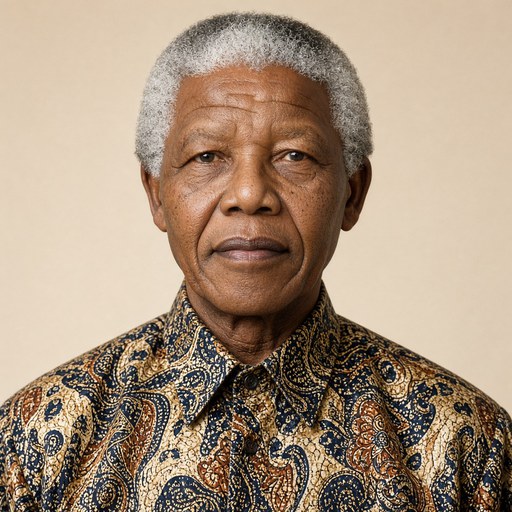
- Mandela addressed African leaders, apparently at an Organisation of African Unity meeting, on June 27, 1993, urging pressure on South Africa's transition, a fixed election date and a Transitional Executive Council before sanctions were lifted.
- Main themes
- UNITA defiance of Angolan election results, Renamo delays to the Rome Agreement, white right-wing attack on the World Trade Centre negotiations, Multi Party negotiating process, election date of 27 April 1994, Multi Party Transitional Executive Council, Independent Elections Commission and Media Commission, lifting of sanctions, talks with the Inkatha Freedom Party, socio-economic crisis and violence in South Africa, regional peace and stability in southern Africa
- Duration
- ~13 min
- Words
- 1,563
- Sentences
- 57
- Readability
- 36
- Grade
- 15.0
- Syntax
- 2.97
- Vocabulary
- 2.34
Source: GitHub DRChivers/Nelson-Mandela-Speeches-Sentiment-and-Topic-Modelling-Analysis ↗
The broad sphere of national life a sentence belongs to. Every sentence has an Arena, so it is the denominator the other indices are read against.
Other57 sentences in 22 paragraphs
Mr Chairperson, Your Excellencies,
The hopes of the southern African region becoming a zone of peace and stability still lies very much in the balance.
On the one hand UNITA’s defiance of the election results in Angola and of world opinion is of serious concern to us. Not only because of its implications for the prospects of peace in Angola itself but also because of the serious implications that UNITA’s actions will have on our entire region.
Already in Mozambique we are witnessing alarming signals. Encouraged by UNITA’s terrorism and the apparent inability of the international community to adequately defend democracy in Angola, Renamo is becoming intransigent and is delaying the implementation of the Rome Agreement.
In South Africa itself powerful right wing elements, inside and outside the state security apparatus, and who are one of the main supporters of UNITA are beginning to believe that if UNITA can disregard world opinion and seize by force what they lost in the elections, they too could achieve their objectives in the same way.
The activities of the anti democratic forces in Angola, Mozambique and South Africa must be defeated if we are to assure peace and stability and democracy in our entire region.
The actions of the white right wing at the World Trade Centre where the Multi Party negotiations are taking place have underscored the dangers that we have been pointing to. In the first place the hopes of all peace loving people inside and outside South Africa are today focused on the Multi Party process producing agreements which will unmistakeably realise democracy in South Africa. The apartheid Parliament in Cape Town has become truly irrelevant. The focus of power has shifted to the World Trade Centre. Even the white right wing acknowledge this when they attempted through force of arms and blatant political thuggery to stop the negotiating process. The tragedy of our country is not that the white right wing failed but that the de facto apartheid government and its state security forces proved incapable and unwilling to defeat this act of political hooliganism.
While this event underlines the fact that negotiations will continue with added urgency, there remains the reality that the process itself is fragile. We must record here that the primary source of this instability is the failure of the de fact govt to acknowledge and act against the danger posed by the fascist white right wing.
In the meantime the socio economic crisis as it affects the daily lives of the people in South Africa continues to deepen and there is every sign that it is building up towards an explosion. This is particularly noticeable in the area of black education and in the potential that violence which was orchestrated and implanted into our society by apartheid, is now showing the potential of becoming endemic. The economy too is now acknowledged to be passing through a deeper and more prolonged recession than it has ever experienced. All segments, all strata in South Africa recognise that one of the indispensable conditions for heading off such an explosion rest on the creation of a politically enabling environment. People want to see promises translated into a decisive break with the past. There is a perception that negotiations at the World Trade Centre have not been moving at a pace which inspires them with confidence. In this regard those who have incumbencies to lose or doubt their chances at the ballot box but are part of the negotiating process are responsible for stalling the process.
From our point of view we have proceeded from two basic premises:
Firstly we have recognised that the negotiating process must be underpinned and driven through reaching bilateral agreement with the South African government on key constitutional questions. Such agreement would enable the Multi Party Process and give it direction and purpose.
Secondly both inside the Multi Party Process and with regards to formations which still refuse to join the process it is necessary for us to engage with all these formations to persuade them and draw them into the agreements which would shape the transition process leading to a democracy.
It is along this path that we have met with the President of the Inkatha Freedom Party, with the Afrikaner Volks Unie and even with the Afrikaner Volksvront which planned, co ordinate and carried out the attempted forced termination of the negotiation process on Friday June 25th, 1993. We have no doubt that the forces of peace and democracy are capable of defeating the anti democratic forces. But the condition for this depends on the ability of all South Africans to come together and act with a common purpose, despite their political differences, to defeat those who want to return to apartheid order and to dismember our country. Our deliberations with the IFP were candid, but we agreed that the President of the IFP and the President of the ANC would address joint rallies and that our negotiating teams would engage in bilateral to discuss key constitutional matters. These decisions will go a long way in dispelling the notion that the violence inside South Africa is mainly the result of clashes between the ANC and the IFP, it will begin the process of exposing those who perpetuate the violence in our country.
We have no doubt that the negotiating process can deliver firm agreements leading to democracy. But the condition for this depends on the steps taken within South Africa and by the international community and are shaped in answer to two questions:
1. What we do collectively to ensure that there is no retreat or regression from advances we have together through struggle
2. What we do collectively inside and outside South Africa to encourage speedy and uninterrupted movement forward to the actual transformation of South Africa into a democratic country.
The negotiating forum when it meets on Friday 2 July 1993 will be considering the confirmation of April 27 1994 as the date for the first general elections in the country which will be held on the basis of one person one vote. This date has to be confirmed. Any wavering about this date is going to be a disastrous signal for the country. On Friday the negotiating forum will have to agree to the establishment of a Multi Party Transitional Executive Council which will have the overall task of facilitating the transition by ensuring the levelling of the political playing field and ensuring that the elections on April 27 1994 are free and fair and take place in the context of free political activity. Among the other instruments that the forum will have to agree on so that the elections are free and fair will be the establishment of an Independent Elections Commission (IEC) which will prepare for, organise and supervise the elections. The election will result in the formation of an elected Constituent Assembly and a democratically elected government. Agreement will also have to be reached on the establishment of an independent Media Commission which will ensure that the State owned Media Act in an impartial and even handed manner henceforth. The manifestation of right wing terrorism that we witnessed at the World Trade Centre on Friday is the clearest indicator that the negotiating process in general and particularly the meeting of the forum on Friday July 2nd, 1993 must deliver firm agreements on these matters. If it fails to do so the critical elements which are needed to be in place for us to begin to lay the basis for the dismantling of apartheid and for the conditions for growth in our economy will be missing.
For our part we have distilled from this package of the transition process two key moments which would enable us to call on the international community to remove all sanctions excepting those relating to military aspects. We are of the position that the fixing of the election date and the installation of the TEC are the two key moments. Accordingly agreement at the forum meeting on Friday on the election date and agreement on the TEC establishment will open the road for the actual installation of the TEC.
All round pressure from the international community including sanctions have been a critical element in ensuring that the De Klerk regime agreed to negotiate. The fragility of the negotiation process and the lame duck approach of the government in acting against the white right wing emphasise the imperative to maintain these pressures until the election date is fixed and until the TEC is actually established. At the same time international pressure is critically needed to ensure those who fear the ballot box and those who have developed vested interests through the apartheid system and therefore attempting to stall the process do not get their way.
Your Excellencies
We have chosen to give you an overview which recognises the potential for realising peace and democracy as well as the dangers that are present in the South African situation. We believe that with such an understanding we who have stood together on the basis of our common and shared love for our continent are able to act together to ensure that South Africa can truly become a democracy and region of peace at last.
I thank the General Secretary of the Organisation of African Unity for the invitation it has extended to the liberation movements of South Africa.