




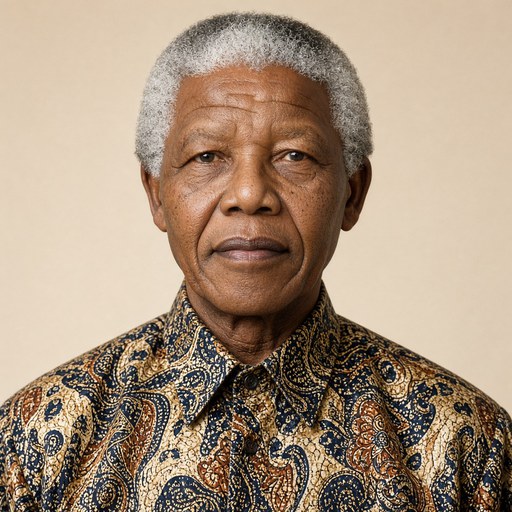

- Context
- Mandela welcomed Swedish Prime Minister Ingvar Carlsson and his delegation to South Africa on February 20, 1995, thanking Sweden for its support during the liberation struggle, seeking investment and trade, and closing with a toast to King Karl Gustaf.
- Main themes
- Sweden's support for the anti-apartheid struggle, partnership between Sweden and South Africa, welcome to Prime Minister Carlsson, aid given as partnership rather than charity, shelter for exiles in Sweden, internationalism and commitment to democracy, shaping a new world order, shift from liberation partner to reconstruction partner, productive investment, expanding trade relations, toast to King Karl Gustaf
- Duration
- ~3 min
- Words
- 312
- Sentences
- 14
- Readability
- 41
- Grade
- 12.4
- Syntax
- 2.98
- Vocabulary
- 2.36
Source: GitHub DRChivers/Nelson-Mandela-Speeches-Sentiment-and-Topic-Modelling-Analysis ↗
The broad sphere of national life a sentence belongs to. Every sentence has an Arena, so it is the denominator the other indices are read against.
Other14 sentences in 7 paragraphs
Prime Minister Carlsson; Minister Laila Freivalds; Deputy President Mbeki; Deputy President De Klerk; Honourable Ministers; Members of the Diplomatic Corps; Distinguished Guests; Ladies and Gentlemen.
It is a great honour, and a very special pleasure to welcome Prime Minister Carlsson and his delegation to South Africa.
Considered from the point of view of geography, language, economic relations, the ties between Sweden and South Africa might seem weak and distant. For that very reason the close bond of partnership that holds our two countries is a very special one. It was based on a voluntary and disinterested decision by Sweden to identify itself with the aspirations of the majority of South Africans for liberation. (refer to Olaf Palme?) (Should one refer though to the long Lutheran tradition in SA) More than that, it was a commitment to give aid not as a charitable exercise but as a partner who respected the judgement of the oppressed themselves as to what forms of struggle were required to free themselves from oppression.
The extent of aid was out of all proportion to the size of Sweden itself, in comparison with other countries, many of them with more resources. The exceptional nature of Sweden's stance is seen by comparison with many other countries. All spheres of struggle benefited - development, education, training. Many exiles have warm memories of the shelter Sweden gave them.
This relationships reflects the true spirit of internationalism and commitment to democracy. A joint commitment to contribute to the shaping of a new world order and to the prospering of democracy.
Turning from partner in struggle for liberation to partner in reconstruction and development. - seeking now not so much aid but productive investment and opening of trade relations which, from the small base which reflected the history of struggle, is multiplying at a rapid pace.
A toast to King Karl Gustaf of Sweden