




- Context
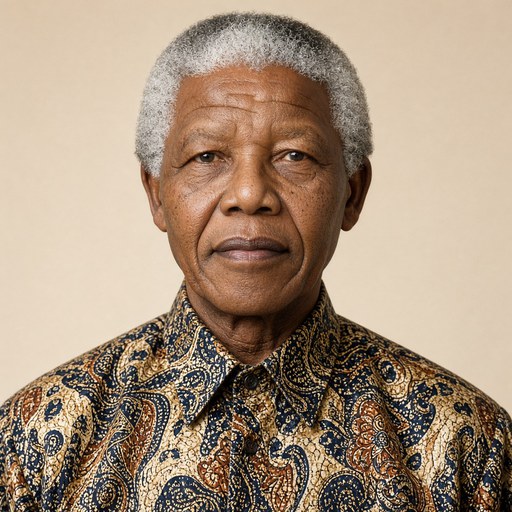
- Mandela addressed the South African Parliament on June 7, 1995, closing a debate he had called on the right to life, and urged an end to violence and no-go areas and united work for reconstruction.
- Main themes
- Right to life, peace and security, national unity and reconciliation, ending political violence, no-go areas, November local government elections, Government of National Unity, housing, education and health care, access to water and electricity, sustained economic growth and job creation
- Duration
- ~5 min
- Words
- 578
- Sentences
- 31
- Readability
- 55
- Grade
- 10.1
- Syntax
- 2.80
- Vocabulary
- 2.15
Source: GitHub DRChivers/Nelson-Mandela-Speeches-Sentiment-and-Topic-Modelling-Analysis ↗
The broad sphere of national life a sentence belongs to. Every sentence has an Arena, so it is the denominator the other indices are read against.
Other31 sentences in 16 paragraphs
Madame Speaker.
The right to life, to peace and security, were amongst the fundamental goals which engaged the ANC and the majority of South Africans over so many years; an aspiration which led thousands to prison and forced so many into exile.
It is concern for the improvement of those lives that lies at the heart of the new political and social order. South Africans took part in the democratic elections of April 1994 - they elected this Government of National Unity - precisely because they wish to make this country a better place for all citizens.
We called for today's debate in order to affirm this, our central belief. It was to re-affirm the absolute need to create and defend institutions and circumstances that will ensure that sanctity of human life.
In the end, this debate must be judged by its contribution to entrenching these goals in our hearts. It must be assessed on the basis of whether it has strengthened us in our resolve to work together as South Africans. Each one of us will be judged by our own contribution.
Now that we have expressed our views and our feelings, we face the question: How do we move forward?
One of our most important goals, and a necessary condition for achieving all others, is national unity and reconciliation.
We have been charged by the nation with the task of addressing the basic needs of our people. This requires that we should see to it that we bring more visible change in providing housing; education; health care; transport; access to water and electricity. It means achieving the sustained economic growth that is required for these things to happen and for jobs to be created.
These are not simple tasks, but enormous challenges. They require the collective resources of our whole nation.
We can succeed only if we emerge from debates like today's stronger than before - if we are ready to cement the common ground we occupy. We have come not in a spirit of vanquishing anyone. South Africa must emerge from this debate, the victor. Whatever views were expressed, and however strongly, I hope that we are now closer together and more firmly united in our shared aspirations.
Let us therefore dedicate ourselves, in memory of all the lives lost in conflict, to working together to seek solutions to the problems which generate conflict.
We must bring an end to violence. The existence of no-go areas, controlled by whatever party, is a shame to our nation - we must see to it that they no longer exist. Above all, we must save human lives.
As long as we fail to tackle these problems, we will fail in our responsibility of ensuring that the November elections are free and fair. We will undermine our capacity to improve the quality of life of our people, millions of whom still live in abject poverty. We will be hampered in our drive to ensure that all South Africans enjoy the climate of safety and security which is their right.
The nation has set itself the task of reconstruction and development, nation-building and reconciliation. It expects of its representatives in these hallowed chambers, the seriousness of purpose and the application to duty which success requires.
It is in this spirit that we view the comments that have been made.
On my part, I call on all parties to join us in working for a better life for all South Africans.