





- Context
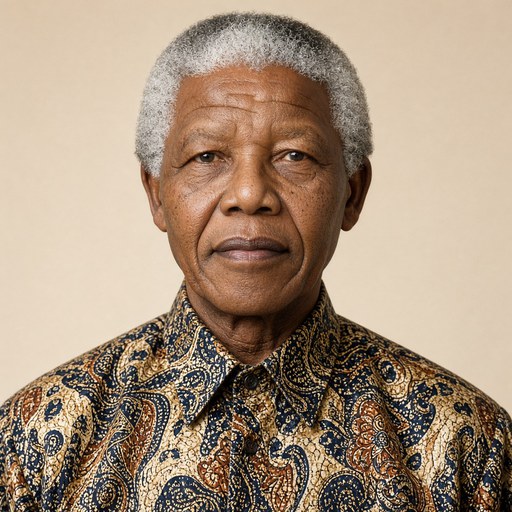
- Mandela addressed members and the chairman of the KWV on 24 April 1996 when accepting an award, urging the wine industry to transform and share expertise, and announcing a review of KWV's regulatory privileges.
- Main themes
- Wine industry success after sanctions, award acceptance on behalf of democracy campaigners, responsible alcohol use, elimination of the tot system, transformation of the wine industry, opportunities for people disadvantaged by apartheid, sharing capital and expertise, women's benefit from change, free political access on farms before local elections, tripling of wine exports, review of KWV regulation and privileges, goal of top five world wine industry
- Duration
- ~8 min
- Words
- 1,017
- Sentences
- 56
- Readability
- 51
- Grade
- 10.6
- Syntax
- 2.64
- Vocabulary
- 2.13
Source: GitHub DRChivers/Nelson-Mandela-Speeches-Sentiment-and-Topic-Modelling-Analysis ↗
The broad sphere of national life a sentence belongs to. Every sentence has an Arena, so it is the denominator the other indices are read against.
Other56 sentences in 26 paragraphs
Mr. Chairman;
Members of KWV;
Ladies and gentlemen,
The wine farming industry has achieved one of the great business successes of the first years of our transition.
Therefore, in celebrating the critical role that the end of sanctions played in your success, it is not an individual achievement that you honour. The award belongs to all those - South African and people everywhere - whose commitment to democracy brought the changes that made the world welcome South Africa as a trading partner and an equal member of the community of nations. On their behalf I humbly accept the award.
Ladies and gentlemen;
Wine farmers are not merely people who plant and cultivate grapes and who pick them to be made into wine. They are all that and more.
You are providers of a breeding ground for a world-class product based on an ancient craft; but also a product which, if used irresponsibly, can harm people, their families and their life expectations. Your efforts to raise public awareness in this regard are commendable and I would encourage you to continue with them and expand them. I would also urge you to use your considerable influence to help eliminate once and for all the last remnants of the tot-system. None of us should rest until this devastating practice is forever consigned to the past.
Your industry makes use of the most modern and advanced technology; at the same time it is an industry that is still in the process of moving away from a production system that reflects some of the worst aspects of our past history.
Contrasts of this kind contain the opportunities and the challenges facing your industry, and the entire agricultural sector in South Africa. Transformation is taking place in every sector and institution of our society. It is inevitable that the wine industry will also feel its impact throughout all its sectors - from production to distribution and consumption.
Our new situation holds great potential for growth; this in turn should give a great boost to the transformation of your industry into one that is representative of our society. This will mean, among other things, that greater opportunities must be created for those who were disadvantaged by apartheid - opportunities in production, processing and distribution.
Success in your industry requires a high level of capital outlay as well as accumulated expertise and skill. The lack of these can, of course, be a major obstacle for newcomers who wish to enter the industry. Organisations such as the KWV have a very great role to play in the restructuring of economic power. You possess the expertise and experience, and it is your responsibility to share it for the benefit of all.
The wine industry requires a high level of technology; the combination of technology with land and capital can make the industry a leading economic force. Coupled with your strong labour base, the industry could be a development model for other industries.
Ladies and gentlemen;
We are aware of the imaginative efforts being made in the industry to help those who were previously excluded to now acquire land or buy shares in existing enterprises. In these steps lies great promise for progress. The same applies to your commitment to the promotion of human resource development and of labour relations that befit the spirit of our new democracy. The government undertakes to support all such efforts.
You have identified the direction to be taken and a good start has already been made. The challenge is to ensure that the pace of change matches the scope and the urgency of the need. The changes should touch all levels of the industry. They must lead to greater access to decision-making and influence, as well as to the acquisition of more skills and a fairer share of the returns.
Special attention should be paid to ensuring that women benefit from these changes just as much as men - whether it concerns opportunities for promotion or such basic rights as job security and housing.
I would also like to use this opportunity to make the following appeal. With the approaching local elections in the rural areas, we must all do everything in our power to ensure that our democratic ideals are realised - also for those who work on our farms. Free access for all political parties will ensure that these voters have the freedom to vote for whomever they wish.
Ladies and gentlemen;
The tripling of your exports over the past three years represents a remarkable achievement in seizing the opportunities which came with the lifting of sanctions. No doubt you have benefited also from the supportive response in international markets to political change in our country. The challenge now is to maintain this success through quality and service in a highly competitive market.
Equally challenging will be the goal of maintaining and even surpassing your performance, as South Africa continues opening its economy to the world and restructures its industries.
As part of this process, the inherited dispensation of regulation, controls, licensing and competition, under which KWV has thrived, is under review. The question to be answered is: what changes are needed in our new circumstances to create a climate, without protection or special privileges, for sustained growth. For the ultimate aim can never be to run down a national asset. Rather we must join hands to build on the continued success of existing enterprises and the emergence of new ones.
Mr. Chairman;
I would like to thank you once again for the honour you have bestowed on me. I want to encourage the KWV to pursue your goal of becoming one of the five most important wine industries in the world.
I have placed emphasis on the challenges that lie before you because I have confidence that you can indeed achieve those goals. In doing so you will turn the KWV's achievements into a true success story. Everyone in the industry will be able to share meaningfully in the fruits of that success. It will be an achievement of which the whole country can be proud.
I thank you