





- Context
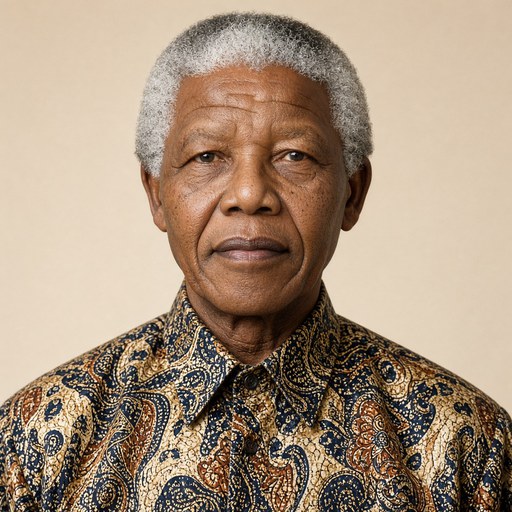
- Mandela, as President, replied to hon senators in the Senate, apparently on June 18, 1996, in what he called his last address to that Senate, defending the Government of National Unity and his ministers and urging cooperation across parties.
- Main themes
- Good men and women in all parties, principles of negotiation with the National Party, Government of National Unity and power-sharing, F W de Klerk's contribution to the transition, collective leadership in the ANC, attacks on Ministers Zuma and Bengu, Cosatu strikes and privatisation, Truth and Reconciliation Commission cut-off date, Comdt Ratte's imprisonment, certification of the constitution and IFP concerns, eliminating racism, delivery of services
- Duration
- ~45 min
- Words
- 5,433
- Sentences
- 293
- Readability
- 59
- Grade
- 9.6
- Syntax
- 2.88
- Vocabulary
- 2.15
Source: GitHub DRChivers/Nelson-Mandela-Speeches-Sentiment-and-Topic-Modelling-Analysis ↗
The broad sphere of national life a sentence belongs to. Every sentence has an Arena, so it is the denominator the other indices are read against.
Other293 sentences in 39 paragraphs
PRESIDENT OF THE REPUBLIC: Mr President, I have listened very carefully to the comments made by the hon senators. They were relevant, profound and made by men and women who are anxious to resolve the problems of our country. I have taken note of the observations and concerns which hon senators have expressed. There are certain remarks which I have made outside this House, but because this is the very last occasion for me to address the present hon senators, I would like to repeat them. I hope that whatever hon senators do, they will remember these remarks.
I have said on a number of occasions that there are good men and women in all national groups in this country, without exception. They are amongst Africans, Coloureds, Indians and Whites. That is exactly the same position in regard to the political parties inside and outside Parliament. One finds good men and women of the highest integrity, who are absolutely brilliant, loyal and committed to the country and who are yearning for the opportunity to use those talents, not only for political parties, but for the country as a whole. One finds those men and women in the ANC, the NP, the IFP, the DP, the FF, the PAC, the ACDP, the CP of Ferdie Hartzenberg, and Azapo. If all of us would realise and accept this and act on it, whatever problems we have, South Africa would become a true miracle and a Mecca for the entire world.
I have also drawn attention to the principles which we in the ANC have adopted in our relations with other political parties in this country. When it came to the question of negotiations between the NP Government and the ANC in May 1990, at the first meetings, we adopted a principle which we carefully examined, debated and agreed upon. That was that in negotiations there should be no winner or loser, that the whole of South Africa should be the winner. We applied that, and hardly had we started when we discovered that there were good men and women in all political parties, and certainly in the NP with whom we were negotiating. We could not have made this progress if we had not acted on the basis of that principle. Of course, at that stage the delegation of the NP was composed of men only, whereas our delegation had at least two women. Nevertheless, we assumed that there were women in the NP who were as good as their men.
The second principle which we have also applied now that we are in government is that we have a large majority and there is a real temptation that we could abuse that majority. However, we have felt that this would be a disaster because, at least at the beginning of the activities of the Government of National Unity, we had to concentrate on confidence-building and therefore it would be disastrous and contrary to that objective for us to abuse our majority. We then decided that the minority parties must not be used as rubber stamps to the decisions of the ANC, but that they must be made to feel that their input is accommodated by the majority party. It is not easy, of course, when one is dealing with individuals and important social issues, to be seen to be consistent in that, but we kept on reminding one another that this was the central strategy that we should use, not just because we wanted to win, but because we wanted to build. In fact, I might disclose that at first we decided that we should have no parliamentary caucuses at all and that we should have no Cabinet caucus. However, when we found that other political parties caucused and that their members of the Cabinet were caucusing, the pressure became too strong for us to resist. We decided that we should also have caucuses, but this was because we did not want to go to the Cabinet meetings with prepared attitudes. We wanted each individual to express his or her point of view without limitation by the political party. These, therefore, are the two principles on which we have been working-good men and women in all communities, political parties, the Cabinet and every sphere of life in which we are acting.
Having said this, I would like to respond to the questions that have been raised here. I would like to point out that they are very pertinent questions.
The contribution of Deputy President F W de Klerk has been referred to in one of the questions. I would like to state very clearly that Deputy President De Klerk has made a very important contribution indeed towards this transformation. I first met him when I was still in prison and the impression I gained was that we were dealing with a man of integrity. On the basis of those observations, I smuggled a letter to my leaders in Lusaka and conveyed this. It was extremely dangerous for me to do so because to the politicians in the liberation movement in those days for one to praise a leader of the NP was like treason. I was putting my neck on the block. The forceful impression he made on me, however, compelled me to bring this to the attention of my colleagues who were leading the organisation and deciding on questions of policy. I came out of prison and made a public statement to that effect on a number of occasions, saying that this was a man of integrity and that we should deal with him. I want to repeat that that was and still is my position, in spite of the criticisms that I have levelled against him. The fact that we criticise each other does not mean that we do not accept the integrity of the man we are criticising.
Having made this statement, however, I also want to put it in context. There are other members of the NP who have made a very commendable contribution towards this transformation. Some argue that they have made an even greater contribution, and I am very glad that the hon the President of the Senate is here today. He was one of the architects of this transformation, and he stood alone at a time when the leaders of the NP did not want to hear about the then State President P W Botha meeting a Black prisoner who has been arrested for challenging White supremacy. He stood all alone.
Senator I W DIREKO: Haak Vrystaat!
The PRESIDENT: He was assisted by men such as Dr Neil Barnard who was at that time the leader of the intelligence services in this country, Fanie van der Merwe, at that time permanent secretary of the Department of Justice, Mr Mike Louw who also came from the intelligence department, and Gen Willemse, the Commissioner of Prisons. These were the men with whom I conducted negotiations from July 1986. My association with the hon the President of the Senate dated from then when he was coordinating these discussions and trying hard that I should meet President P W Botha and explain to him what I wanted. I wanted a meeting between the Government and the ANC to discuss the future of this country. He had the vision to see that this was crucial for our country, because I was asking him, "What is the point of us slaughtering one another as South Africans when we could sit down and talk? Let me meet the State President." He realised the importance of this. The men with whom I was negotiating also realised this, and when there was a deadlock between us the hon the President of the Senate would come in to resolve that deadlock.
Therefore we must weigh the contribution of the hon the Deputy President Mr F W de Klerk against this background.
There was also a man such as Pik Botha. We all know how he got into trouble when he made the statement that he was prepared to serve under a Black President. He was repudiated in Parliament by the then State President P W Botha. He was called up by Gen Malan as the party leader in the Transvaal at the time, and pulled up. I beg your pardon, he may not have been the Transvaal leader, but he actually pulled him up for having made the statement, and it was reported as such in the newspapers.
Therefore the contribution of any one man for the purposes of accuracy and for the purposes of history must always be placed in context. It is incorrect to claim that any one person was responsible for bringing about this transformation. It was the sacrifices of members of the liberation movement, the ANC, the PAC, the Non-European Unity Movement, and so on. They fought and bought this liberation with their lives. We did not ask for permission from anybody to bring about this transformation, but the value of these men to whom I have referred was that if they had not been co-operating, the liberation would have been far more costly than it was. Therefore it is correct that we should now regard this transformation not only as the result of the sacrifices which were made when we were all alone as the liberation movement. It is now a collective effort by all South Africans, White, Indian, Coloured and African. It is the result of the collective contribution of all our people.
The question has been asked about the Government of National Unity. We should differentiate between voluntary and forced coalitions. We all agree that South Africa should become a normal democracy, and that if and when concrete conditions dictated that there should be a coalition, this would be per agreement among parties rather than being forced by the constitution. The hon the Deputy President Mr De Klerk will acknowledge this. I invited him some time before the run-up to the general election of 1994 and we discussed his idea of power-sharing.
The Government of National Unity was never the policy of the NP, as Senator Moosa has said here. It was power-sharing. Indeed, power-sharing meant that if 75% of the people of South Africa voted for a particular party, and 25% voted for the NP, the representatives of the 7 5% would never be able to take a decision without the consent of the 25%. That 25%, it was intended, should have the power to stop a decision of the 75%. I then invited him, and he will acknowledge this, and I discussed this matter with him over three hours. I said to him: Look, there was no law which forced me to approach your Government to say let us sit down and talk. I did so because I believed this was the step which South Africa wanted. We sat down and reached an agreement. This was not as a result of any provision of a law. I then told him that we should move away from the idea of power-sharing, because we would never accept it. What we were suggesting was that we should have a government of national unity written into our interim Constitution. I further suggested that we should have a threshold percentage and that any political party which surpasses that threshold in the election should then be represented in the government. That is how the Government of National Unity came about. I would like that to be clear for the record. It is important to understand that, because even after 1999-it is not a question of there being a legal provision-the ANC will still be there.
The ideas I expressed were not mine; they were the ideas of a collective leadership. We believe in collective leadership; it is a tradition. Not even the president is above his comrades in a branch. I have been challenged by comrades in a branch and I have had to retreat, because I could not convince them of my views. That is the nature of our organisation. One will find that in some political organisations if the leader says something, everybody must fall in line. [Interjections.] That is not the position with us. The president has to persuade his colleagues to agree to a point of view.
I can assure the senators that after 1999, if we are returned to power, we will respect the point of view of other political parties, even if they are not in the Government. I think that perhaps the case of the FF is a striking example. I have concluded major deals with the FF in the interests of the people of South Africa. I have introduced both the hon Senator Dr Gous and Gen Viljoen to leaders and heads of state in neighbouring countries, because they came to me with a plan which I was convinced was in the interests of South Africa-to deploy South African farmers in these countries in order to provide the people in those countries with jobs. I discussed the scheme fully with my colleague, Kraai. the hon the Minister of Agriculture, Dr Kraai van Niekerk. My apologies for using that name, but that is how we address each other outside this House. We discussed the matter fully and I sent Gen Viljoen to see President Chissano. The President of Tanzania wants Gen Viljoen to go there, because they have 40 million hectares of land which is suitable for ploughing. However, they have the capacity to plough only 6 million hectares of that land. When they heard that there was this scheme involving Mozambique, they insisted that Gen Viljoen should be there. Senator Dr Gous, Gen Viljoen and I were in Maputo together recently when the Maputo Corridor was opened, precisely because of their contribution. They are not in Government, but nevertheless, we realise how important they are.
There was also an attack on Ministers Zuma and Bengu. These attacks are really unjustified. Perhaps they are understandable, however, because these Ministers are successful in transforming health and education, and in improving the lives of all the people of our country.
People here are acting with the greatest integrity, the greatest honesty. However, we must always remember the background from which we come. We have the difficult position that we are restricted in our vision by the background from which we come. The Whites, whenever there is a major national problem, think of that problem from the point of view of Whites and forget that the overwhelming majority of the people in this country are Black; by "Black" I mean Africans, Coloureds and Indians. However, that is not the only problem we have. We have that problem among Blacks themselves, who think that this transformation means that they can dictate to Whites in this country, that they have defeated Whites in the battlefield, and that the Whites are now helpless and begging for mercy. We must discourage both tendencies. We must try to look at problems not from the point of view of the community or the political party to which we belong, but from the point of view of the interests of South Africa.
Nkosazana Zuma and Minister Bengu are remarkable people. I would like the hon senators to leave them to do their work, because I am not going to be influenced by propaganda in dealing with them. I am convinced of their ability, their competence and their dedication, and I will defend them to the hilt.
I went to India in January last year. I was shocked to find that a packet of tablets which costs Rl5 in this country, costs R I there, because they do not allow multinationals and conglomerates to monopolise the market. Competition is rife. That is one thing we do not have here. We have multinationals from foreign countries that control the whole field of medicine, with the result that they can dictate, and therefore, the drugs one finds here are far beyond the capacity of the ordinary man. What Dr Nkosazana Zuma is doing is to ensure that there are affordable medical services and that is a challenge to the multinationals in this country. I know that hon senators are acting innocently, but they should investigate what is happening in this country and compare it with what is happening in the rest of the world. This young lady is doing a remarkable job.
The hon the Minister of Education, Dr Bengu, is a self-made man. He literally raised himself by his bootstraps. He got a doctorate on his own by means of private studies. He became the principal of one of the poshest schools in KwaZulu-Natal. He then left and worked for the World Council of Churches in Geneva for some years. When he returned he become the principal of Fort Hare University, a top African university, and he developed that university. Those are his qualifications, his credentials. He is working very hard to transform education in this country, to ensure that the resources which were diverted to a small community of 14%, the Whites in this country, are now gradually being shifted so that the under resourced communities can also have the opportunities which our White colleagues in this country have had. For that we are not blaming the Whites, because that is what they inherited. However, they must understand the mandate we have: We have to transform education so that every child will be subsidised in exactly the same way, and so that we do not have the disparity we had before.
Of course, for transforming education, Minister Bengu has earned the hostility of those who want to retain privilege. Many hon senators feel that they should defend those privileges. It is not because they are racist, but simply because they think that transformation will lead to the falling of standards. We are also concerned about that, and the matter is being handled in such a way that we shall bring about these changes without lowering the standards.
As far as Minister Zuma is concerned, the matter of Sarafina was referred to the Public Protector with the agreement of all the political parties in Parliament. The Public Protector was appointed by me after consultation with all the political parties. He is a man who does not represent a particular political organisation. He decided to clear Dr Zuma on the basis of evidence. Hon senators are aware of where he laid the blame. I am not prepared to ignore the decision of the Public Protector. To me, the question of Sarafina is settled for ever!
Statements were made about what had occurred during the election campaign. Campaigns in South Africa have always been robust. In 1994, in November 1995 and now, robust statements were made on all sides. The hon Senator Van Breda has made such statements, the hon Minister Kraai van Niekerk has made them, and I have made them. We must accept that our politics are very robust. We want them to be fair and not racist. As long as they are within the bounds of decency, the less said about the election pronouncements of all parties in this House, the better.
I want to illustrate what happened, for example, when I was in Mitchells Plain. Reports appeared in the paper that I had been referred to as a "kaffir". I never heard that, because I went to the crowd knowing that the majority were members of the NP. As I went to them, they were waving placards of F W de Klerk. As they saw me walking towards them, some of them ran away. I shook hands with those who were prepared to shake hands with me. I then told them that I had come to them knowing that they were members of the NP, and that I knew that in the NP there are good men and women, and that is why I had come to shake hands with them. I saw some of them hiding the placards of Mr De Klerk. Because of the noise, I was unable to hear any specific remark that came from them. I was prepared to go down the line to talk to all of them, but the security officers were very worried and wanted me to leave, and I left.
I think that is the way we should deal with problems. We must confront our opponents and not fear what they are going to say to us. If we are dignified, decent people, and not prepared to exchange insults with them, and want to focus attention on what we consider to be our main goal in life, they can do nothing to diminish our integrity and standing. We must learn to confront people decently, and to ask what it is that we have done that makes us unable to sit down and resolve those problems.
The hon Senator Dr Rabinowitz made a moving speech about the constitution. What a pity the hon senator did not make that speech in the Constitutional Assembly, because it could have influenced many people. As I said, we are quite aware of the rich talent that exists amongst all parties. Listening today to all the hon senators' comments, and especially the comments of Senator Rabinowitz and Senator Zondi, it is difficult to say that they are members of the IFP. In fact, I could enrol almost all the speakers here in the ANC.
Let me say that the constitution is going to be certified. It may not be certified if that is the decision of the Constitutional Court. However, nothing is impossible. Even after that, if there are legitimate concerns on the part of any political party generally, and in particular the IFP, they are free to raise the matter with us. Depending on the merit of their proposals, I can assure them that at no time shall we say that the constitution has been adopted and certified, and that we shall not listen to anybody. That is not the way to build a country and it is not the way a leader should behave. I am saying to the IFP that our doors are wide open. They are welcome to approach us. We know that they have been peeping into the CA now and again. I hope that one day they will be able to sit down with us and try to resolve our problems. I am sure that they will find all of us ready to do that. Comrade Cyril Ramaphosa is now in business with Nail, but if that kind of approach is made, I am sure that he will be prepared to leave Nail and come back here.
We have made our position on the issue of privatisation clear. The hon the Minister, Stella Sicgau, will be making relevant announcements in her Budget speech later this week. However, I want to remind hon senators that they should not be impatient with us on this matter. We have made announcements inside and outside the country that privatisation is our policy. Hon senators must remember how long it took us to get the former government to sit down and talk with us. I have already said, and the President of the Senate knows, that this process started m July 1986. It took me four years before I could meet former President P W Botha. I had the patience, and perhaps even the vision-I am not so sure about that-but I creamily had the patience to know that this was crucial, and that eventually I would find men and women in the NP to support this initiative. We only met m May 1994, more than four years after we had started this initiative.
Now hon senators want us to rush with our own ally Cosatu. Mr De Klerk has said: "Die ANC moet Cosatu vas vat." That is not our style. Our style is to sit down and negotiate with everybody, especially with our ally.
I want to tell hon senators that Cosatu is led by a powerful, talented, gifted leadership who have the interests of South Africa at heart. They are doing this because there is still a wide gap in privileges and in wages between Blacks-Africans, Coloureds and Indians-on the one side, and White workers on the other. Even where there is parity, there is in fact no parity. That is so because White workers stay in towns next to their factories and places of employment by virtue of the policy of the former government. Black workers, receiving the same wages, stay miles away from the1r places of employment, and the cost of transport eats into their incomes. Even in industries where there is so-called parity, there is, in fact, no parity at all if one analyses the situation. That is why Cosatu is calling strike after strike. However, we are talking to them. We are telling them not to give the country a bad image. They must think of the 40% of workers who are unemployed because, at least they can take something home to give to their fam1hes, to buy them food, to ensure that their children are maintained. Those 5 million unemployed people do not know where their next meal should come from.
If one conducts repeated strikes, what is going to happen is that business is going to do what It d1d between 1985 and the first half of 1994, when R51, 7 billion left the country because of political uncertainty. However, R30 billion of that, according to Dr Stals, has come back into the country. We are discussing these matters with our colleagues. They are honest. They are doing something which they feel is their duty to their fellow workers. We are having discussions with them. We took four years to discuss matters with the NP before they could sit down with us. Why should we not take seven days to discuss matters with Cosatu? [Interjections.] That we are not going to neglect to do.
Regarding the Truth and Reconciliation Commission and the cut-off date, the date of December 1993 is set out in the Act. We are firmly committed to this date, but depending on the circumstances regarding peace and security, we can say that it is not cast in stone and that we are prepared to discuss the matter, because our 1dea IS peace. Our idea is to ensure that the past 1s forgotten and that mutual confidence is built. That is the basis. Whether a crime has been committed after the cut-off date is immaterial in the long run if the proper procedures are taken.
This brings me to the case of Comdt Ratte. Comdt Ratte is a man who has committed a serious offence, that of occupying a military fort. He was charged and brought before the courts. However, his behaviour before the judicial officer was totally unacceptable. Hon senators all know what he did. Before sentence was passed, he said to the magistrate, "I do not care for you!" and made statements, in court, which I cannot even repeat here. In so doing, he was challenging the magistrate. He was then sentenced to five years in jail. Instead of negotiating decently with us, his supporters make demands. I received a fax in which I was not even addressed politely, saying Mandela, you must be at the Union Buildings at 12 o'clock on Saturday, and we demand the unconditional release of Ratte. So, I told my office not even to acknowledge receipt, because these people did not want this commandant released. They wanted him to spend five years in jail. I said this because no head of government can see delegations to discuss matters under a threat. I was not prepared even to see them. They have sent me a second fax in which they were polite. They even referred to me as "Mr President". However, they cannot forget that their method is one of violence. At the end, they say: We want his release without any conditions, and immediately. He must be released today. We cannot yield to that type of pressure. That would bring the judicial system of the country into disrepute. To challenge a magistrate is extremely serious. The Commandant must be prepared to serve his term. However, he can appeal if he wants to. That applies to everybody, and everybody who has lodged an appeal can ask for bail. Those are the legal remedies which he can use. We are, however, not going to yield to intimidation.
With regard to the President's Fund and the victims of violence, the Cabinet decided on 2 August last year to amalgamate the Social Relief Fund and the State President's Fund into a new fund. The President's Fund is for victims of violence, and is managed by the Department of Welfare and Population Development, in the capable hands of Minister Patrick McKenzie. He is going to be followed by another capable Minister, Geraldine Fraser-Moleketi. I will put this matter before her, and I am sure she will treat it with sensitivity. If there are any concerns, I am sure if senators want to see her, she will see them and give a full explanation.
With these words, I would like to thank the senators for the contributions they have made. However, I also want to say that one of our main ideas is to destroy racism in all its ramifications in this country. We are determined to do that. I think we are joined in this by members of other political parties here, including the NP. They are also trying to fight racism and to eliminate it from the social fabric of this country. That is what is happening. We cannot live with racism. However, at the same time, let us have a sense of proportion. Racism has been the fundamental policy of this country for more than three centuries. One cannot expect it to be eliminated within two years. If senators think that we are going to eliminate it just within two years, then they are unrealistic. We have to fight it tooth and nail, but at the same time set out an agenda and realise how long it is going to take us to eradicate it completely. Otherwise, we will make great mistakes.
In regard to the question of delivery of services, in the run-up to the election, in every people's forum right round the country, I made the point that we wanted to better the lives of our people. But I added that that could not be achieved overnight. It is a long process which might take even as long as five years before we can deliver services. I explained the reasons. I did that so that our people should not have exaggerated expectations, and so that we should be elected on the basis of what we say-where there is a reasonable prospect of our carrying out those promises-because there is nothing as dangerous to a politician as making a promise that one is unable to keep. That is why I made this point before the elections, that it might take even as long as five years before we could deliver, create a job or build a house. Now my colleagues have forgotten this. They think that these things can be done within two years. It is just not possible.
However, senators can see that we have been working hard. We have been planning and finding out from the various provinces what their respective priorities are. Some say houses, but if one goes to the rural areas, one will find that the demand is not houses and schools, but a thing that one takes for granted, namely water. We have to make investigations to know what the priorities are in the various areas. Now the investigations have been completed. I was happy to hear senators, before I spoke, say that they could see that the delivery of services was going to take place.
I am very grateful, therefore, that I have had this opportunity. It is an unforgettable occasion. I will always think of the debates here and the sincerity on the face of each and every senator as they have contributed to these discussions. It is this that makes me go to bed every night feeling 50 years younger than I am. This is because I can see that there are South Africans from all communities, from all political parties, and outside political parties who are thinking very seriously about the problems of our country, and who are making a vital contribution towards the future of our country.