





- Context
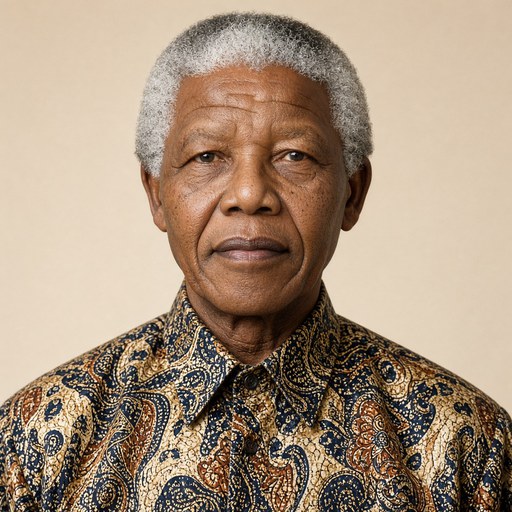
- Mandela addressed an audience including the Indian High Commissioner and South African officials on August 20, 1997, marking fifty years of Indian independence and praising India's support against apartheid and the Red Fort Declaration partnership.
- Main themes
- Fiftieth anniversary of India's independence, India's role against apartheid at the United Nations, Gandhi's years in South Africa, India's sanctions against apartheid South Africa, Red Fort Declaration and strategic partnership, South Africa-India solidarity, lessons from India's land reform and nation-building, eradication of poverty, multilateral cooperation in the Non-Aligned Movement and Indian Ocean Rim Association, Asia-Africa partnership
- Duration
- ~5 min
- Words
- 546
- Sentences
- 22
- Readability
- 24
- Grade
- 16.1
- Syntax
- 2.93
- Vocabulary
- 2.25
Source: GitHub DRChivers/Nelson-Mandela-Speeches-Sentiment-and-Topic-Modelling-Analysis ↗
The broad sphere of national life a sentence belongs to. Every sentence has an Arena, so it is the denominator the other indices are read against.
Other22 sentences in 6 paragraphs
Madam Speaker; Chairperson of the National Council of Provinces; Cabinet Ministers; Members of the Diplomatic Corps; High Commissioner of India; Distinguished guests, History books in both our countries will forever record India's Independence as a date of enormous significance. It was not just a victory for the people of India but for all those under colonial rule. It inspired and encouraged other liberation struggles around the world.
But it is especially significant to South Africans. India's Independence constituted an important landmark in the international community's mobilisation against the colonial apartheid regime. Session after session of the newly formed United Nations heard the determined voices of India's representatives consistently raising the question of racism in South Africa, even against the most powerful opposition. India's position in the Commonwealth and the Non-Aligned Movement helped the African National Congress galvanise international support for our liberation struggle. Our history books will also record how India made it possible for our leadership, including Oliver Tambo and Yusuf Dadoo, to safely leave South Africa to broaden our struggle; How India was the first country to apply sanctions against South Africa; how India opened her doors to our refugees and exiles; how India's institutions of learning afforded many South Africans the opportunities denied them in their own country. Most important of all, our history books will always tell the story of how the struggle for freedom in South Africa and the struggle for freedom in India were linked by the experience of Gandhiji in South Africa; how our heritage was forever enriched by the wisdom of his philosophies and his spiritual leadership, by his uncompromising commitment to the aspirations of the poor.
As a younger sibling, democratic South Africa continues to learn from the experience of India. In the fifty years since her independence, India has kept together a diversely multi-lingual, multi- cultural and multi-religious society in one nation. Its self-sufficiency in food, its approach to technological development, its space programme and its prowess in world forums are but a few of its achievements. India's pioneering experiences with land reform, nation-building and constitution-making have provided invaluable lessons. From India too we have learnt of the enormity of the challenge of eradicating poverty.
As we enter the new millennium we are transforming our solidarity in struggle into a partnership to ensure that the emerging world order reduces the huge disparities between the haves and the have-nots. During my recent visit to India in March this year, South Africa and India signed the "Red Fort Declaration", as the basis of a strategic partnership to promote economic development. It is a pledge to work together for global peace, security and equity in multilateral fora such as the Non-Aligned Movement, the Indian Ocean Rim Association, the World Trade Organisation and the United Nations. And so we look forward to the next fifty years close to our friend, ally, teacher and partner.
Mr. High Commissioner, please convey to His Excellency President Narayanan, to Prime Minister Gujral and through them to our brothers and sisters in India, warm and fraternal greetings from myself and from the government and people of South Africa. This celebration is as much ours as it is yours. May India and South Africa; Asia and Africa, find peace and prosperity in partnership.
I thank you.