





- Context
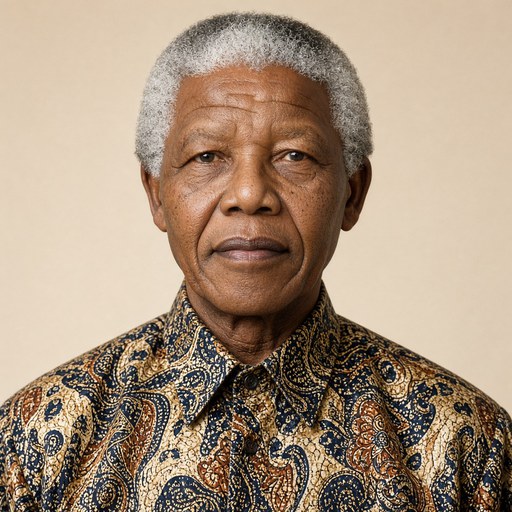
- Mandela addressed Colonel Qadhafi and the Libyan people in Tripoli on October 22, 1997, during his first official visit, thanking Libya for its support in the anti-apartheid struggle and urging trade and investment ties.
- Main themes
- Thanks to Libya for support in the anti-apartheid struggle, first official visit to Libya, Libyan people's suffering under sanctions, multilateral responsibility for fair solutions, African solidarity and a collective African voice, Libya's return to the community of nations, third year of democracy in South Africa, reconstruction and development programme, trade and investment between South Africa and Libya, relations with countries that backed the anti-apartheid struggle, friendship and partnership for peace and prosperity
- Duration
- ~7 min
- Words
- 836
- Sentences
- 34
- Readability
- 48
- Grade
- 12.6
- Syntax
- 3.03
- Vocabulary
- 2.04
Source: GitHub DRChivers/Nelson-Mandela-Speeches-Sentiment-and-Topic-Modelling-Analysis ↗
The broad sphere of national life a sentence belongs to. Every sentence has an Arena, so it is the denominator the other indices are read against.
Other34 sentences in 16 paragraphs
My Leader and Dear Brother;
Friends,
I want to thank my dear Brother, Colonel Qadhafi, and the government and people of the Great Socialist People's Libyan Arab Jamahiriya for the warm welcome I and my delegation have been given. It is indeed an honour and a privilege to be so received here in Tripoli, and to have the opportunity to renew, in person, the strong bonds between our nations.
Our visit to your country, brief as it has had to be, has proved a moving experience. The people of Libya shared the trenches with us in our struggle for freedom. You were in the front ranks of those whose selfless and practical support helped assure a victory that was as much yours as it is ours.
We are therefore deeply moved to be amongst freedom fighters for whom the freedom of others was as precious as their own. Though South Africans, and myself personally, are no strangers to your country, our first official visit affords us the opportunity once again to thank you from the bottom of our heart for making our cause your own. This makes it all the more painful to see evidence of the Libyan people's own suffering.
The suffering of the people of any single country affects all of us no matter where we find ourselves. That is why it is so important that multilateral bodies assume collective responsibility for finding fair and just solutions to problems in the world, taking into account equally the considerations of the weak and the mighty; the rich and the poor; developed and developing nations alike.
As Africans, especially as those who have benefited from African solidarity, we cannot be unmoved by the plight of African brothers. We should all redouble our efforts to have Africa's collective voice heard in the councils of the world in finding such fair, just and even-handed solutions.
We look forward keenly to the time when this great country can again take its rightful place in the community of nations.
Our visit provides abundant proof, if it were needed, of the strong fraternal relations between us, as well as our dedication to high-level dialogue on matters of mutual concern. We also share, as a priority, the welfare and development of the continent of Africa. This should indeed be so, as this is our continent; as we are the children of Africa.
Thanks to your contribution to our liberation struggle, we are now in our third year of democracy in South Africa. It is with great pride that I can report to you that the people of South Africa are making good use of that freedom. Exciting challenges have opened up, especially because of our success in uniting the country. Those who were divided by apartheid into separate groups have joined hands to work together for a better life for all our people.
Whether it be in the writing of a democratic constitution and the entrenchment of human rights; in the development and implementation of a strategy for sustained economic growth; or in programmes of action for socio-economic improvement, our people have joined hands in a way that has confounded the prophets of doom.
Already our programme of reconstruction and development is changing the lives of millions of our people, bringing them basic amenities previously denied to the great majority: clean water; electricity; decent education and better housing. This is only the beginning of a task that will take us many years, but we face the future with confidence, because of our people's unity and because of the increasing success of the nations of the South in making their voice heard in world economic and political affairs.
As we define our place in the world as a democracy we are rapidly expanding relations with those who supported our struggle and in so doing refrained from entering into economic relations with apartheid South Africa, often at great cost to themselves. The countries of Africa in particular, as well as those of Asia are high on our agenda.
We are actively encouraging our business people to develop trade relations with countries such as yours, and I believe that good progress has already been made. Both our countries require investment and have much to offer each other, including skills and resources that complement those of the other. I would urge you to look closely at the investment opportunities presented by South Africa and I can assure you that our business people will do the same in respect of your country.
I am confident that bilateral relations between our two nations and peoples, already on a sound footing, will be strengthened by the fruitful discussions which our visit allows.
Friends, Ladies and gentlemen, on behalf of my country, may I express our gratitude for your kind hospitality. And may I ask you to join me in wishing good health to Colonel Qadhafi and to the people of Libya. May the ties of friendship and solidarity between our peoples flourish in a partnership for peace and prosperity.