




- Context
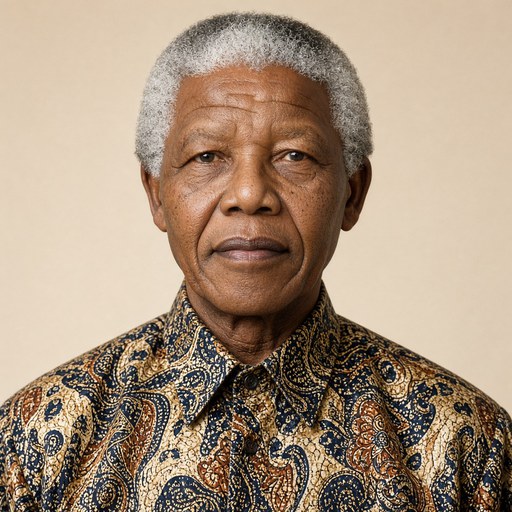
- Mandela addressed the Mafikeng Council, the North West Premier and legislature members in Mafikeng, presumably on December 15, 1997, thanking the town for naming its main street after him and recalling its history of sieges and struggle.
- Main themes
- Renaming of Mafikeng's main street, siege of Mafeking 1899-1900, Sol Plaatje, liberation struggle figures from North West Province, Mafikeng uprising of March 1994, honour from the Mafikeng Council, changing street names to reflect new South Africa, reconstruction and nation-building, human rights and dignity, legacy for future generations
- Duration
- ~4 min
- Words
- 486
- Sentences
- 18
- Readability
- 52
- Grade
- 12.7
- Syntax
- 2.86
- Vocabulary
- 2.47
Source: GitHub DRChivers/Nelson-Mandela-Speeches-Sentiment-and-Topic-Modelling-Analysis ↗
The broad sphere of national life a sentence belongs to. Every sentence has an Arena, so it is the denominator the other indices are read against.
Other18 sentences in 8 paragraphs
Your Worship the Mayor of Mafikeng, Mr Mandla Magokonyane, the Premier of the North West Province, Mr Popo Molefe, Members of the North West Legislature, Councillors, Ladies and Gentlemen.
I am greatly honoured by the decision of the Mafikeng Council to honour me as a person with the naming of the main street in Mafikeng after me. I am aware that many street names have been changed to reflect the new South African reality whilst simultaneously paying tribute to both the rich national and the local historical heritage of our struggle as a people for freedom, equality and human dignity.
Despite its location on the North Western fringe of the country, and despite its relatively small size Mafikeng has always somehow managed from time to time to become the central focus of national and global attention. The first time that this small town managed to draw the attention of the World to itself was during the "Siege of Mafeking" when the soldiers of the Zuid Akrikaanse Republiek laid siege to the British forces under Colonel Robert Baden-Powell between 1899 and 1900.
It was during that siege that one of the true sons of our country first came into his own. Sol. T. Plaatje first black South African novelist, journalist, translator of Shakespearian plays into Setswana, diarist of the Mafikeng Siege and later bitter chronicler of the effects of the 1913 Land Act rose to prominence during the siege, noting the events of the siege in great detail in his diaries. Sol Plaatje went on to become one of THE founding members of the South African Native National Council.
Other giants of the liberation struggle also originated from this province such as George Montsioa, Joe Morolong, LB Marks, Silas Molewa, Moses Kotane and Dr Molema. This province in general and Mafikeng in particular has a proud heritage in the history of South Africa.
More recently the population of Mafikeng rose up in support of their wish to participate in the building of a new South Africa. Fearing undemocratic exclusion from the processes that were unfolding elsewhere in the country, the people of Mafikeng rose in defence of their rights to freedom, equality, democracy and justice, and suffered a second, though short-lived, siege between 10 and 11 March 1994. When the forces of reaction finally withdrew from the town more than forty people had died, but those who remained behind had earned the right to call themselves South Africans again.
I am greatly humbled by the honour that the citizens of Mafikeng have bestowed on me. Our walk to freedom has been long, having reached our destination we are faced with the task of reconstructing and developing our country and building our nation. What we leave behind for our children must be a better, more peaceful, prosperous and just society, one in which the human spirit flies free and human rights and dignity is respected.
I thank you.