




- Context
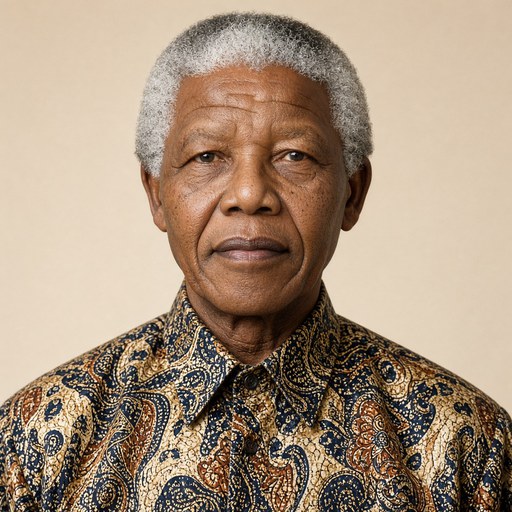
- Mandela addressed a banquet hosting Mauritian Prime Minister Navin Ramgoolam in South Africa on February 17, 1998, welcoming his first visit, noting a newly signed investment protection agreement and proposing a toast.
- Main themes
- South Africa-Mauritius bilateral relations, investment promotion and protection agreement, bilateral trade and trade imbalance, shared colonial history and freedom, Mauritian economic success, SADC and European Union trade negotiations, Commonwealth, OAU, Non-Aligned Movement and SADC cooperation, anti-personnel landmines treaty, Indian Ocean Rim Association secretariat, business delegations and private sector links
- Duration
- ~6 min
- Words
- 674
- Sentences
- 34
- Readability
- 45
- Grade
- 11.9
- Syntax
- 2.74
- Vocabulary
- 2.23
Source: GitHub DRChivers/Nelson-Mandela-Speeches-Sentiment-and-Topic-Modelling-Analysis ↗
The broad sphere of national life a sentence belongs to. Every sentence has an Arena, so it is the denominator the other indices are read against.
Other34 sentences in 21 paragraphs
Prime Minister Ramgoolam and Mrs Ramgoolam;
Cabinet Ministers;
Distinguished Guests,
Although we have met often at various fora across the world, it is a special pleasure to welcome you for the first time as a guest of the government and people of South Africa. We hope that your stay in our country is a pleasant and memorable one.
The name of Mauritius is familiar to South Africans. Many have relatives and family roots in Mauritius. Some do business in Mauritius and some just like to spend time resting on your renowned beaches. The origins of South Africa's sugar industry were in Mauritius.
And you, Prime Minister, we believe might have been a South African citizen had your father, Sir Ramgoolam decided to stay here on his way back from Britain after completing his studies. But then yesterday's gain to South Africa would have been today's loss, for we would not now be welcoming you as the harbinger of stronger relations between our peoples.
The links between us go back centuries. Like most of our continent and the Indian Ocean region, the impact of imperial expansion and colonialism is an experience our people share. So too is that of resistance and of freedom regained which allows us now to work together to realise the potential for promoting development through co-operation.
The agreement we signed today on the reciprocal promotion and protection of investments contributes to a legal framework within which our business relations can flourish.
We look forward to continuing growth in bilateral trade, which had already topped R1billion the year before last. We are conscious of the imbalance in this trade, though we note too that the scales are more evenly balanced when it comes to financial services and tourism. The completion of the SADC and European Union negotiations now in progress will, we believe, set the scene to further develop bilateral trade relations between us.
The seriousness with which our private sectors are building economic links between our countries is underlined by the successful road-show in South Africa led last year by your Minister of Finance, and by the recent large South African investments in Mauritius.
For the same reason, we extend a warm welcome to the strong business delegation you have brought with you. We can only move from strength to strength.
South Africa, Mr Prime Minister, has much to learn from you. A nation that within two decades converted a sugar-producing country into a major economic success growing at about six per cent and with an unemployment rate of five per cent surely has important lessons for us.
On the international front, too, we have much in common and much to gain through co-operation.
We are joint members of the Commonwealth, the OAU, the Non-Aligned Movement, SADC and the Indian Ocean Rim Association. This gives us many opportunities to work together in giving voice to the interests of our region and continent and more broadly the nations of the South.
Our common position on a fast-track treaty to rid the world of anti personnel landmines is one example of such co-operation. This kind of partnership will help achieve our shared goals of reducing the gap between the world's haves and the have-nots, and promoting peace, stability and democracy in our regions and in the world.
Mauritius has placed itself amongst the leaders of this process.
Recent as your membership of SADC may be - not that our own membership is much older - your active participation is already doing much to foster regional reconstruction.
By housing the interim secretariat of the Indian Ocean Rim Association you have shown that Mauritius is ready to offer more than lip-service to promoting the region's economic and trade interests.
I am confident that your visit to our country will add impetus to these encouraging beginnings.
Ladies and Gentlemen, I ask you to rise and raise your glasses in a toast to Prime Minister and Mrs Ramgoolam and the people of Mauritius, and to the ever deepening bonds of friendship between our peoples.
I thank you