





- Context
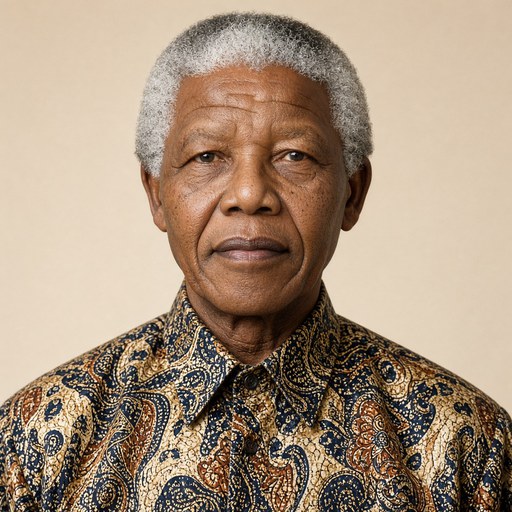
- Mandela addressed local leaders and community members in the Eastern Cape on August 14, 1998, at the opening of the Sitebe-Komkulu access road built by the Noluntu project, praising its largely female workforce.
- Main themes
- Opening of the Sitebe-Komkulu access road, righting the wrongs of apartheid, rural infrastructure neglect, empowerment of women through road construction, labour-intensive job creation, skills training and certification, Bumbane the Great Place, King Sabata Dalindyebo's legacy, reconstruction and development programme, delivery of water, clinics and electricity
- Duration
- ~6 min
- Words
- 667
- Sentences
- 35
- Readability
- 55
- Grade
- 10.3
- Syntax
- 2.81
- Vocabulary
- 2.12
Source: GitHub DRChivers/Nelson-Mandela-Speeches-Sentiment-and-Topic-Modelling-Analysis ↗
The broad sphere of national life a sentence belongs to. Every sentence has an Arena, so it is the denominator the other indices are read against.
Other35 sentences in 18 paragraphs
Your Highness, King Zwelibanzi Dalindyebo;
Premier of the Eastern Cape;
Minister of Transport;
Members of the Provincial and National Legislatures;
Ladies and Gentlemen,
When I was a young boy, I learned the value of education in this very area. I am pleased to return to the place I spent many of my formative years in. And I am honoured to be part of a project which will enable teachers to reach the children of this area once again and teach them too, the value of a good education.
The opening of a new road in our country is always a cause for celebration. The new access road to the Sitebe - Komkulu area opens up a world to communities who have been cut off through years of neglect.
The opening of new roads is part of the earnest progress we are making in righting the wrongs of apartheid; we are confronting our evil past; we are building and growing for the future. Here, as elsewhere, it is part of a much broader programme to improve the lives of our people. This programme has already seen the delivery of clean water to nearly 2,5 million people; over 600 clinics built and the connection of electricity some two million homes. All over the country, people are gaining access to health services, good education opportunities and much more. There are still years of hard work ahead of us all before we complete the task, but we can be proud of the act that democracy is already changing the lives of millions.
For the villages in this area, this road means health services, schools, shops and other facilities are within reach. It means mobility and choices for people who have been forced to spend many hours walking or forced to pay high transport costs because their homes are far from any roads.
And in this case, the new road is special because it means access to Bumbane, the Great Place: home of the late King Sabata Dalindyebo, who fought for the liberation of our country and who was forced into exile as a result.
As a result of his courage, the apartheid government and its servants punished all those who were loyal to King Sabata and to democracy, by neglecting their needs. The infrastructure deteriorated so badly that many people could only reach health services; food supplies and schools through walking. Even taxis and buses could not service the area.
By the construction of this road, we are finally able to empower Dalindyebo's people once again. One of the standards by which our democratic government must be judged is how much it does to empower those who have been most weakened by apartheid. This empowerment comes in many forms. By ensuring that this was a labour-intensive project, job opportunities were created for people of this region which brought training and skills development as well as work.
Another way in which this project has empowered people is that it was built primarily by women. The contract for this road reflected the fact that this is an area populated chiefly by women. It is thus fitting that there were 70 women for every 30 men engaged in building this project.
Given this opportunity the women of this area have risen to the challenge. That is clear from the fact that out of the 22 employees who qualified for Civil Engineering Training Board certification, 16 were women. To them and to the five women who gained additional accredited training in project management, as well as to everyone else, I wish to say: congratulations on your sterling efforts.
This project has been a model of reconstruction and development: redressing the legacy of the past; opening new opportunities; and developing vital skills for building our nation.
Today as we celebrate the completion of the Noluntu project and officially mark the opening of the road, we can say with confidence:
Together, through hard work, we will continue to build a better life for all.
I thank you.