





- Context
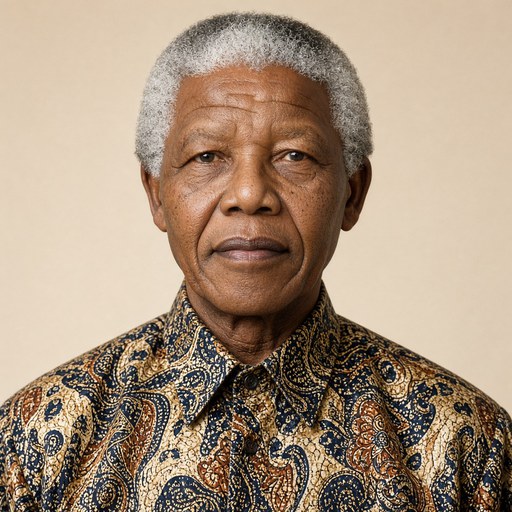
- Mandela, as President, addressed the launch of the One City Many Cultures journalists' initiative in Cape Town on March 1, 1999, urging reconciliation and unity after recent terrorist acts and asking residents to sign the campaign pledge.
- Main themes
- One City Many Cultures initiative, Cape Town's cultural diversity, recent acts of terrorism in Cape Town, legacy of the Group Areas Act, Truth and Reconciliation Commission, colonial dominance of history and culture, recovery of silenced histories, stereotyping and demonization of communities, gap between rich and poor, transformation of museums and history teaching, role of journalists, pledge to support the campaign
- Duration
- ~6 min
- Words
- 771
- Sentences
- 39
- Readability
- 52
- Grade
- 11.0
- Syntax
- 2.70
- Vocabulary
- 2.19
Source: GitHub DRChivers/Nelson-Mandela-Speeches-Sentiment-and-Topic-Modelling-Analysis ↗
The broad sphere of national life a sentence belongs to. Every sentence has an Arena, so it is the denominator the other indices are read against.
Other39 sentences in 21 paragraphs
Master of Ceremonies
Mayor of Cape Town, Nomaindia Mfeketo
Distinguished Guests
I am very pleased and honoured to be given a small role in the much-needed and overdue initiative that is being launched here today.
Although the perpetrators of the recent acts of terrorism in Cape Town will be brought to book, all of us must be concerned at how their actions have caused tension and even hatred amongst people who have shared this city for hundreds of years.
Cape Town, more than any other city in South Africa, has been home to people from different cultures for a long, long time. The many people who know Cape Town as their home can trace their ancestries from across the world. Muslim, and Jew, Christian and Hindu; Coloured, African, Indian and White; all these and others have brought to the Cape a part of the soul of many peoples and cultures in many parts of the world.
That diversity was a valuable asset to those who shared a common vision in striving to defeat apartheid, and replace it with a South Africa that belongs to all who live in it. Yet this city, like the rest of South Africa, continues to show the traces of deep divisions.
One reason lies in the Group Areas Act which divided our communities so effectively that we became strangers to each other. Ask anyone from District Six or Sophiatown and they will recall their close familiarity with each other's lifestyles before apartheid divided us.
The Truth and Reconciliation Commission has helped open the way to the long journey from our terrible past to reconciliation. For us as individuals that journey means coming to terms with the effects that our enforced separation had on our attitudes to each other. It means working to repair the torn fabric of our society.
Another reason for this lack of tolerance lies in a problem that is not peculiar to this country. Part of the legacy of colonialism is the dominance of the history, language, culture and religion of the colonial powers. We know many details of European Royalty but how many of us can tell the story of Hintsa or Tuan Guru to our children? How many can recount the epic resistance to the occupation and invasion of the Cape? How many know how the Malays came to the Cape and the Indians to Natal?
Few of us know how we came to be the nation we are.
Even those who feel slighted by others' ignorance of themselves are in turn often guilty of stereotyping others. We have seen recently how easily ignorance about each other can turn to demonization and isolation of one another; how easily hostility towards a community or religion can be awakened even by false claims that others are acting in their name.
Colonialism and apartheid have left a sharply polarised society. Until we reduce the wide gaps between the educated and the illiterate, the sheltered and the homeless, and very rich and the poor, we will continue to be deeply divided.
Every day South Africans are together helping to reduce that gap through job creation, providing services and investing in our human resources.
But the rebirth of our nation also requires a slow learning process in which we come to identity the values we share as a nation and respect those of others.
A part of that process is the recovery of the silenced histories of our different communities. Government is helping through the transformation of our museums and changes in the teaching of history in our schools.
But all of us need to play a part, however small. In that context, the One City Many Culture initiative is very welcome. The journalists have recognised a problem in their city and they have begun to take action, as professionals, to help address its causes.
Rather than the superficial treatment of the all-important matters of love, marriage, childbirth, prayer, initiation and death to which we have become accustomed, especially when it concerns those outside the dominant culture, readers are being given a new insight into the lives of others. They are being given a confirmation that fundamentally, we all have the same needs and aspirations.
Through this initiative Cape Town is being helped to build unity from our diversity.
As one who was guest of your city for 26 years and who has since then spent much of my time here. I urge all the people of Cape Town to support the One City, Many Cultures Initiative. And I encourage you all to sign the pledge that will add strength to the campaign.
I thank you.