





- Context
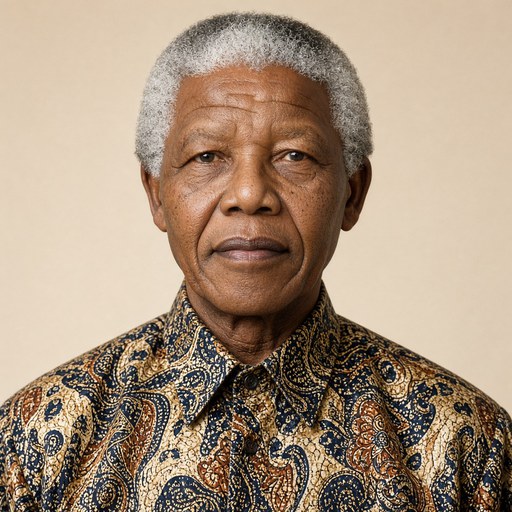
- Mandela addressed the Chairperson and Members of Council and members of the University of South Africa in March 1999 (dated March 29), celebrating Professor Anthony Melck's appointment as chief executive and urging universities to deliver.
- Main themes
- Appointment of Professor Anthony Melck, transformation of universities, institutional dignity and coherence, end of first phase of democracy, upcoming election, delivery of services since 1994, partnership between government and society, universities and national reconstruction, state subsidy of higher education, financial and fiscal discipline, impact of international financial turmoil, distance education at UNISA
- Duration
- ~9 min
- Words
- 1,051
- Sentences
- 46
- Readability
- 35
- Grade
- 13.9
- Syntax
- 2.76
- Vocabulary
- 2.13
Source: GitHub DRChivers/Nelson-Mandela-Speeches-Sentiment-and-Topic-Modelling-Analysis ↗
The broad sphere of national life a sentence belongs to. Every sentence has an Arena, so it is the denominator the other indices are read against.
Other46 sentences in 23 paragraphs
Mister Chancellor
Chairperson and Members of Council
Members of the University
Distinguished Guests
It is a special privilege to return once more to address an audience at this distinguished South African institution of higher learning. This time it is to celebrate with you the successful conclusion of a long and inclusive process to select and appoint the chief executive officer whose task it will be to lead the university into the next century.
Allow me in the first place to extend our congratulations and best wishes to Professor Anthony Melck. We are aware of your distinguished service to this University both as academic and administrator. We in government had first hand experience of your skills and wisdom when you served as Deputy Chairperson on that very important organ for the regulation of inter-governmental relations, the Financial and Fiscal Commission. We commend the University of South Africa on its excellent choice, and more united to fulfil its mission and discharge its duties to the country and society.
Establishing these processes at our universities presents a particular challenge, one that is shared by some other sectors of our society. The challenge revolves around the difficult task of changing and transforming institutions, without in the process damaging those institutions or the quality of the work that must continue within them. UNISA's experience teaches us that we are making great progress into his regard, and that the vigour of reconciling different positions and interests can be accommodated without compromising the dignity and institutional coherence of the university.
Universities are amongst those institutions in which form is often as important in establishing quality as content. Questions as to the dignity and institutional coherence projected by a university are therefore becoming increasingly important as we pass through the first phase of establishing our institutions in our new democracy.
The general public with an interest in the universities is seldom in a position to make judgements about the relative quality of research and teaching at different institutions. What does reach it are perceptions about the stability of institutions, the quality of management, and the general sense of institutional commitment amongst the constituent parts of the university. It is therefore important for staff and students, management and employees, to always carefully consider the broader impact of any actions and statements taken or made within or about their institutions.
The first phase of our democracy draws to an end as we prepare for the election of a new government. This is a time for all of us, not only those in the political sphere, to take stock and to evaluate our progress and achievements as well as to plot the way ahead.
For government the first phase was to a large extent one of developing and putting in place the policy and legislative framework required to abolish apartheid's legacy and to start transforming our people's lives. Much has been achieved in the delivery of services in these five years, and the lives of millions have been changed by the access they have gained to such basic amenities as primary health care, decent schooling, clean water, housing and electricity.
Yet, much remains to be done, and we can truly say that these next five years will mark a period of accelerated implementation and delivery.
That must also be that challenge to all our people and all sectors of our society. No government can transform society on its own. That task calls for partnership and commitment on the part of our people and all institutions.
The universities might themselves have found the first five years of democracy a period for evaluating a changed environment and for planning and repositioning themselves. It was understandably a time in which they had to wait for, and then study the outcome of, the National Commission on Higher Education. And there were new policies and pieces of legislation to be absorbed. Surely, the period for implementation and delivery of quality services for which society subsidises the universities, has now arrived.
International factors over which we had no control have obliged us to shift the dates for the achievement of key economic targets relating to our economic policy framework. That South Africa survived the turmoil in the international financial markets better than most emerging economies, is in large part due the determination with which we have stuck to our policies of financial and fiscal discipline.
We shall therefore have to apply ourselves with even more discipline and commitment to productivity in order to achieve the economic goals that will help create more jobs and free up resources to deliver services to our people.
That is the context within which the universities must also do their planning. This government has steadily increased the level of state subsidisation of the universities. A simple appeal from universities for more money would therefore be both misplaced in view of the level of subsidy, and foolhardy given the well-known constraints of our economy.
What society would now be looking for from the universities and the university system, are clear plans and indications of the part they see themselves playing in the reconstruction and development of the country within those constraints.
South Africa's economic development and our progress and a modern society hinge crucially on the quality of education we can provide, as a matter of urgency. As generators of new knowledge and as agencies for the transmission of the pooled wealth of human knowledge, our universities are key to the survival of our society in the form that we envisage and hope for.
There is nothing academic, in the bad sense of that word, in our call upon the universities to be in the forefront of productive intellectual work as we enter the new century. It is a matter of crucial importance for the quality of life in our country.
We are confident that the University of South Africa will rise to the challenges of the changed and changing times. You have a proud history of distance education that stretches far beyond our borders. you have to resources and the collective wisdom to adapt and to transform in order to continue to be a leader in the 21st century.
We wish you well, Professor Melck. From the luxury of retirement I shall be watching your progress and that of your institution.
Go well.