





- Context
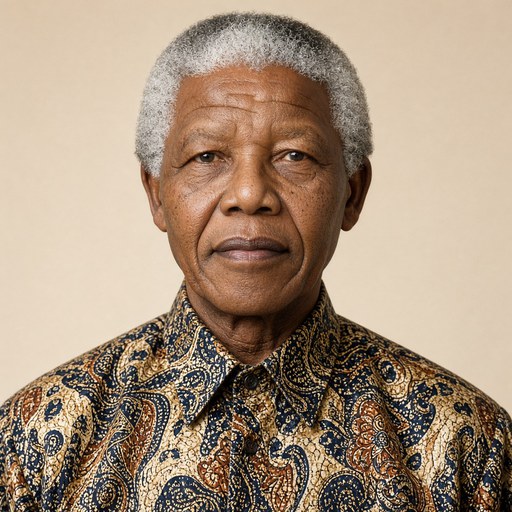
- Mandela addressed an audience of comrades and guests on February 11, 2000, recounting the long history of the South African liberation struggle, defending the ANC against its critics and thanking ministers and staff for a performance.
- Main themes
- History of the South African liberation struggle, Autshumayo as first freedom fighter, Khoisan resistance to Voortrekkers, Robben Island prisoners and shrine of Sheikh Abdurahman, Xhosa resistance under Makana and Maqoma, political prisoners from many liberation organisations, role of the ANC as flagship of the struggle, criticism of former collaborators with apartheid, Mandela's loyalty to the ANC, unity behind Thabo Mbeki's government, thanks to ministers and staff for a cultural performance
- Duration
- ~17 min
- Words
- 2,035
- Sentences
- 84
- Readability
- 57
- Grade
- 11.3
- Syntax
- 3.14
- Vocabulary
- 2.27
Source: GitHub DRChivers/Nelson-Mandela-Speeches-Sentiment-and-Topic-Modelling-Analysis ↗
The broad sphere of national life a sentence belongs to. Every sentence has an Arena, so it is the denominator the other indices are read against.
Other84 sentences in 21 paragraphs
Your Majesties, Friends and comrades.
In celebrating this historic day we should always remember that the South African struggle has a proud and long history stretching out for almost three and a half centuries. In that struggle there were the Khoisan, the Bantu-speaking people, Coloureds, Indians and Whites, however few they might have been. Some of our intellectuals and leaders fully appreciate this fact. But the overwhelming majority of our intellectuals and opinion-makers are not aware of this position. To them the struggle started with the Bantu-speaking people around the banks of the Great Fish River during the eighteenth century.
Yet it is common knowledge that the first freedom fighter in the history of this country was Autshumayo, others call him Hadah, others call him Harry the Strandloper, or beach comber. He resisted Jan van Riebeeck when he landed in this country and in 1658 he was then captured and sent to Robben Island. He has the distinction in history which we cannot justly claim, but I will deal with that later.
The surveyor – general of the Cape Colony in the eighteenth century, Edgar Stone, tells of a case where the Voortrekkers in their plundering trek northwards clashed with the San or Batwa, or Basarwa in Sotho. The Voortrekkers headed the San against a deep cliff, the San using poisoned arrows and the Voortrekkers guns. The battle lasted the whole day. But when everyone was dead and dying, one man remained fighting. This impressed the voortrekkers and they decided to save him, to give him his freedom without any humiliating conditions. He said, “where have you ever seen a chief, when he is people are dead and dying, handing himself over to the enemy” and with this he shot last arrow and jumped over the cliff and died.
Over these three centuries many freedom fighters were brutally killed either through torture or outright murder. But I am not aware of any who was offered freedom without humiliation, who chose death rather than accept the mercy of the enemy.
Then we have Sheikh Abdurahman [Mantoora?Matebe], who fought the Dutch in Batavia, which is now the present Indonesia. They captured him in 1743 and then banned him to Robben Island. He died about 10 years later. The Moslem community a shrine Robin Island in his honour and throughout the period we were on the island the Muslim community almost every week went to pay homage to his shrine.
But of course there was some incident, because there was a prisoner during our time, not with us, in another section. When we first met him he was a little bit thin then gradually he put on weight and the warders noticed that this chap, why is he putting on weight so fast, and they decided to watch him. Because they used to do was to lock us up, but because he was already in A group, they would lock him up in the evening long after we had been locked up. Then they watched his movements. They saw him moving to the shrine, because the Muslims, especially on Wednesday, would bring biryani, thee samosas and all the niceties and he would go to the shrine and eat that food up and that is why he was getting bigger and bigger. That was the last time he had that freedom. They decided to lock him up early.
The struggle in this country raged for some time before the Bantu-speaking people entered the fray. But because of their large numbers in comparison with the Khoisan groups, their advanced social organisation, the better weapons they commanded, they put up a fierce fight and on many occasions the white aggressors suffered disasters and humiliation. We know how Maqoma, in 1834, drove the whites from around the banks of the Fish River almost close to Cape Town. There is no war in the hundred years in the Eastern Cape when whites have suffered such a disaster. Before him, Makana attacked Grahamstown in 1818, was captured and sent to Robben Island, and later Maqoma was captured and sent to Robben Island.
We have the Zulu chief Langalibalele, who has sent to Robben Island, he was there with Cetshwayo for some time. In the north amongst the Pedis we had Mampuru who was the heir to the throne of the BaPedis but he was murdered by another [?son?part] of the Royal house. But he put up a great fight against the whites. I think Gen Joubert in his grave today trembles when he is told of Mampuru.
I have said earlier that Autshumayo had a distinction in history which none of us can justly claim. Generations of prisoners that went to Robben Island tried to escape. Makana, oNcele, was sent to Robben Island and he thought he could swim across the channel. He drowned. The Xhosas kept on saying, Ncele will come back one day, and later the Xhosas said, when they don’t believe in anything – Xhosa proverb – because the Xhosas said he would come back, but he never came back.
But even during our time some of our prisoners wanted to escape. One of the prisoners in the other section tried to escape and midway between the island and the mainland he was caught by some fishermen and brought back to Robben Island. The only man who was able to escape was Autshumayo. He has that distinction, but when they captured him again, they said well, this is a wonderful man, for him to have escaped from Robben Island and to reach the mainland, that is a distinction which Autshumayo has.
Throughout this liberation struggle, especially from the early 50s, South African South African jails became a beehive of political prisoners from different sections of the liberation movement – from the ANC, the Communist Party of South Africa, from Cosatu, from the PAC, Azapo, the Liberal Party and the Unity Movement. They all produced political giants and young people of great potential. In Robben Island we had Walter Sisulu, Govan Mbeki, the present Deputy President, JZ Zuma, Ahmed Kathrada, Mac Maharaj, George Peake and others from the ANC; Robert Sobukwe, Zephania Mothopeng and John Pokela and others from the PAC; Mosibudi Mangena, now the president of Azapo, Saths Cooper, Strini Moodley and others from Azapo; Eddie Daniels from the Liberal Party; Neville Alexander, Fikile Bam and Don Davies and others from the Unity Movement. We were on occasions split from top to bottom by sharp and fundamental differences. We still have such differences. But there is an umbilical cord that binds us together, that distinguishes all of us, because we have been forced to go in exile, we have worked underground under difficult conditions to liberate our country, we have been thrown into prison.
But the striking feature of our liberation movement is that we are the architects of the campaigns to destroy white supremacy in this country. We are the kingmakers of the modern history of South Africa. Few will deny that the ANC and its allies were throughout this period the flagship of the liberation struggle. There could have been no liberation in this country without the ANC. In the first democratic elections the ANC emerged as the majority party. In 1999, the ANC increased that majority because the masses of the people, who have never known what they enjoy today, appreciated the role of the ANC.
But, as I have pointed out, we were not alone. We share this honour with other sections of the liberation movement in various degrees.
But amongst you there, there are many who have never been forced into exile, who never went underground and who were never jailed, but who nevertheless in various ways were of great help in our struggle. No one can say that only those who were forced into exile, or to work underground or to languish in jail are freedom heroes, monopolise that honour. Amongst you here there are those men and women who even today we rely on although they have never suffered as I have indicated here.
But there are those amongst you there who when our young men were going abroad for military, giving up the pleasures of youth in order to train as soldiers in order to come back and liberate their country, some amongst you here were working with our oppressors, were being trained by our oppressors as soldiers in order to fight our young men when they came back to liberate our country. But the opportunists they are, when they realised that we had completely isolated their bosses, the oppressors, when we had turned white South Africa into a polecat of the world and when everybody after our freedom fighters had gone to almost every continent in the world turning the communities in those continents upside down and saying to them, we want you to condemn apartheid as a crime against humanity, when everybody now was clear that we were winning, those same opportunists, the intelligence projects of the apartheid regime, they now came over to us opportunistically, and said we are with you. But although they said so, their actions as individuals and as organisations, throughout, they reveal them as agents of the most sinister forces in the country. They can go to Parliament, make wild and irresponsible statements, allegations which to their own knowledge, are false and without foundation.
There is one thing to which the African National Congress under Thabo Mbeki as its president, as well as the government under his leadership, there is one thing that is striking about the government, their quest for peace, in every country in Africa and throughout the world. And yet those same people who are attacking our organisation come to me crawling to say, Madiba, we want you to build a school, and a clinic in our area. I agreed, because I’m not interested in political differences.
There is Dr Ngubane, I’m going sometime next week to a school which is run by his wife, to rebuild school and to have a clinic, although he belongs to a different party and when I go to KwaZulu-Natal, invariably, when I’m taking business people to build a school or clinic, I inform Umntwana, Mangosuthu Buthelezi, because I want unity, I don’t want to abuse any popularity I may have as an old man. I tried to do the same thing in the Western Cape, to inform the leadership of the National party, but they have not been as cooperative as Buthelezi is. But after what happened at the opening of Parliament, those people I promised to build a school and a clinic for them, can go begging other people, I will not do so.
I have been a member of the African National Congress for 56 years, I will be buried by my family, by the African National Congress. There are people who are going around who saying that now that I’m not a president I work with them. These are the same people who make false allegations against our government. It has been a strategy ever since I came out of jail. Many politicians belonging to other organisations praise me and at the same time launch a vicious attack against the African National Congress. They want to be examined mentally. Because any leader who will accept praise from enemies and then his organisation is attacked //under the cover, is no leader at all and has no pride in being a leader of this country. When I leave this world to the New World, the first thing I will do, I will take out a membership card for the ANC.
It is individuals and organisations like these and other problems facing our country which demand that all of us close ranks and speak with one voice to take our country forward, to work for peace in every part of Africa and far beyond.
In conclusion I must with all humility and appreciation thank Minister Ben Ngubane, Stella Sigcau, Deputy Minister Mabandla, and each and every one of their staff, the Cape Town gallery and volunteers from Qunu and other places for a highly impressive performance. It is an achievement which in many respects is peerless.