




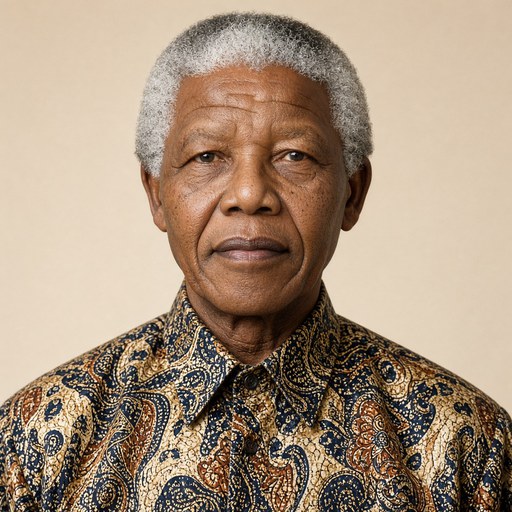

- Context
- Mandela addressed a gathering of financial services figures, apparently hosted by INVESTEC in South Africa, on July 12, 2000, thanking the sector for economic soundness and urging greater financing for black economic empowerment and small enterprises.
- Main themes
- Soundness of South Africa's macro-economic fundamentals, role of the financial services sector, survival of the Asian crisis, global interdependence, equity in international relations, short-term capital flows, domestic equity goals for financial institutions, small, medium and micro enterprises, black economic empowerment, access to financing, job creation
- Duration
- ~6 min
- Words
- 698
- Sentences
- 27
- Readability
- 46
- Grade
- 13.3
- Syntax
- 3.08
- Vocabulary
- 2.10
Source: GitHub DRChivers/Nelson-Mandela-Speeches-Sentiment-and-Topic-Modelling-Analysis ↗
The broad sphere of national life a sentence belongs to. Every sentence has an Arena, so it is the denominator the other indices are read against.
Other27 sentences in 6 paragraphs
It was my great privilege to be asked to address a conference on financial services, arranged by INVESTEC in London, two weeks ago. I then indicated to the invited guests there what an honour it was for a poor unemployed old man to rub shoulders with such luminaries of the financial world. Little would I have known that in less than a month INVESTEC would add further to my elevation to these esteemed ranks of the captains of finance. I need therefore not explain to you how honoured I am to put in yet another appearance at an occasion like this. At the same time it relieves me of the necessity to explain to this gathering why it would be inappropriate for me to try and repeat the address I gave to that gathering in London two weeks ago - a gathering that focussed on South Africa and included a large number of South Africans, many of whom I suspect will again be present here today.
I may just be allowed to repeat in a modified way my comments about the soundness of our macro-economic fundamentals, and particularly of the contribution of our financial sector in that regard. In London I obviously had to make those comments by way of commending our country to potential foreign investors. Today I can make those comments as a gesture of appreciation to the financial services sector of our economy for the way that they have made of that economy the robust one it is. The manner in which we survived the impact and trauma of the Asian crisis is in no small manner clue to the soundness of our banking and financial services sector. The effects of the Asian crisis reminded us like few other occurrences of the last years that we are, for better or for worse, one inter-dependent world. What happened in one corner of the world had major effects on people all over the globe. And once more it was proved that the vulnerable and the poor were most hard hit by such global tremors.
In London I pleaded for a new global sensitivity for the importance of equity in international relations. It is becoming increasingly clear that the free flow of capital and finance is not always serving such objectives of equity. The movement of money is often not directed by social purposes, but rather by the considerations of short term profits.
Here at home today, I must cast those same pleas in domestic terms. The financial institutions in our country, like all other agencies of our economy, should have it as conscious goal of their operations to serve equity. Too often we still find that those traditionally excluded from the fruits of our progress continue to be marginalised. The development of small, medium and micro enterprises is generally recognised to be crucial to job creation in our country. Long term stability also in our political system is dependent on the success of black economic empowerment through which all South Africans will feel that they have a stake in the economy. Too often we hear the lament from the small entrepreneurs that their contribution to economic development and job creation is being stifled by their lack of access to financing. Similarly, one hears the comment that black economic empowerment is being impeded by the absence of financing, and the growing reluctance of the financial sector - which is still traditionally dominated and controlled — to continue investment in empowerment. If charity begins at home, here is an opportunity for us to demonstrate that domestic solidarity. If we can harness our domestic energies towards equity, we shall stand so much stronger as members of the developing world to argue for equity goals in global affairs.
But, as I have indicated in the beginning, I am not here to repeat myself or to make a lengthy speech. Suffice for me to congratulate once more the financial sector of our economy and to commend to them even greater effort towards making our society one in which all people will indeed feel that democratic change had made a difference to their daily lives.
I thank you and I wish you well.