





- Context
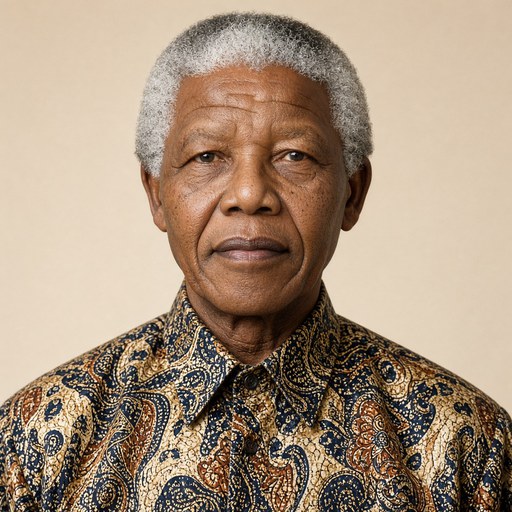
- Mandela delivered a eulogy at the funeral of Govan Mbeki, probably in South Africa on or around September 8, 2001, honouring his struggle record and urging collective effort toward a better life for all.
- Main themes
- Tribute to Govan Mbeki, condolences to the Mbeki family, Isitwalandwe award, liberation struggle generation, Mbeki's work as journalist and writer, Mbeki as first Deputy President of the Senate, non-racialism and the fight against racism, conference on racism in South Africa, government delivery of a better life for all, national partnerships against poverty and unemployment, Thabo Mbeki's inheritance of his father's legacy
- Duration
- ~8 min
- Words
- 1,018
- Sentences
- 56
- Readability
- 51
- Grade
- 11.0
- Syntax
- 2.59
- Vocabulary
- 2.38
Source: GitHub DRChivers/Nelson-Mandela-Speeches-Sentiment-and-Topic-Modelling-Analysis ↗
The broad sphere of national life a sentence belongs to. Every sentence has an Arena, so it is the denominator the other indices are read against.
Other56 sentences in 29 paragraphs
Mister President and First Lady
Members of the bereaved family
Members of the NEC of the ANC and leaders of the Tripartite Alliance
Members of the Cabinet
Premiers
Excellencies
Distinguished Guests, including our friends from abroad
Comrades and Friends
Compatriots
Ladies and Gentlemen
We recognise firstly here this morning the presence of the family of our departed comrade, colleague and friend: his widow Epainette, his children: Linda, our President, Moeletsi and the rest of the family.
To you we convey our deepest sympathies at this time of loss and bereavement. You are constantly in our thoughts and we wish you to know how profoundly we share your sense of loss.
We gather here today to take leave on this earth of one of the truly great sons of Africa borne by this country of ours.
We gather here at the same time to take encouragement and inspiration from his life and work, knowing that the foundations he so centrally helped to lay will support us as a people and a country as we continue on the path of building a better life for all.
Govan Mbeki is one of the great heroes of our liberation struggle. He rightly carries the honoured title of Isitwalandwe, the highest award our liberation movement could confer on anyone. We salute this giant of our struggle.
As we now take leave of a leading member of a generation of freedom fighters that was so crucial to the liberation of our country, we are reminded of the solidarity, comradeship and collective commitment that brought us to where we are today. We are not bidding farewell only to an individual; it is a piece of ourselves that we are losing. We were bound together as comrades committed to a single common cause.
In Govan Mbeki the best traits of our movement were combined. He was a deep thinker, an inspiring teacher and educator, a fearless revolutionary and a man selflessly committed to the ordinary people of our country. His life tellingly speaks of his devotion to the cause of the oppressed and exploited masses.
His work as a journalist and writer will remain an inspiration and a guide for future generations. It provides a record of the depth of thinking that informed our national struggle. It is a monument to the intellectual quality of that struggle. And it will continue to serve as a lesson that reason and analysis are the solid tools for arriving at strategy and direction in national affairs. We were singularly privileged to have had the benefit of that incisive mind in our collective deliberations and decision-making. I can only attest to how much I personally gained from his intellectual leadership, support and advice.
We all owe it to the memory and legacy of Govan Mbeki to ensure that the ideals he fought for and to which he dedicated his entire life, are realised for the benefit of all our people.
As collective effort was the driving force behind our struggle, the delivery now required calls on the collective contribution of all of us.
Our government takes the lead in this regard, having been elected by the people to represent them. And even though very much still remains to be done before we can claim that the better life for all has been achieved, we must also recognise and acknowledge how excellently our government has performed under difficult circumstances. We knew all along that redressing the terrible legacy of our past would not be achieved overnight. Today, though poverty, unemployment and other forms of deprivation still abound, basic services have been brought to millions of people formerly denied those basic rights. Above all, a sense of dignity has been restored to our people.
It is, however, not the responsibility of government alone to work for that better life. All sectors of our society have an obligation to contribute in their various ways to the achievement of those national goals. It is only through comprehensive partnerships on a national scale that we can go forward decisively on that path.
As he was leader in struggle, Govan Mbeki was there to play his role in national life on the attainment of democracy. As the first Deputy President of our democratically elected Senate, he helped to lay the foundations of our new constitutional dispensation. The wisdom and experience he brought to that position were crucial for building national unity and partnership in that period of transition from apartheid to non-racial democracy.
It was always in the character of the man to build principled unity and to foster non-racialism. As we look to the road ahead in our national life, we can once more take example and inspiration from his life and his leadership.
It was fitting that an international conference on racism should have taken place in South Africa at the time of his death. He was an unrelenting fighter against all forms of racism and racial oppression. May the coincidence of his death with that conference serve to spur all South Africans to greater efforts to expunge from our national life all traces of racism and racist practice.
Mister President, you lead our country with the privilege of the example of a father who was a great South African, a giant of our struggle and man of magnificent character. Apart from all the other compelling reasons why we have so much trust in you as a leader, we know that his legacy continues to inspire and direct you.
We salute you, Zizi, dear comrade and friend. The tears so generously shed by a nation in mourning are tribute to what you meant to all of us. In our mourning we give thanks for an intellect so persistent in search for the truth; for modesty so reflective of an inner strength to soldier on despite the odds; and for a life so selflessly given to the people. We take courage and inspiration from that life.
Your memory will remain etched on our hearts – a lodestar to guide our labours in search of a better South Africa and a better world.
Hamba kahle, Govan.