





- Context
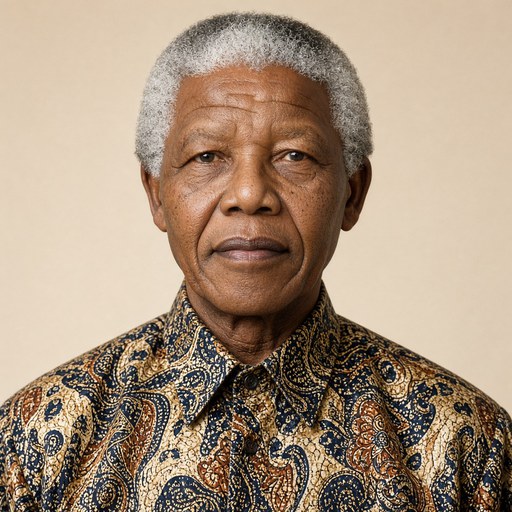
- Mandela addressed the first meeting of the new Board of the Vaccine Fund on May 1, 2002, during the week of the UN Special Session for Children, urging action on immunisation, poverty and affordable vaccines.
- Main themes
- Childhood immunisation, Vaccine Fund board, preventable child deaths, UN Special Session for Children, poverty and economic inequality, divide between rich and developing nations, health education for communities, affordable vaccines, pharmaceutical companies and access, low income countries
- Duration
- ~5 min
- Words
- 551
- Sentences
- 28
- Readability
- 58
- Grade
- 9.9
- Syntax
- 2.87
- Vocabulary
- 1.99
Source: GitHub DRChivers/Nelson-Mandela-Speeches-Sentiment-and-Topic-Modelling-Analysis ↗
The broad sphere of national life a sentence belongs to. Every sentence has an Arena, so it is the denominator the other indices are read against.
Other28 sentences in 16 paragraphs
Good morning and welcome to everybody. It is a great honour to be here with you this morning.
Thank you to everyone for giving of your valuable time to attend, particularly as this is the first meeting of the new Board of the Vaccine Fund
I believe that with the efforts of so many talented and committed people - each of you here around this table - we will be able to bring about significant change and improvement in the lives of millions of the world’s children.
It is fitting that this meeting is taking place during the week of the UN Special Session for Children. The work of the Vaccine Fund is crucial to the well-being and development of children. The work of the Fund fits in completely with the UN's concern for the children of our world.
The advances in science, technology, and learning have given us the capacity to address most of the needs of the population of the planet. Yet, at the beginning of this century the majority of people still languish in poverty. All over the globe they are subject to hunger, preventable disease, illiteracy and insufficient shelter.
We all know that more than 3 million of the people who die from diseases that are easily preventable are children. And that 2 million of them are children under the age of 5. These are children whose lives could have been saved through routine immunisation against childhood diseases.
The social and economic consequences for a country whose children are born into ill-health and who die before reaching their 5th birthday is nothing short of devastating.
These are children who should be given the opportunity to be productive members of society; to help build and nurture their communities and to strengthen their nations.
And the reality is that the vast majority of these children lived and died in low income countries, emphasising once more the cruel effects of gross economic inequalities in the world.
We will not adequately address the issue of getting vaccines to children, if we do not work to eradicate the scourge of poverty. As a global community, we must work to eliminate the growing divide between rich nations and the developing world.
Furthermore, we must ensure that children and parents and communities are educated and taught: unless all of our communities understand the importance of immunisation, we will not succeed in preventing the millions of deaths that are occurring unnecessarily. And we must ensure that vaccines and health care are accessible and affordable for all families.
Agencies and organisations, such as the Vaccine Fund, must work to negotiate a just relationship between the pharmaceutical companies which produce the vaccines and communities which require them at affordable rates. We have the resources and the knowledge and we must make sure that it reaches those who need it most.
I know this is not an easy task. But I am confident that if the knowledge and expertise in this room is harnessed we can meet the many challenges we face.
I thank you all again for being here and showing such great commitment. I look forward to hearing of the progress and future of the Vaccine Fund.
I shall now hand over the chair to Ms. Patty Stonesifer, chair of the Board’s executive meeting.
Thank you.