




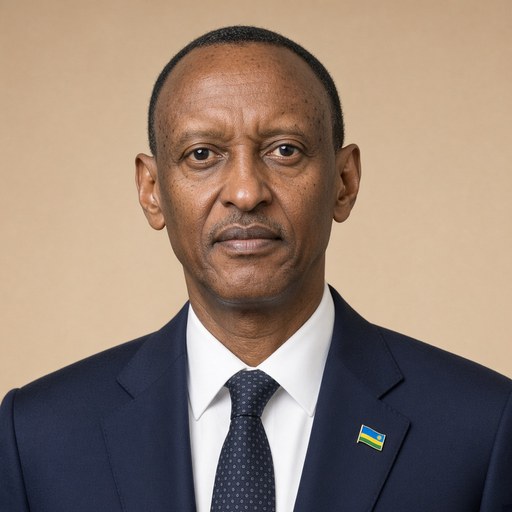
ADDRESS BY PRESIDENT PAUL KAGAME – International Day of Reflection on the 1994 Genocide against the Tutsi in Rwanda
 Paul Kagame · President of Rwanda
- Context
- Kagame addressed the UN General Assembly in New York on April 12, 2019, at the 15th annual International Day of Reflection on the 1994 Genocide against the Tutsi in Rwanda.
- Main themes
- Genocide remembrance and commemoration, denial and trivialization of genocide, prevention of genocide, Genocide against the Tutsi terminology, lessons learned and institutional change, UN peacekeeping reform and civilian protection, international solidarity with Rwanda, Genocide Convention, Rwanda's contributions to UN peacekeeping, historical accountability
- Duration
- ~5 min
- Words
- 626
- Sentences
- 46
- Readability
- 53
- Grade
- 9.2
- Syntax
- 2.62
- Vocabulary
- 2.30
The broad sphere of national life a sentence belongs to. Every sentence has an Arena, so it is the denominator the other indices are read against.
Other46 sentences in 21 paragraphs
United Nations, New York, 12 April 2019
Let me begin by thanking the organisers of this event, and we are happy to be with you today. And also thanking you for attending this 15 th annual Day of Reflection.
Most especially, I wish to thank the Secretary General and the President of the General Assembly for co-organising this event with Rwandans, and for the important statements we have just heard.
Remembrance is an act of honour.
More than a million lives were lost. We honour the victims. We honour the courage of the survivors. And we honour the manner in which Rwandans have come together to rebuild our nation. We honour and thank you all, those who have been with Rwanda through these hard times.
Remembrance is also an act of prevention.
When genocide is dormant, it takes the form of denial and trivialisation. Denial is an ideological foundation of genocide. Countering denial is essential for breaking the cycle and preventing any recurrence.
In that spirit, the General Assembly voted overwhelmingly last year to adopt the proper terminology: Genocide against the Tutsi. I thank Member States most sincerely for this measure.
Such a clarification should not have been necessary, given the irrefutable proof and historical facts of what happened in Rwanda. But the efforts to rewrite history are relentless and increasingly mainstream.
The victims of genocide are targeted because of who they are, a distinction fundamental to the definition of genocide itself, both morally and legally. This does not in any way diminish the memory of others who died.
Remembrance also serves to help spur change for the better. There are encouraging signs that lessons are slowly being learned and institutionalised.
It helps that we have something to build on. In 1994, three representatives on the United Nations Security Council consistently called for action, despite the resistance of more powerful states. They were Ibrahim Gambari of Nigeria, Colin Keating of New Zealand, and Karel Kovanda of the Czech Republic.
The Genocide Convention is now 70 years old. Of the 149 states party, nearly one-quarter acceded after April 1994.
France, Italy, Luxembourg, Poland, and Switzerland have criminalised denial of the Genocide against the Tutsi, and Belgium has announced its intention to do so. Canada and France have designated April 7 th as a day of commemoration. We applaud these steps and encourage others to follow suit.
Perhaps the most significant advances relate to peacekeeping.
With the strong support of the Secretary General and Member States, civilian protection has moved to the heart of peacekeeping doctrines. I commend the Member States that have already adopted the Kigali Principles on the Protection of Civilians. Of course, what really counts is living by these guidelines in the field.
In 1994, the warnings of the United Nations Force Commander, General Dallaire of Canada, fell on deaf ears. In the absence of a protection-of-civilians mandate, there are limits to what good commanders can achieve. Nevertheless, he stayed, and his forces did what they could. Captain Mbaye Diagne of Senegal helped save countless lives, before giving his own.
For several years, Rwanda has been among the top five troop contributors to United Nations peacekeeping operations. We intend to maintain this commitment.
But Rwanda does not only contribute soldiers and police. We come to the task with the values instilled by our tragic history. As a nation once betrayed by the international community, we are determined to do our part, working with others, to make things better going forward.
To close, I come back again to your presence here with us today. It is a gesture of solidarity that we do not take lightly.
Once again, thanks to the Secretary General and the President of the General Assembly and all of you here today.