




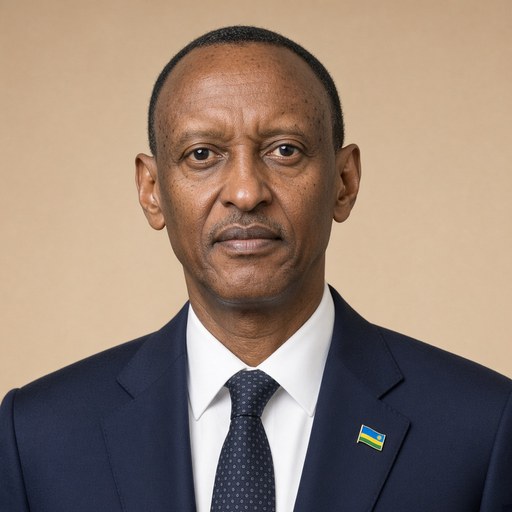
High Level Forum on Higher Education, Science, Technology And Innovation
 Paul Kagame · President of Rwanda
- Context
- Kagame addressed the closing session of the High Level Forum on Higher Education, Science, Technology and Innovation in Kigali, Rwanda, on March 14, 2014.
- Main themes
- Higher education in Africa, science and technology capacity building, innovation and research, skills gap in STEM, Rwanda's development strategy, Centres of Excellence, East African Science and Technology Commission, ICT development, socio-economic transformation, international partnerships, private sector investment, export diversification
- Duration
- ~5 min
- Words
- 645
- Sentences
- 31
- Readability
- 31
- Grade
- 14.1
- Syntax
- 2.92
- Vocabulary
- 2.18
The broad sphere of national life a sentence belongs to. Every sentence has an Arena, so it is the denominator the other indices are read against.
Other31 sentences in 18 paragraphs
Kigali, March 14 th , 2014
Good afternoon. Although most of you have already been in our country a couple of days and this is the closing session of the meeting, let me still take this opportunity to say: welcome to Rwanda. I also would like to thank the World Bank and other partners for their support in organizing this very important forum.
The importance of science, technology, research and innovation cannot be overstated. They are critical enablers which shape the socio-economic transformation of nations.
In Sub-Saharan Africa, they can drastically improve standards of living. But to unlock this potential, Africa must have well-trained science and technology professionals.
As it stands, only around 25 percent of tertiary education students in Africa are enrolled in science, engineering and technology. In fast growing countries such as Korea, China, and Taiwan, this figure is closer to 50 percent.
In an effort to address this gap, the October 2007 Connect Africa Summit made a recommendation to establish five Centres of Excellence in each sub-region of Africa and Vice president of the World Bank has alluded to that. These centres would support the development of a critical mass of science and technology skills required for the continent’s advancement. The rationale was that for Africa to utilise and benefit from global scientific research, it needs scientists who communicate and collaborate with their peers around the world on specific regional and international projects.
In this respect, higher education has a unique and important role to play in resolving the skills gap in Africa.
During the last two decades, Rwanda has put in place governance and physical infrastructures to develop national science, technology and innovation. We know that harnessing their potential and integrating them into Rwanda’s development plans is critical to achieving our national goals.
Here in Kigali we opened an ICT Centre of Excellence in conjunction with the African Development Bank. The government also invited Carnegie Mellon University to establish and operate a master’s degree programme in Rwanda, based on their strong tradition of research and innovation. We look forward to seeing the first cohort of students graduate later this year.
This is also the reason why, in collaboration with our East Africa Community partners, we have agreed to establish the East African Science and Technology Commission, based here in Rwanda.
Leveraging opportunities in science and technology contributes to the building of capacity across many sectors, including health, agriculture, trade and industry, infrastructure, environment, and ICT, all of which are key to development. They will help us fight against infectious diseases, increase food production, promote industrialisation, add value to natural resources and arrest degradation of the environment.
Better developed scientific and technological capability will also help increase and diversify our exports, as well as attract private sector investment – a critical factor in creating prosperity on our continent.
I am therefore pleased to endorse the outcomes of this conference as outlined in the communiqué. I welcome the commitment to strengthen and mobilise resources for building capacity in science and technology, in our pursuit of Africa’s socio-economic transformation.
I would like once again to pay special tribute to the World Bank for spearheading this launch pad for a high-profile, high-impact dialogue on Higher Education Science and Technology and technical training in Africa.
The support of new partners such as Brazil, China, India, and Korea, who are investing in the development of science and technology capacity on the continent, is much appreciated.
I look forward to follow-up action, including the upcoming regional workshop on the Partnership for Applied Sciences, Engineering and Technology and the Higher Education Summit in November this year.
Our collective commitment must be followed by concrete action to drive innovation through science, technology and research, for the development of our people and our continent. On that note, I am pleased to close this meeting.
I thank you for your kind attention.