




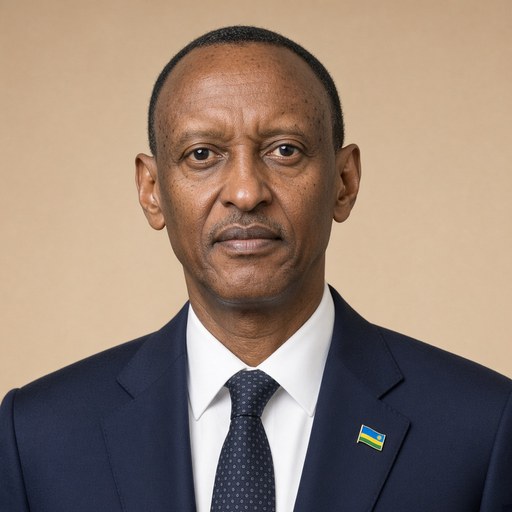
I welcome the new members of the House of Deputies in the Parliament.
 Paul Kagame · President of Rwanda
- Context
- Kagame addressed the newly elected members of Rwanda's Chamber of Deputies at their swearing-in ceremony in Kigali on September 19, 2018.
- Main themes
- Swearing-in of new deputies, legislative responsibilities, government accountability, national development, grassroots governance, multi-party representation, post-genocide rebuilding, follow-up and oversight, citizen representation, Rwanda's progress
- Duration
- ~21 min
- Words
- 2,570
- Sentences
- 138
- Readability
- 73
- Grade
- 7.7
- Syntax
- 2.76
- Vocabulary
- 1.79
Translated from Swahili
The broad sphere of national life a sentence belongs to. Every sentence has an Arena, so it is the denominator the other indices are read against.
Other138 sentences in 25 paragraphs
Kigali, September 19, 2018
I would like to greet you all and hope you are doing well.
We have gathered here for the ceremony to receive the oath of the newly elected members of the Chamber of Deputies.
First, I want to thank you for your commitment, and for the oath you have just taken, I also thank you all for your commitment to be our representatives and advocates. I appreciate that.
I would also like to take this opportunity to thank all Rwandans for the good conduct of the recent elections, which were held in transparency, peace, and freedom.
Honorable Deputies, you are about to begin your work;
Meeting like this is not just a ceremony or a formality, but a decision that we are about to start real work. Rwandans expect you to serve them, to represent them, and to help take our country to the level we all desire. You have a significant role to fulfill, but we will all work together.
This fourth legislature is unique: many of you are new. The energy, ideas, and approaches will elevate this Assembly to a new level in line with our journey of building our country.
You also have a starting point. In the path of the activities you are about to undertake, you will build upon what others have accomplished in the past twenty-four (24) years, and you were part of those activities, albeit in different sectors.
The entire term should reflect where we have reached as a country. I believe we have seen this in the oath, in the elections as they unfolded, with new people coming in, those we have mentioned. The new people we refer to may be new members of the FPR, or new members of the PL, or new members of the PSD, and so on. But the names I mentioned and others I did not mention are of the established parties in the Assembly. However, there are also new parties we have seen in the Assembly.
All of this is new and different in its own way. It indicates the level our country has reached and shows how we are rebuilding ourselves. Whether it is the Green Party, or PS Imberakuri, … they are new, they are new in the Assembly. They are not new like the others from the established parties. What they were doing outside, they will continue to do, but now they have risen in rank, joining others, and they will also do it in the Assembly. This is a step we should continue to build upon.
During the time you have spent campaigning across the country, you have met with Rwandans.
As you met with them, as you sought their votes, and as you went everywhere, that is how you will continue to reach them, working together to solve the problems they have that we must address, starting with the responsibilities of the Assembly.
During that time, there are also other responsibilities you have; it is not just you who should reach them, you should listen to them and work together with them. But also in your responsibilities, you have others to follow up on the activities of the Government, you must reach them and follow up to see if the Government is fulfilling its responsibilities; because you are responsible for that. You should uphold that responsibility. Often, there are places where it is not upheld. But every time has its own pace. I want us to increase our efforts, to take further steps, to follow up on those responsible for activities related to the development of our country, related to the development of Rwandans, so that we know, we see if they are being carried out as they should be. And then those who do not do so should be held accountable.
People who do not fulfill their responsibilities, in terms of advancing our country, in terms of advancing our citizens whom we lead, we should not overlook that; they should be held accountable. I ask this new Assembly, therefore, that we work together more, that we follow up more, that we make the most of all of this, so that we see that we are making progress as we should. It is being done, it has been done, but what I can say here is that it is not enough. And often what is not enough, there is much we have the capacity for, to make it happen or it has been done, but much is lost in between. It is lost in the levels, in the leaders. Leaders at all levels; I am talking about leaders among you as the Assembly, I am talking about leaders in the government, I am talking about leaders wherever they are. I will ask, therefore, but not just to ask; to say that I will ask, or that I always ask, is just a good culture of asking you, but I will also follow up to see if we fulfill what we are asked to do.
This issue of bringing activities down to the grassroots, bringing the necessary capacity to do so, in the meantime, those responsible should take it personally, we will increase that... But I want to speak for myself. I believe you also feel the same; it will be followed up more, people will be followed up more.
Now I speak with before me a list of many things that have been allocated resources, and resources have been provided but the activities that were supposed to be carried out, that should be done for the citizens are not done or not done properly. That will not just happen. Let me tell you other things I have told you before, I want to reiterate but I want to follow up. It is an example I want to give so that you understand me well. And in this Assembly and in others that have passed, this has been recurring. It recurs to say that this level has been given this and that, resources, means to work, everything they wanted to ensure that activities reach the citizens. There is an Auditor General who is always here, whether you have lowered your heads or you have organized it in such a way that he always comes to show you how things are, to show you the numbers. What was allocated, what resulted does not match, and he mentions the levels involved. He mentions the people involved. He mentions the number of what was lost. He ends there. The example I want to give, therefore, I speak of what should be improved, what should change is this. If you are a leader at a certain level, everything you were responsible for, you understand it or others understand it, and you have been given those responsibilities, you have been given resources, you have been given everything to fulfill them. You finish in the meantime, the Auditor General comes and tells us or others show us that what reached where it was supposed to go is like 25%, the rest no one can know where it went. The way I want us to explain this further is to say that we will ask you to tell us where that went. First is to begin by showing you or agreeing with you that is how it is; because we do not want to accuse anyone falsely. You also accept and say that indeed what reached where it was supposed to go was 25%. At that time we will ask you where the 75% went? Just telling us that you do not know is not enough. In my view, there is a way to investigate further and find out even if you do not tell us. We will investigate and follow up to know what you hold in your names or what you have put in others. We will retrieve that. But in retrieving that we will have a place to keep you. In this world we live in our Rwanda as we know it, some of those people even choose to flee the country after having stolen from it. In fact, they have those who welcome them abroad. These countries you see us working with and collaborating with help us in development, they have policies that are also welcoming. I do not have the capacity to change that, I cannot change it, but I will change what is here. They welcome them but once you have stolen, once you have caused problems for Rwandans, the wealth you have put on them is said to be followed up politically. They flee and they are welcomed with open arms. But I have seen they have failed to welcome people…. It seems they are now trying to scrutinize to know who they are welcoming. It is not enough just to go around saying that you will be welcomed because of politics in your country. Even when they welcome you, they do not have much to give you. They do not have much to use on you starting from that politics you tell them. In the governance of our country, we look at what benefits us and that is what we do, we do not seek to harm others outside who are not Rwandans. Our politics is to look at what concerns us, our politics is not to go after or to look at what concerns others. Others are the owners of what should be followed up for them. But we are used to that politics. It has been a long time. When that politics of those who steal, or make other mistakes is there, they run away and say that it is political problems and then they are welcomed, I do not know. But they should also know that they cause problems for those people, that they cause problems for Rwandans in general. Because when they have put you in a position to commit any crime, we will welcome you without issue because we do it in the name of wanting things to change here in Rwanda. In Rwanda, things will change according to how we want them to change, not according to how others want them to change. Recently in a normal way because you know it is not the first time, in a way of solving those problems I was talking about, we have compassion, but not just compassion to seek to give compassion, but compassion to solve problems. So, if it were not like that, we would have people, based on truth, how many would be sitting in prison. We would still have thousands sitting there because that is where they should be. But, we for the sake of building our country, we say that is not how we should always do it. We seek both the offender and the victim, we want to find a way to build them so that they too have a little to build the country. Recently we released those people from the past, we released those who were political prisoners based outside but not based in the country. That is also in the way we do it, it is not the first time, you see people there… I did not ask for forgiveness, I would not ask for forgiveness… Or that they released us because of pressure. Pressure here? If you continue to rely on that you will find yourself going back. If it is a testimony that is sought to show you that pressure here does not work, it works to think well, you will find yourself going back, or you will find yourself going back outside, you will find yourself wandering because there is nothing else you will do there.
This Rwanda you see, where it has come from has taught us lessons that prevent people from stepping on us to write. Therefore, whoever wants can take it easy. Whoever wants can do well and work with others, and even in our country we want to work well with others. And the lessons from around the world as they have shown, show us that working together, complementing each other, understanding, seeking the interests of everyone is the only thing left that we can use.
As for other things to say: “I am better than you in this, I am better than you in that… I must dominate you in what I want and you must accept…” That does not work anymore. Especially we have been dominated by many things, it does not affect us anymore. It does not work. Whoever wants we can coexist. We can have mutual interests. We can progress together.
This Assembly, therefore, I want to emphasize the breadth of that responsibility you have. Understand that the whole country is what we depend on. We first look at ourselves, we evaluate ourselves, we correct ourselves, we do what we should be doing, and for the rest we listen. If someone has something to tell us that is different from what we know or what we feel or what we wanted to base ourselves on, we will listen to them. If we feel it has a place we will accept it. If it does not have a place we will also tell it that “it does not have a place” and we will tell you the reason. If you bring us disputes we will tell you that we also know how to bring disputes when necessary.
This is not just a privilege of Rwanda. This is how it should be elsewhere. This Africa of ours has been simmering for years that we can no longer count, and that is what it needs; and I believe all Africans also want to free themselves. And those who were weak or thought they were weak, slowly they are beginning to know where to find strength to do what they should be doing. Certainly, what gives us all strength is working together, complementing each other, and being kind to one another.
So in our vision as Rwanda we have reached or are preparing to reach, thirty (30) years from the year two thousand and twenty (2020). You have started this Assembly with that vision before us. Therefore, we must work for that vision and continue to promote our uniqueness as Rwanda because it helps us. It has helped us in the past twenty (20) years, it should also help us in the next thirty (30) years from the year two thousand and twenty (2020).
The saved ones are filled with spirit; that is the spirit. It is our spirit, it is what we should build upon. Others, those other people, continue with your own, no one will stand in your way. But let us start from there. Because if you do not start from there, you will not find another spirit. That spirit will not reach you; it will reach you when you are weak. Therefore, it will not be of any use.
Honorable gentlemen, therefore, all deputies, the new ones, all levels of our country, let me conclude by thanking you for the cooperation that should be there and is often visible, reminding you that as Rwanda we should start from home. We should do everything possible to advance ourselves, to empower us, to protect us from whatever may harm us from wherever it may come. And I wish everyone good health and good work.
Thank you.
The original Swahili. The tags above are read on the English translation's sentences.
Kigali, 19 September 2018
Mbanje kubaramutsa mwese, ndizere ko mumeze neza.
Twateraniye hano mu muhango wo kwakira indahiro y’abagize inteko Ishinga Amategeko Umutwe w’Abadepite baherutse gutorwa.
Ndagira ngo mbanze mbashimire kuba baritanze, hanyuma n’indahahiro bamaze kutugezaho, mbashimira kandi ko mwese mwiyemeje kutubera intumwa n’abavugizi. Ibyo ndabibashimiye.
Mboneyeho n’umwanya wo gushimira Abanyarwanda bose igikorwa kiza cy’amatora tuvuyemo yakozwe neza mu mucyo, mu mahoro no mu bwisanzure.
Badepite rero, mugiye gutangira imirimo yanyu;
Guhura dutya ntabwo ari umuhango gusa cyangwa kurangiza umugenzo, ahubwo ni ikemezo cy’uko tugiye gutangira umurimo nyawo. Abanyarwanda bizeye ko muzabakorera, mukabatumikira, mukabafasha kugeza Igihugu cyacu ku rwego twese twifuza. Mufite uruhare runini mugomba kuzuza, ariko tuzaba dufatanyije twese.
Iyi nteko ya kane ifite umwihariko: benshi muri mwe muri bashya. Imbaraga, ibitekerezo, n’imikorere bizazamure iyi Nteko ku rwego rushya rujyanye n’inzira turimo yo kubaka Igihugu cyacu.
Mufite kandi n’aho mutangiriye. Muri iyo nzira y’ibikorwa mugiye gukora murubakira kubyo abandi bamaze gukora muri iyi myaka makuburi n’ine (24) ishize, ndetse namwe mwari muri ibyo bikorwa gusa mu zindi nzego zitari uru mugiyemo.
Manda yose iba ikwiye kwerekana aho tugeze nk’Igihugu. Ngira ngo uko twabibonye mu ndahiro, mu matora uko yagenze, abantu bashya bagiye baza, abo twavuze. Abantu bashya tuvuze, bashobora kuba ari abashya ba FPR, cyangwa bashya ba PL, cyangwa bashya ba PSD, ugakomeza utyo. Ariko ayo mazina nari mvuze n’andi ntavuze ni ay’amashyaka asanzwe mu Nteko. Ariko hari n’amashyaka mashya twabonye mu Nteko.
Ibyo byose ni bishya bitandukanye mu bushya bwabyo. Bivuga urwego Igihugu kimaze kugeramo kandi bigaragaza uko tugenda twiyubaka. Ari Green Party, ari PS Imberakuri, …abo ni bashya, ni bashya mu Nteko. Ntabwo ari bashya nka ba bandi ba ya mashyaka yandi asanzwemo. Ibyo bakoreraga hanze bazakomeza kubikora, ariko ubu noneho nabo bazamutse mu rwego, basanze abandi, bagiye no kubikorera mu Nteko. Iyo ni intambwe dukwiye gukomeza kubakiraho.
Igihe mwese mwamaze mwiyamaza hirya no hino mu gihugu, mwabonanye n’Abanyarwanda.
Uko mwabonanye nabo, uko mwabagezeho mubashakaho amajwi, kandi mukaba mwaragiye hose, abe ari ko muzakomeza kubageraho mubasanga, mufatanya gukemura ibibazo bafite tugomba kubakemurira, duhereye no ku nshingano z’inteko.
Muri icyo gihe rero, hari n’ibindi mushinzwe, si mwebwe ubwanyu gusa mukwiriye kuba mubageraho, mukabumva mugafatanya nabo. Ahubwo no mu nshingano mufite zindi zo gukurikirana ibikorwa bya Guverinoma, muzabagereho munakurikirana niba na Guverinoma muri ibyo bikorwa ishinzwe ibikora; kuko murabishinzwe. Mukwiye kubahiriza iyo nshingano. Akenshi hari aho itubahirizwa. Ariko buri gihe kigenda kigira intera yacyo. Ndashaka ko twongera umurego, twongera intambwe, yo gukurikirana abashinzwe ibikorwa bijyanye no guteza imbere igihugu cyacu, bijyanye no guteza imbere Abanyarwanda, kugira ngo tumenye, turebe niba bikorwa uko bigomba kuba bikorwa. Hanyuma abatabikora nabo bakabibazwa.
Abantu badakora ibyo bashinzwe, mu buryo bwo guteza imbere igihugu cyacu, mu buryo bwo guteza imbere abaturage bacu tuyobora, ibyo ntabwo dukwiye kubica iruhande; bakwiye kubibazwa. Ndasaba iyi nteko rero nshya, ko turushaho gufatanya, ko turushaho gukurikirana, ibyo byose tukabibyaza umusaruro, tukabona ko dutera intambwe uko bikwiye. Birakorwa, byakorwaga, ariko icyo navugira aha ni uko bidahagije. Kandi akenshi ibyo bidahagije, hari byinshi tuba dufitiye ubushobozi, kugira ngo bibe bikorwa cyangwa byarakozwe, ariko ibyinshi bikaburira hagati ahongaho. Bikaburira mu nzego, mu bayobozi. Abayobozi mu nzego zose; ubwo ndavuga n’abayobozi muri mwebwe nk’inteko, ndavuga abayobozi muri guverinoma, ndavuga abayobozi aho ari ho hose. Nzasaba rero, ariko bitari ugusaba gusa; kuvuga ngo nzasaba ,cyangwa mpora nsaba, n’umuco gusa mwiza wo kubasaba, ariko ubundi nzabikurikirana ndebe ko ibyo dusabwa tubyuzuza.
Ibi byo kujyana ibikorwa hasi mu giturage, kujyanayo ubushobozi bukwiye kuba bubikora, hagati aho ababishinzwe bakabigira ibyabo ku giti cyabo, abongabo tuzongera.,,, Ariko nshatse nakwivugira. Ndibwira ko namwe ari ko mubyumva; bizakurikiranwa kurushaho, abantu bazakurikiranwa kurushaho.
Ubu ndabivuga mfite imbere yanjye urutonde rw’ibintu byinshi biba bifitiwe ubushobozi, ndetse ubushobozi bwatanzwe ariko ibikorwa byagombaga gukorwa, bikorerwa abaturage ntibikorwe cyangwa se ntibikorwe uko bikwiye. Ibyo ntabwo bizajya bihita gusa. Reka mbabwire n’ibindi nigeze no kubabwira, ngira ngo nsubiremo ariko nshaka kuzakurikirana. Ni urugero nshaka gutanga kugira ngo munyumve neza. Kandi muri iyi nteko no mu zindi zimaze guhita, ibi byagiye bigaruka. Bikagaruka bivuga ngo urwego uru n’uru twaruhaye ibi n’ibi, ibikoresho, uburyo bwo gukora, icyo bashakaga cyose kugira ngo ibikorwa bijye mu baturage. Hari Auditor General uhora hano, musa naho mwatesheje umutwe cyangwa mwarondongoje ku buryo ahora aza akabereka uko ibintu bisa, akabereka imibare. Ibyatanzwe, ibyavuyemo ntibihure, ndetse akavuga inzego izo ari zo. Akavuga n’abantu abo ari bo. Akavuga n’umubare w’ibyo batakaje uko ungana. Yarangiza bigashirira aho. Urugero nshaka gutanga rero mvuga rw’ibikwiye kunozwa, bikwiye no guhinduka ni ibiki. Niba uri umuyobozi ku rwego runaka, ibyo wari ushinzwe byose, ubyumva cyangwa n’abandi babyumva, ukaba warahawe izo nshingano, ugahabwa amikoro, ugahabwa buri kintu cyose cyo kubyuzuza. Warangiza hagati aho, Auditor General akaza akatubwira cyangwa abandi bakatwereka ko ibyageze aho byagombaga kujya ari nka 25%, ibindi ntawe ushobora kumenya aho byanyuze. Uburyo nshaka ko tubisobanura kurushaho ni ukuvuga ngo tuzabikubaza utubwire aho ibyo byagiye. Ubwambere ni ukubanza tukanabikwereka cyangwa se tukumvikana nawe ko ari ko bimeze koko; kuko ntawe dushaka kubeshyera. Nawe ukemera ukavuga uti nibyo koko ibyageze aho byajyaga ni 25%. Icyo gihe tukakubaza ngo 75% byagiye he? ibyo kutubwira gusa ngo ntabwo mbizi ntabwo bihagije. Njye mu myumvire yanjye hari uburyo bwo kunahashakisha tukahabona n’iyo waba utahatubwiye wowe. Tuzashakisha dukurikirane tumenye n’ibyo utunze mu mazina yawe cyangwa ibyo washyize mu y’abandi. Tubigarure. Ariko muri uko kubigarura tuzagira aho tukubika. Muri iyi isi tubamo mu Rwanda rwacu uko tubizi, bene abo hari n’ubwo bahitamo guhunga igihugu bamaze kucyambura gutyo. Mu byukuri bafite n’ababakira hanze. Ibi bihugu mureba dukorana nabyo ndetse dufatanya bidufasha no mu majyambere, bafite politike nayo iteye Ubuntu. Ibyo nta bushobozi mbifitiye, ntabwo nayihindura, ariko nzahindura ibiri hano. Barabakira ariko ndetse umaze kwiba, umaze gutera ibibazo Abanyarwanda umutungo yawishyizeho akavuga ko akurikiranwe ku buryo bwa politiki. We agahunga bakamwakiriza amaboko yombi. Ariko nabonye bamaze kunanirwa kwakira abantu….Ubanza basigaye bashaka gushishoza ngo bamenye uwo bakira uwo ari we. Ntabwo bihagije gusa kugenda uvuga ngo uzize ibya politiki mu gihugu cyawe ngo bahereko bakwakira. N’iyo bakwakiriye ntabwo bagifite byinshi byo kuguha. Nta n’ubwo bagifite byinshi byo kudukoreshaho bahereye kuri iyo politike yawe ubabwira. Mu miyoborere y’igihugu cyacu tureba ikidufitiye akamaro tukaba ari cyo dukora, ntidushake guhutaza abandi bo hanze batari Abanyarwanda. Twe politike yacu ni iyo kureba ibitureba, ntabwo twe politike yacu ari iyo kujya gukurikirana cyangwa kujya kureba ibireba abandi. Abandi ni ba nyir’ibyo bigomba gukurikiranwa kuri bo. Ariko iyo politike turayimenyereye. Imaze igihe. Iyo pilitike y’abo bamara kwiba, cyangwa gukora andi makosa ari aho bakiruka bakavuga ko ari ibibazo bya politike nuko bakabakira ibyo babakorera simbizi. Ariko bajye banamenya ko batera ikibazo abongabo, ko batera ikibazo n’Abanyarwanda muri rusange. Kuko iyo bamaze kugushyiramo ngo uzakora icyaha icyo ari cyo cyose, tuzakwakira nta kibazo kubera ko turabikora mu izina ry’uko dushaka ko ibintu bihinduka hano mu Rwanda. Mu Rwanda, ibintu bizahinduka bikurikije uko tubyifuza bidakurikije uko abandi babyifuza. Ejobundi mu buryo busanzwe kuko murabizi ko atari bwo bwambere, mu buryo bwo gukemura ibyo bibazo navugaga byacu, tugiramo n’impuhwe, ariko bitari impuhwe gusa zo gushaka gutanga impuhwe, n’impuhwe zo gukemura ibibazo. Nonese se, iyo bitaza kuba gutyo ubu tuba difite abantu, bishingiye ku kuri, bangahe bicaye muri prison. Tuba tugifite amagana y’ibihumbi bicayemo kubera ko niho bakwiriye kuba bari. Ariko, twe kubera inyungu zo kubaka igihugu cyacu, tukavuga ngo ariko ntabwo ari ko iteka twabigenza. Tugashakisha n’uwabaye umunyabyaha n’uwagize ute, dushaka uko tumwubaka kugira ngo nawe na ka gacyeya afite kubake igihugu. Ejo bundi turekuye aba bantu b’ejobundi twarekuye barimo ba basitari ba politike bishingiye hanze ariko bidashingiye mu gihugu. Nabyo ni muri yo nzira tubikora ntabwo aribwo bwa mbere, ukajya kubona ukabona abantu bari aho… Njyewe ntabwo nasabye imbabazi, ntabwo nasaba imbabazi…Cyangwa ngo buriya baturekuye kubera igitutu. Igitutu hano? Ukomeje kubigenderaho urajya kwisanga wasubiyemo. Niba ari ubuhamya bushakwa kugira ngo tukwereke ko agahato hano atari ko gakora, hakora gutekereza neza, urisanga wasubiyemo, cyangwa se urisanga wasubiye hanze, wasubiye kuzerera kuko ntakindi uzakorayo.
Uru Rwanda mureba, aho rwavuye twavanyemo amasomo atuma abantu batadukanda ngo dukandike. Rero, uwashaka yacisha make. Uwashaka yakora neza agakorana n’abandi, ndetse mu gihugu cyacu twifuza gukorana n’abandi neza. N’amasomo ku isi hose uko bimaze kugaragara, biratwereka ko gukorana, kuzuzanya, kumvikana, gushakisha inyungu za buri wese ari cyo cyonyine gisigaye twakoresha.
Naho ibindi byo kuvuga uti: “nkurusha ibi, nkurusha iki… Ngomba kugutamika ibyo nshaka ukabimira…” Ntabwo ibyo bigikora. Cyane cyane twe twatamitswe byinshi, ntabwo bikidukoraho twebwe. Ntabwo bikunda. Uwashaka twabana. Twagirana inyungu. Twatera imbere hamwe.
Iyi nteko rero, nagira ngo mbasogongeze ubugari bw’iyo nshingano mufite. Mwumveko igihugu cyose ari icyo tugenderaho. Turabanza tukireba, tukisuzuma, tukikosora, tugakora ibyo dukwiriye kuba dukora, ibindi tugatega amatwi. Ufite icyo atubwira gitandukanye n’icyo tuzi cyangwa n’icyo twumva cyangwa icyo twashakaga twagenderagaho, nawe turamutega amatwi. Nitwumva gifite umwanya turacyakira. Niba kidafite umwanya nacyo turacyikubwira ngo “nta mwanya gifite” tukubwire n’impamvu. Nutuzanaho amahane tukubwire natwe tuti: “Natwe tuzi gutera amahane iyo byabaye ngombwa.”
Ibi ntabwo ari umwihariko w’u Rwanda gusa. Ubundi ni ko byari bikwiye kuba n’ahandi. Iyi Afurika yacu yatesetse imyaka tutagishobora kubara, nabyo ubundi nibyo ikeneye; kandi ngira ngo Abanyafurika bose barifuza nabo kwivanayo. N’abari bafite intege nke cyangwa bumvaga ko bafite intege nke, buhoro buhoro bagenda bamenya aho gushaka intege baheraho kugira ngo bakore ibyo bakwiye kuba bakora. Cyane, cyane ikiduha intege twese ni kwa gufatanya, kuzuzanya, no kugirirana ineza.
Rero mu kerekezo cyacu kindi nk’u Rwanda tumaze kugeramo cyangwa cyateguwe dushaka kujyamo, imyaka mirongo itatu (30) uhereye ku bihumbi bibiri na makumyabiri (2020). Mutangiye iyi nteko icyo kerekezo kituri imbere. Tugomba rero icyo kerekezo kugikorera ndetse tugakomeza guteza imbere ubudasa bwacu nk’u Rwanda kuko buradufasha. Budufashije mu myaka makumyabiri (20) ishize, bukwiriye no kudufasha muyindi myaka mirongo itatu (30) uhereye ku bihumbi bibiri na makumyabiri(2020).
Ba barokore bajyibwamo umwuka; uwo ni wo mwuka. Ni wo mwuka wacu, ni wo dukwiye guheraho. Abandi nabo, abo ngabo bandi nabo mukomeze ibyanyu, ntawe nakwitambika imbere. Ariko duhere aho ngaho. Kubera ko nudahera aho ntamwuka wundi uzabona. Nuwo nguwo ntabwo uzakugeramo; uzakugeramo usange warembye. Ubwo rero ntacyo bizaba bimaze.
Banyacyubahiro rero, badepite mwese, abashya, inzego zose z’igihugu cyacu, reka nsoze mbashimira ubufatanye bukwiye kuba buhari kandi bukunze kuboneka, mbibutsa gusa nyine ko nk’u Rwanda dukwiye guhera iwacu. Tugakora ibishoboka byose biduteza imbere, biduha imbaraga, biduha no kwirinda ibyaduhungabanya aho byaturuka aho ari ho hose. Kandi nkaba nifuriza buri wese ubuzima bwiza n’imirimo myiza.
Murakoze.