





- Context
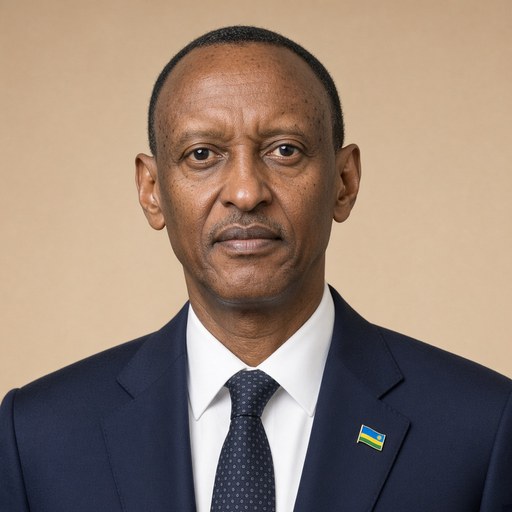
- Kagame delivered the keynote address at the AfCFTA Business Forum in Kigali on 20 March 2018, the day before the signing of the Continental Free Trade Area agreement.
- Main themes
- African Continental Free Trade Area, intra-African trade, African economic integration, private sector engagement, African Union Agenda 2063, ratification and implementation, continental market creation, manufactured goods and services, African unity, regional competitiveness
- Duration
- ~6 min
- Words
- 725
- Sentences
- 53
- Readability
- 51
- Grade
- 9.5
- Syntax
- 2.66
- Vocabulary
- 2.12
The broad sphere of national life a sentence belongs to. Every sentence has an Arena, so it is the denominator the other indices are read against.
Other53 sentences in 24 paragraphs
Kigali, 20 March 2018
A warm welcome to Kigali, and thank you all for being here today.
I thank Chairperson Moussa Faki Mahamat for convening this event, and I also commend the Commissioner for Trade and Industry, Albert Muchanga, and the entire staff of the African Union Commission for their hard work and dedication.
Tomorrow, we will sign a historic agreement creating a Continental Free Trade Area. The road to this point has been long indeed. It can be measured in decades. And we still have a few more steps to take. But we are persisting, and a new chapter in the story of African unity is set to begin.
The last mile of a race is often the most arduous. I therefore wish to congratulate the Leader of the Continental Free Trade Area process, His Excellency President Mahamadou Issoufou, for keeping us on track.
The stakes are enormous for Africa, but also for the entire global economy, to which Africa will contribute an ever-greater share in the decades ahead.
The creation of one African market necessarily entails a metamorphosis in how we think and act. The full involvement of the private sector is needed more than ever before. The purpose of today’s forum is to discuss how to make the most of the new opportunities we are creating for ourselves.
From now on, the clear wish of everyone is that consultation between business and political leadership, at all levels, becomes a continuous feature of continental deliberations.
It should be understood that profit and power are not an end in themselves. They are tools for creating prosperity for every African.
The Continental Free Trade Area symbolises our progress toward the ideal of African unity, but that is not the only reason why it is so historic. This agreement is about trade in goods and services. These are the kinds of complex products that drive high-income economies.
African workers adding value in Africa. Services offered by African professionals using the latest technologies. Manufactured goods that are “Made in Africa”.
Less than 20 per cent of Africa’s trade is internal, meaning from one African country to another. However, in the world’s richest regional trading blocs, the level of internal trade is three or four times higher.
Increasing intra-African trade, however, does not mean doing less business with the rest of the world. On the contrary, as we trade more among ourselves, African firms will become bigger, more specialised, and more competitive internationally.
Let’s also be realistic. We cannot take the Continental Free Trade Area for granted. After it is signed, there will still be challenges. Any concerns or technical issues that remain should be addressed fairly, but also expeditiously. Work on some additional protocols and annexes will also continue. Once again, the full engagement of the private sector will be absolutely essential.
Allow me to outline three of the tasks before us.
First, let’s now raise our ambitions even higher. Success on free trade shows that we are capable of achieving much more together. This is not the time to sit back and relax.
The right place to start is moving rapidly to accomplish the other flagship projects in the first Ten-Year Implementation Plan of the African Union’s Agenda 2063.
Second, the agreement needs to be ratified by Member States. The speed at which this occurs depends on us. Let’s do our part to communicate the rationale and the urgency of the Continental Free Trade Area to our parliamentarians, civil society organisations, and chambers of commerce, as well as to the media.
Third, implementation will mean reform of procedures and rules at the national level. This won’t happen overnight. It will be a process requiring dialogue and flexibility.
But getting those details right is central. Doing so anchors the case for the next stages of African integration in concrete outcomes that citizens feel in their daily lives.
In summary: Raise our ambition. Ratify. Reform.
The Africa we want is clearly visible on the horizon. And today, more than ever before, so too is the road we will travel together to get there.
Allow me to close by welcoming you all once again, and wishing you productive deliberations and a very happy and pleasant stay in our country.
I look forward to our interactions in the next session, and I thank you very much for your kind attention.