





- Context
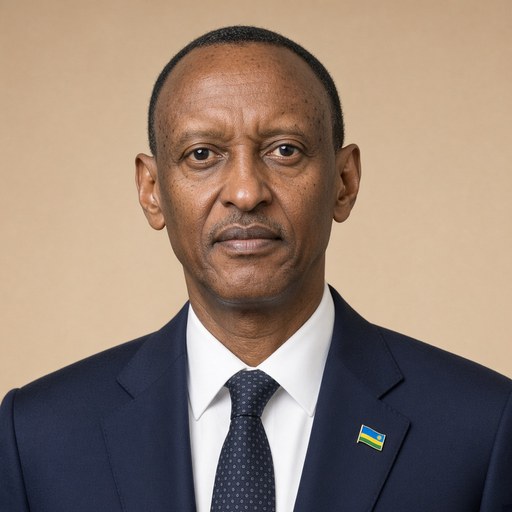
- Kagame addressed the launch of the Loomba Trust Entrepreneur Project in Rwanda on April 6, 2009, during the fifteenth genocide commemoration, to empower 600 widows.
- Main themes
- Widows empowerment, Loomba Trust entrepreneur project, 1994 genocide legacy, women-led households, legal reforms for women, income-generating activities, Rwanda's reconstruction, cooperatives and self-organization, government support programs, reconciliation and forgiveness, entrepreneurship
- Duration
- ~5 min
- Words
- 644
- Sentences
- 23
- Readability
- 29
- Grade
- 14.9
- Syntax
- 3.04
- Vocabulary
- 2.40
The broad sphere of national life a sentence belongs to. Every sentence has an Arena, so it is the denominator the other indices are read against.
Other23 sentences in 15 paragraphs
I am delighted to join you tonight as we launch the Loomba Trust in Rwanda, and inaugurate the Loomba Trust Entrepreneur Project aimed at empowering six hundred widows in our country. This is highly appreciated.
Allow me also, if I may, to congratulate you, Mr. Raj Loomba and Mrs Cherie Blair, for your efforts to designate an international day for widows.I welcome you to Rwanda – and express my sincere gratitude that you are joining us during our fifteenth commemoration of the 1994 genocide.
The contemporary situation facing Rwandan widows is challenging but hopeful. Presently, twenty seven percent of the five and a half million households in Rwanda are led by women, a quarter of which are headed by girl-children.
The dynamics of the widow population in our country have a lot to do with the 1994 genocide which drastically increased their numbers.The challenges facing this segment of our society mirrors that of the country as a whole – in the last decade and a half we have been rebuilding our lives, and today, Rwanda is fundamentally different from what it was fifteen years ago.
For instance, recent legal reforms have sought to address past discrimination against women and girls in general – and have brought about considerable positive changes for Rwandan widows. As a result of these reforms undertaken since 1999, including land, inheritance and organic laws, a widow can now inherit from her union, her parents, and from in-laws.
Besides these legal modalities, moral, material and financial support for widows and their families is provided by both government and non-governmental actors. National policies to directly support widows include shelter – a provision in public housing (imidugudu) ensures that units are reserved for them.
This is also true in the case of the national community health insurance scheme in which government pays the contributions of those who cannot pay for themselves.
It is important to note that some widows have stable incomes – in other words, not all of them fall in the category of vulnerable segments of our society.
Another important support mechanism for the Rwandan widows is training for income generating activities – we considered this critical, and that is why there is a specific budget for this program in the Ministry of Gender and Family Promotion.
In addition, faith-based organisations, local and international non-governmental organisations actively support widows and their families. Rwandan widows have also been at the forefront of seeking their own creative solutions, something that tells us that they are not just recipients of charity – they are actively organizing themselves in cooperatives especially in agriculture, animal husbandry, weaving and other business activities.
In some cases, these Rwandan women have gone to remarkable lengths to improve their lives. In the Southern and Eastern Provinces of our country, for example, genocide widows together with women whose husbands are in prison for genocide crimes, joined forces to enhance their livelihoods through various income-generating activities.With their earnings, these women are able to cater for their own needs, as well as the needs of the prison inmates. Together they visit the inmates, and encourage them to confess and seek forgiveness – they also collaborate in maintaining genocide memorial sites.
This narrative is the story of Rwanda itself – of finding practical and home-grown solutions for our specific challenges.
I end by noting that the main challenge of widows, women, and Rwanda in general is that of confronting structural features and mindset that still hinder prosperity creation in our country. We are working hard to change these – and in this respect I once again thank you Mr. Loomba, Mrs Cherie Blair and Loomba Trust colleagues for your partnership in promoting entrepreneurship among Rwandan widows.This is an important pathway to enable individuals to improve themselves, strengthen their own communities – and ultimately build our country.
I thank you for your kind attention.
Save