




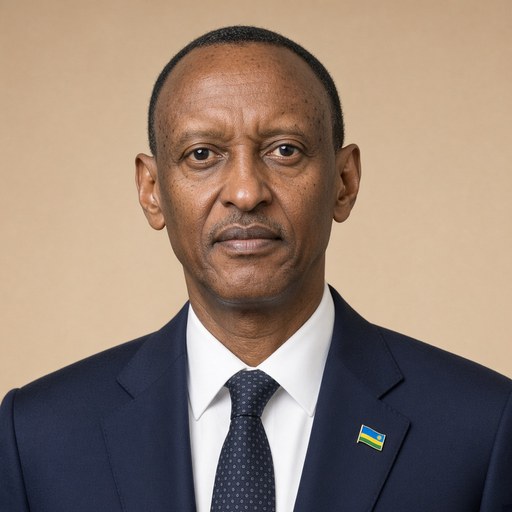
MESSAGE FROM PRESIDENT KAGAME AT THE CEREMONY OF WELCOMING NEW LEADERS IN THE MINISTRY OF INFRASTRUCTURE.
 Paul Kagame · President of Rwanda
- Context
- Kagame addressed a ceremony welcoming new Ministry of Infrastructure leaders on February 8, 2022, stressing accountability and the consequences of leadership negligence.
- Main themes
- Leadership accountability, negligence and follow-up failure, public service delivery, welfare of vulnerable citizens, livestock and agricultural programs, social media as citizen feedback, government oversight, Rwanda's development goals
- Duration
- ~35 min
- Words
- 4,190
- Sentences
- 231
- Readability
- 72
- Grade
- 7.7
- Syntax
- 2.75
- Vocabulary
- 1.82
Translated from Swahili
The broad sphere of national life a sentence belongs to. Every sentence has an Arena, so it is the denominator the other indices are read against.
Other231 sentences in 33 paragraphs
Hello everyone,
Honorable guests here, starting with those from the highest levels of our government, the diplomats representing their countries and other international organizations, honorable guests and Rwandans following us. First, I would like to thank those who have brought us this oath. Normally, they had other jobs they were doing, but now they are continuing to work in other sectors as appropriate.
I think we need to reiterate often that the work we do is for our country, we work in different sectors, and it is clear that it depends on where we come from as a country and where we want to go. In the meantime, it also depends on our operations and capabilities, and they must also add willingness.
It should generally be understood without needing to be repeated every day, but when it comes to actions and the outcomes of those actions, that is where it becomes evident that perhaps what we think is understood or easy to grasp is not the case.
Many people, in terms of rhetoric and action, and achieving goals, often do not see it that way. However, that does not prevent us from reiterating so that one continues to emphasize the weight of those things we should often be doing but perhaps are not. Even when we do not do them sometimes, it is not because there is a clear reason preventing us. No, it is a reason I would tell you, we forgot. Do you forget all the time?
Forgetting is possible. People forget, but can you forget all the time? Can you forget the important things? Things that people can lose their lives over, things that can cause people to lose their lives if forgotten? A person, things could die for you if you forget! Or, do you think about it? In all the things you were considering, you were not thinking about the people you are working for. Starting from yourself, the interests became yours, what others will wait for may or may not reach them. You thought about those you consider yours, other Rwandans, whatever happens, that will come later.
That is where things fall apart, that is where they die. Negligence. I will give you a few examples. This is how we help vulnerable people, we put in a lot of effort to do what is possible, we build houses for them in various programs, we have things we give them to use to sustain themselves or those we have given cows to so that they can sustain themselves… and so on. If you were to follow up, following up is also difficult, it is challenging. Following up, for leaders, is hard. But where people will suffer, someone speaks up, the houses we built for them, some of those houses collapsed or just fell because there was no follow-up to see if anything was not in order.
The cows that were given, given to the citizens, you will find that the leaders are the ones who took them. They gave them. Those who were supposed to give them did not take care of them, they took care of nothing, nothing reached them. It is there, it is known. When it comes to Nyagatare, in the villages, leaders should be following up on what was put in place to help the citizens where they graze cows, a leader comes and puts in their own cows while the citizens' cows die or seek elsewhere. Or they must sell them because they cannot find where to graze them because everywhere is taken by a leader.
Recently, I was following social media often, and I saw a citizen, citizens crying out on social media, talking about animals that have harmed their livestock near Gishwati, in Nyabihu I believe. Upon seeing this, I took my phone and called some leaders. I started with security, asking the police: do you know about these things, have you seen them? Are you following up? They said they had seen them. This was written, and the time it took, and the livestock of the citizens had already been killed by those animals, did you know? Did you know all that time? Honestly, without shame, they told me they were aware. Every leader I called told me they were aware. I asked them, okay, you were aware, what did you do? Then they started telling me that they were going to do something about it. You see, I said that is not the question I asked, the question I asked was to say you have known for a long time, what did you do? I am not asking you what you are going to do? I am asking you what did you do or what prevented you from doing it? They told me they knew about that issue since 2019.
Over 50 livestock have died. Cows, people's livestock, since 2019. So, leaders, when that disease is among leaders, how can one treat it? What is it? How do you perceive it? And as it goes, it reaches everyone here, you sitting here, and others who are not here. Does it mean that no leader knows or reaches Nyabihu? Leaders go there but are taken there for other reasons that are not to see what is happening in Nyabihu, the problems that need to be solved are there. Since 2019, when I mention many other things that come up on social media. When I ask about health, education, agriculture, and livestock, when I ask ministers: but how? Did you know about this? The answers I get, you tell me you know but do nothing about it, how did you come to know this? Or what is your role as a minister? If you say you do not know, one could ask, does this minister here or another leader here not know the things happening in the country that harm the citizens, what are they doing? What are they there for?
I used to say that perhaps you should look at the disease of Covid-19 that changed things, that made us wear masks. If they had been wearing them on their faces, I would say they do not see, but it also has left us something. At least we cover our mouths but we do not cover our eyes, we do not cover our ears. We should be seeing, we should be hearing. But I think the reason is that masks cover places you use a lot without anything coming out. People talk a lot more than they act, I think it has also done us good by covering our mouths so that perhaps they see that we should use our ears or eyes.
Leaders therefore, coming here to participate in ceremonies, swearing in people, how do we do it, just as they call it a tradition, hhhhh. It is indeed a tradition. It is coming to swear in and taking a flag and going out. People doing what they swore to do is a problem. They should evaluate it or at least we should just put people in place, we should announce on the radio and on TV that people should not come here to deceive others. Swearing to do what you know you will not do is of no use. Ultimately, I think I will ask you to stop swearing, let us put people in place, we make an announcement on the radios to stop wasting people's time and coming to deceive them. People swear to do what they will not do.
Let me put that aside. I would like to take this opportunity to bring to your attention some things we have not had the time to discuss publicly like this, to discuss with the assembly that should be informed in a special and public manner, and also for the citizens to follow. These are activities of Rwanda. Let me start outside our country. I will come back to what we do inside the country, or what we should be doing again. I think I will start with the region we share, the countries we share borders with, our relationship.
Starting with Burundi, I think recently, you saw our leaders meeting with the leaders of Burundi at the borders or in Burundi.
Recently, the President of Burundi sent me a message, he sent envoys with his message, wanting us to continue the path of building a relationship between our two countries. I would say that there is a step being taken that is encouraging. I think in the coming times the relationship will continue to improve, and Burundians and Rwandans will live together as they should, as it used to be. Even the issues that used to cause other security problems related to the border that you follow in Kibiri-Nyungwe, it is one forest, there are people armed crossing over to attack Rwanda and then retreat into the forest, we are going to agree with the Burundians on how we will address that issue so that it is resolved permanently. Those behind it will have more trouble. Otherwise, it was not a very difficult thing. It is like a menace but it will be resolved better. That is about Burundi, I think I will leave it there, you will be informed about other things in the future.
There is Uganda, our northern neighbors with whom we had problems even during the border time, not all of it, at Gatuna but it is the main part that is heavily used, it has been closed for a while. But when I say the border was closed, I would say it is an action that Rwanda took, it closed the border. On the other hand, there was a reason for the border to be closed. The border did not just close, so people wake up in the morning to find the border closed. There are reasons, there is where it came from. The problem has always been to say that the border cannot be opened without addressing the reasons that caused it to be closed. Then in the recent days, there was a way for Ugandans to send envoys, but there were also others who were already coming, other envoys who were already coming, and it was just discussions without any conclusion.
When that envoy brought a message, in the discussions we agreed that there are things we could do, but I continue to say that opening the border is good but opening the border without addressing the reasons that caused it to be closed is not right, it cannot even happen. There must be an agreement that the issues that caused the border to be closed will also be addressed.
If you remember, let me take you back a little, not long ago, Rwandans in Uganda were hunted like game. There was something called Rwandans going to Uganda to spy, they were spies. Otherwise, I used to hear a little about it, about spying. But to send all Rwandans to go spy, to send hundreds, thousands, to go spy, to send even children and old people… the cost of that, I do not know if it would equal what you would want from that spying. You would be a very extreme fool, and it would be that Rwandans were hunted or were being hunted as Rwandans who feel that their home is in Rwanda have no problem with Rwanda. But someone who has a problem with Rwanda was not taken, they would not be a spy. But even in that spying, I know little, but as it is, I would send people who insult Rwanda so that they are received well and used. But to take every Rwandan who says they have no problem with Rwanda and send them to spy, someone who knows how to spy would send someone who says they have a problem with Rwanda.
Then there are also our enemies operating in Uganda. If you remember well, there were people who once attacked in Kinigi, very few were caught, all the others crossed over to Uganda, and then they told us they had been arrested and then we heard they had reached DRC where they returned, that is where they had come from. We discussed all that with Ugandans, but we told the leaders of Uganda. There is a lot, I will not spend time repeating it. We told them that nothing is better than us living well together, rather than supporting or doing things that do not benefit them because all those, whether they are here, whether they are outside, whether they are doing well, if they thought again, I tell you often that they cannot achieve anything, their days are numbered, they just get closer without anything else.
So that path is also there, we are opening the border, Gatuna… it is also clear that we opened it in a way, we even mentioned it in the documents we told them we work with, it is to open it in a way that we avoid COVID-19 as well. That is it, Covid-19 if it treats us well… and we have also established that we must agree, the leaders of Uganda and Rwanda looking at health should meet and establish a way that the issue related to Covid-19 can be addressed in a way that does not cause problems on either side whether it is Uganda or Rwanda.
So the border was closed, we opened it. In Uganda, there are also things that have started to show that they are removing obstacles or those things that caused the border to be closed they are removing them from the way. It is evident. We are closely monitoring it. We are discussing it with them. I believe we are also on the right path.
As for DRC, I think I will leave it and tell you later because it could be very long. But we are also following it, we are closely monitoring it. Our enemy has been there for over 25 years, it is still there in such a way that even the actions put in place to combat that issue seem to have left the problem to continue growing. I think that could also be providing jobs for some people, it continues, it continues, people are paid to solve that problem. But I cannot understand how a problem can last for twenty years and take how many billions of dollars but remains a problem there. You see that there must be something that does not make sense. I have no way to explain it. That is why I do not want to dwell on it too much. However, what I would return to is to say that whatever it is, whether it comes from anywhere in the region I have just mentioned, it continues to last for 3, 5 years and comes back, lasts for 3 or 5 years and comes back, it keeps putting us under pressure as Rwanda, perhaps it will continue, I do not know. But what I would say and you must know is that we are always ready to confront it. That is not a problem, it does not prevent us from progressing as we should. If it is to coexist with it, we will coexist with it as long as we work… But otherwise, we want peace here in the country. We want peace in the region. We wish everyone peace. We do not wish anyone insecurity nor do we wish anyone little peace. But if you wish us war, we will fight it. That is not a problem, that is not a problem at all. We have professionals who do it properly. Here, and elsewhere. Especially because we are a small country, our doctrine is that where the fire comes from is where we find it, we do not let it reach here because we are a small country, we do not have the space to fight. We will fight where the war came from, they have the space to fight. That is how it goes.
From that, I would say two other things, which you should have known. It is the Central African Republic. In the Central African Republic, we have two types of forces. We have forces working under the UN. We also have forces in a bilateral manner that we have worked with the Central African Republic. Their reason also came from the fact that there were security issues in that country that we could not work on under the UN because in the UN when you work there you are governed by UN regulations, you are somewhat bound. Therefore, we found that we would not contradict UN laws, we will respect them. But those other things that needed to be resolved were not to be done under that framework. We do it under bilateral arrangements.
This means that the mandate and rules of engagement are different; there are those of the UN and there are bilateral ones. Because with the UN, they tell you it’s peacekeeping, so if there is no peace, what do you keep? What do you keep? So, this means that in a bilateral arrangement we create peace and then the peacekeepers can keep the peace. That’s what happened. But we do all this in agreement with other countries or with the organizations that govern us or with which we should be cooperating.
Now, in both of these, there has been security in the Central African Republic; the remaining issues are those of the country’s owners. We cannot get into the politics of the country to choose a leader or decide how they should proceed. That is not our responsibility. So, we create peace, we keep peace, and then the country’s institutions and people will do whatever they want to do for themselves. That’s their business. At that point, it’s none of our business; we do not get involved in the politics of CAR or anything. No, we just get involved in peace and security matters under those two arrangements. That’s what we are doing. I want the parliamentarians to understand this, especially those who are here, to know how your institutions operate, what Rwandans are doing, what the Rwandan forces and police are doing, and what other security agencies are doing there.
Then Mozambique. Mozambique has also had a significant problem for some time; terrorist groups have taken over a large part of the country in a place called Cabo Delgado. Cabo Delgado province alone is three times larger than Rwanda. Just the province. It had been taken over by terrorist groups. The owners of that country asked various countries to help resolve that issue, including Rwanda. Then we agreed that we would help them, and we did; a large part of Cabo Delgado is now secure. The Rwandan forces, police, and all other security agencies went in, working with the local population, collaborating with the Mozambican forces to resolve that issue. I can say that about 85% has been resolved; 15% are small areas of those remaining people who fled and are moving to other areas where they were not before, and they are being pursued to ensure they are cleared out as well.
Another point I would add is that because of this, we have also apprehended some terrorists here in Rwanda who are collaborating with terrorist groups in the DRC, known as ADF. That is why ADF is a regional problem; it’s not just a problem for one country or two. So, we found that these people are collaborating with those from the DRC who have activities they want to carry out here in Rwanda, but we caught them before they could do so, and they even said that what they were doing was to avenge those who share their ideology and actions in Cabo Delgado, Mozambique. They were avenging them, claiming that they wanted to harm Rwanda because it went to Mozambique to fight those groups. That is what makes the issue we are watching closely also a problem from the DRC. Although I said I wouldn’t dwell on the DRC, the reason we are watching the DRC is FDLR and other groups in the DRC that could mix with ADF because you can already see that there is a connection. We are keeping an eye on that. But we will resolve it as it should be resolved.
There are times we negotiate, there are times we agree, there are times we ask, and there are times when it goes beyond a limit where we have no one to ask, and we resolve the issue as it should be resolved. We are still in those stages of understanding, of seeking ways in which we all should agree on how the issue affects us. But if we do not agree and it leads to compromising the security of Rwanda because others ignore what we asked of them, that is where it leads us to take necessary actions whether we agreed or not.
The security of Rwanda is a priority. Among all our priorities, security is the first. It comes first because nothing else is possible without security. Therefore, those who continue to think that we do not take it seriously are mistaken. They choose to use foreign media, other people outside who come and incite people, and some have turned Rwanda into a tool, a threat they always use to scare us, claiming that Rwanda has caused insecurity, Human Rights in Rwanda, dictatorship in Rwanda […] that had become a bad music we ignored. Yes, if we had been listening to them, we would not have reached where we are now. We let them shout, but we carry out actions and we let people argue with the facts; we will not go arguing about every little thing that happens, explaining ourselves… When we have time, we explain ourselves. We make time for that. If you insult me, I can ignore you, and then if necessary, I can respond. So, if you want a fight, we fight. So, what’s the problem?
But for us, the issue of security, people joke when they think… there are people you see all those outside, of course, and some countries want to support them, but it is done with shame. Even those who support them are also ashamed. They hide behind those people and say they are people denied peace, denied peace by Kagame. Here I am, even if you go on the internet, I am known as a person who denies people peace. That does not affect me. You can come and meet me, no problem. And those we forgive here, some are in prison, they are there as genocide perpetrators, and they come out and are called democrats, claiming to fight for freedom. A genocide perpetrator fighting for freedom? How? When you see people forgiving you, and you find that the tongue only speaks, that means nothing… all those others who are out there will eventually grow old while we are here, we are working for ourselves. Everyone’s time will pass, but mine will pass while I am in the country, hhhhh it will pass… you know aging at home and aging… what they call being a burden. Being a burden in Kinyarwanda you know it? Aging while being a burden, I think there is…. now, those who believe in God, when they get there, God will hold them accountable. He will hold them accountable for why they were a burden, what burdened them?
So, regarding Mozambique, what I wanted to tell you is that… but both are ongoing, it will take time. It is a place we see will take time; I cannot fail to warn you to tell you that it will take time for security… to restore it is easy, but preparing those we partnered with to be able to face their issues in the future is what will take time. That is what will take time, whether in Mozambique or in CAR, we may have time to spend there. I want you to be aware of this, be prepared. But there is no gap left here. To say that people are going outside to solve problems elsewhere in collaboration with the owners of the problems but forgetting here, we will not forget here. That is where we start. Nothing will be compromised at all.
I just want to warn you, and each of us should work together to ensure our country progresses, that we ourselves here in the country progress, that we progress together with others we work with, and contribute in ways that can help. Let’s continue from there; the rest are easy things, let no one lose hope or think… there are times you look and find that there is chaos? That would be looking at it wrongly. You should take off the… masks you have on your faces and put them on your mouths and noses only, and see how things should be seen. Isn’t that so? Let me stop there; I have taken too long….
Have a good day.
The original Swahili. The tags above are read on the English translation's sentences.
Muraho neza mwese
Banyacyubahiro muri hano, guhera ku bo mu nzego nkuru z’igihug cyacu, aba diplomats bahagarariye ibihugu byabo n’indi miryango mpuzamahanga, banyacyubahiro mwese n’Abanyarwanda badukurikira. Ndabanza nshimire abamaze kutugezaho iyi ndahiro. Ubusanzwe bari basanzwe bafite indi mirimo bakoraga, ubu ni ugukomeza rero mu zindi nzego gukora imirimo yindi uko bikwiye.
Ngira ngo tubisubiyemo kenshi, iyi mirimo dukora dukorera igihugu cyacu, dukora mu nzego zitandukanye, birumvikana biraterwa naho tuva nk’igihugu naho twifuza kugana. Hagati aho rero nanone biterwa n’imikorere yacu, n’ubushobozi, bagomba kongeramo n’ubushake.
Ubundi byari bikwiye kuba byumvikana rwose bitagomba gusubirwamo buri munsi, ariko iyo bigeze mu bikorwa n’ibiva muri ibyo bikorwa, niho bigaragarira ko wenda ibyo tuba twibwira ko biba byumvikana cyangwa se ko byoroshye kumva ko atari ko bigenda.
Abantu benshi kubusanya imvugo n’ingiro, no kugera ku ntego kenshi si ko tubibona. Ariko ntibibuza kubisubiramo kugira ngo umuntu akomeze avuga uburemere bw’ibyongibyo tuba dukwiye gukora kenshi wenda tudakora. Ndetse tudakora rimwe na rimwe atari uko hari n’impamvu igaragara yumvikana yabitubujije. Oya. ni impamvu nakubwira, twibagiwe. Ubu se wibagirwa buri gihe?
Kwibagirwa birashoboka. Abantu baribagirwa, ariko wakwibagirwa buri gihe? Wakwibagirwa mu bikomeye se? Ibintu abantu bashobora gutakazaho ubuzima, ibintu bishobora gutuma abantu batakaza ubuzima ukibagirwa? Umuntu, ibintu byapfa kuri wowe wibagiwe! Cyangwa se, wibanje? Mu byo watekegerezaga byose ntabwo watekerezaga abantu ukorera. Wihereyeho, inyungu zabaye izawe, iby’abandi bazategereze byabageraho bitabageraho. Wibanje, wabanje abo wita abawe, abandi Banyarwanda uko byagenda kose ibyo bizaba biza nyuma.
Ni ho ibintu bigwa, ni ho bipfira. Uburangare. Ndagenda mbaha ingero nkeya. Ibi ngibi dufasha abantu batishoboye, tugashyiramo imbaaraga nyinshi tugakora ibishoboka, tukabubakira amazu muri porogaramu zitandukanye, tukagira ibyo tubaha bakoresha kugira ngo bibatunge cyangwa se abo twagiye duha inka ngo bazitunge, zibatunge… bityo. Wajya gukurikirana, ubwo gukurikirana nabyo birakomeye ubundi, biragoye. Gukurikirana, ku bayobozi biragoranye. Ariko aho abantu bazaremberaaa hakagira ubivuga, amazu twabubakiye twabashyizemo, amwe, bamwe, ayo mazu yabaguye hejuru cyangwa se akagwa gusa kuko yabuze gikurikirana ngo niba hari ikitaratunganye gitunganywe.
Inka zatanzwe, zahawe abaturage, ukazasanga abayobozi nibo bazitwariye. Barazihaye. Abo bagombaga kuziha batahira aho, batahira ubusa, ntihagira ikibageraho. Birahari, birazwi. Iyo za Nyagatare, mu midugudu, abayobozi bakwiriye kuba bakurikirana ibyashyizwemo kugira ngo bifashe abaturage ahantu bororera inka umuyobozi akaza akishyiriramo ize iz’abaturage zigapfa cyangwa zigashaka ahandi. Cyangwa se bakagomba kuzigurisha kuko badashobora kubona aho baziragirira kubera ko hose hatwawe n’umuyobozi.
Ejobundi aha, nkurikira, ndeba social media kenshi, nza kubona umuturage, abaturage batakamba kuri social media, bavuga inyamaswa zabamariye amatungo hafi na Gishwati, muri za Nyabihu ngira ngo. Mbibonye, mfata telephone ntelefona abayobozi bamwe. Mpera kub’umutekano, mbaza abapolisi: ibi bintu murabizi mwabibonye? Aha hantu murahaba, murakurikira? Bati twabibonye. Ibi byanditswe, n’igihe bimaze n’amatungo y’abaturage amaze kwicwa n’izo nyamaswa, murabizi? Mwari mubizi icyo gihe cyose? Rwose nta soni, nta ki, bambwira ko bari babizi. Umuyobozi nterefonnye wese akambwira ko bari babizi. Ndababaza, nti ok mwari mubizi, habaye iki, mwakoze iki? Ubwo bagatangira bakambwira noneho ko bagiye kubikora. Urumva ndavuga nti ntabwo ari cyo kibazo nabajije, ikibazo nabajije ni ukuvuga ngo mumaze igihe mubizi, mwakoze iki? Ntabwo nkubajije ngo mugiye gukora iki? Ndakubajije ngo mwakoze iki cyangwa mwabujijwe n’iki kugikora? Barambwira ngo icyo kibazo bakizi muri 2019 guhera uwo mwaka.
Hamaze gupfa amatungo arenze 50. Inyana z’inka, amatungo y’abantu, guhera muri 2019. Ubwo abayobozi, nk’ubwo iyo ndwara iba iri mu bayobozi umuntu ayivura ate? Ni iyihe? Muyumva mute? Kandi uko bigenda bikagera kuri buri wese uri hano, wicaye hano, n’abandi badahari. Ni ukuvuga se ko nta muyobozi uzi cyangwa ugera muri Nyabihu? Ubwo abayobozi bajyayo ariko bakajyanwayo nibindi bitari ukureba ibiri muri Nyabihu, ibibazo byo gukemura bihari. Guhera muri 2019, ubwo navuga nibindi byinshi bijya biza kuri social media. Ubwo nkabaza, abavuga ibijyanye n’ubuzima, ibijyanye n’uburezi, ubuhinzi n’ubworozi ubwo nkabaza, nkabaza abaminisitiri: ariko bite? Ibi mwari mubizi? Ibisubizo mbona, unambwiye ngo urabizi ariko ntacyo ubikorera, wabimenyeye iki se? Cyangwa se ubereye iki kuba minisitiri? Uvuze ngo ntubizi nabyo umuntu yakwibaza ati, uyu minisitiri uba hano cyangwa undi muyobozi uri aha utamenya ibintu biri mu gihugu bigirira nabi abaturage, ubundi we amaze iki? Abereyeho iki?
Najyaga kugira ngo wenda urareba nk’indwara ya Covid-19 yaciye ibintu, yatumye twambara udupfukamunwa. Iyo biza kuba babwambara ku maso, najyaga kuvuga ngo ntabwo babona, ariko nayo ifite icyo yadusigiye. Nibura dupfuka umunwa gusa ubundi ntabwo dupfuka amaso, ntidupfuka amatwi. Twari dukwiye kuba tubona, twari dukwiye kuba twumva. Ariko ngira ngo impamvu ni uko masks zipfuka ahantu mukoresha cyane hatagira n’ikivamo. Abantu baravuga cyane gusa kurusha gukora ngira ngo nayo yatugiriye neza idupfuka iminwa ngo wenda bareba ko twakoresha amatwi cyangwa amaso.
Abayobozi rero, kuza hano tukajya muri ceremonie, kurahiza abantu tukagira dute, nyine nkuko babyita ngo ni umugenzo, hhhhh. Ni umugenzo koko. Ni ukuza mukarahira mugafata idarapo mukisohokera. Abantu gukora n’ibyo barahiriye ni ikibazo. Bakwiye kugisuzuma cyangwa se nibura tujye dushyiraho abantu gusa, turange ku iradiyo no kuri tv abantu bitahire aho kuza hano gushuka abantu gusa. Kurahirira ibyo uzi utazakora nta kamaro byaba bifite. Amaherezo ngira ngo nzabasaba twekwirirwa turahira, dushyiraho abantu, dukore itangazo ku maradiyo twitahire tweguta igihe cy’abantu no kuza kubashuka. Abantu barahirira ibyo batazakora.
Ibyo reka mbe mbishyize iruhande. Nagira ngo mbonereho umwanya mbagezeho ibintu bimwe tutagiye tubonera umwanya wo kuganira mu ruhame nk’uku, kuganirira inteko iba ikwiye kubigezwaho ku buryo bw’umwihariko kandi ku mugaragaro, ndetse n’abaturage bakabikurikira. Ni ibikorwa by’u Rwanda. Reka mpere hanze y’igihugu cyacu. Ndaza kugaruka ku byo mu gihugu imbere dukora, cyangwa dukwiye kuba dukora nanone. Ngira ngo mpere ku karere nabo dufitanye, ibihugu dufitanye imbibi, umubano wacu.
Mpereye ku Burundi, ngira ngo ubushize, mwabonye abayobozi bacu bagiye bahura n’abayobozi b’u Burundi ku mipaka cyangwa I Burundi.
Vuba aha President w’ Uburundi anyoherereza ubutumwa, yohereza intumwa zizanye ubutumwa bwe, bashaka ko dukomeza nanone inzira yo gushaka kubaka umubano hagati y’ibihugu byacu byombi. Navuga rero ko hari intambwe igenda iterwa ishimishije. Ngira ngo mu bihe biri imbere umubano uraza kugenda urushaho kuba mwiza, n’Abarundi n’Abanyarwanda babane uko bikwiriye, uko byari bisanzwe n’ubundi. Ndetse n’ibyajyaga bitera ibibazo bindi by’umutekano bijyanye no ku mupaka mujya mubikurikira muri za Kibiri-Nyungwe, ni ikibira kimwe, hari abantu bitwaje intwaro bambuka bagatera u Rwanda bakongera bakaburira mu kibira, ibyo turagenda tubyumvikanaho n’Abarundi uko tuzagenda icyo kibazo kugira ngo kiveho burundu. Aba biri inyuma rero bazarushaho kugira ibyago. N’ubundi ntabwo ari ikintu cyari kigoye cyane. Ni nka menace ariko ubundi ubwo biraza kurushaho gutungana. Ibyo ku Burundi ngira ngo naba mbirekeye aho ngaho, ibindi muzabigezwaho mu bihe biri imbere.
Hari Uganda, abaturanyi bacu bo mu majyaruguru nabo twari dufitanye ibibazo ndetse n’’igihe cy’umupaka, ntabwo ari wose, kuri Gatuna ariko ni cyo gice kinini gikoreshwa cyane cy’umupaka, hari hamaze igihe harafunzwe. Ariko ubwo mvuga ngo umupaka warafunzwe, navuga ko ari igikorwa u Rwanda rwakoze, rwafunze umupaka. Ku rundi ruhande hari icyatumye umupaka ufungwa. Ntabwo umupaka wapfuye gufungwa gusa, ngo abantu babyuke mu gitondo basange umupaka ufunzwe. Hari impamvu, hari aho byaturutse. Ikibazo rero iteka hahoze ari ukuvuga ngo umupaka ntabwo ushobora gufungurwa ibyatumye ufungwa bitabanje ngo bikemuke, bive mu nzira. Hanyuma muri iyi minsi ishize, habaho uburyo abanya Uganda batumye intumwa, ariko hari n’izindi zari zisanzwe ziza, izindi ntumwa zari zisanzwe ziza, bikaba impaka gusa zitagira gica.
Iyo ntumwa yazanye ubutumwa, mu biganiro twumvikana ko twese hari ibyo twakora, ndetse ariko jye nkomeza kuvuga ko gufungura umupaka ni byiza ariko gufungura umupaka udakemuye icyatumye umupaka ufungwa ntabwo ari byo, nta nubwo byakunda. Habaho kwemeranya ko n’ibyateye umupaka gufungwa nabyo bigiye kwitabwaho.
Niba mwibuka, mbasubije inyuma gato, ni ukugeza aha si kera, Abanyarwanda muri Uganda barahigwaga nk’uhiga inyamaswa. Hakabaho ikintu cyitwa Abanyarwanda ngo bajya muri Uganda gutata, ni intasi. Ubundi ibyo najyaga mbyumva hari icyo mbiziho gito, byo gutata. Ariko gutata ukohereza Abanyarwanda bose kujya gutata, ukohereza abantu Magana, igihumbi, kujya gutata, ukohereza n’abana n’abakecuru… ikiguzi cya byo sinzi ko cyaba kingana n’ibyo waba ushaka muri uko gutata. Waba uri umuginga ukabije, kandi bikaba ko Abanyarwanda bahigwa cyangwa bahigwaga ni Abanyarwanda bitwara nk’Abanyarwanda bumva ko iwabo ari i Rwanda nta kibazo bafitanye n’u Rwanda. Ariko uwaba afitanye ikibazo n’u Rwanda ntabwo bamufataga, ntabwo yabaga ari intasi. Ariko no muri ibyo byo gutata ibyo nzi bikeya, ariko uko bimeze najya nohereza abagenda batuka u Rwanda kugira ngo noneho babakire neza babakoreshe. Naho gufata buri munyarwanda wese uvuga ko nta kibazo afitanye n’u Rwanda ukamwohereza gutata umuntu uzi gutata yakohereza noneho uvuga ko afitanye ikibazo n’u Rwanda.
Ibyo hanyuma n’abanzi bacu bakoreraga muri Uganda. Niba mwibuka neza, hari abantu bigeze gutera mu Kinigi, abasagutseho bakeya cyane, abandi bose bahasigaye bambuka bajya muri Uganda, barangije batubwira ko babafunze hanyuma tugiye kumva twumva ngo bageze muri DRC aho basubiye, nubundi niho bari baturutse. Ibyo byose tukabiganira n’Abanya Uganda, ariko tukabibwira abayobozi b’abanya Uganda. Ni byinshi cyane, ntabwo nirirwa mbisubiramo. Twababwiye rero ko nta kiruta ko twebwe twabana neza, kuruta ko bashyigikira cyangwa bakora ibintu bitagira icyo bibagezaho kuko abo bo bose, ari abari hano, ari abari hanze, ari abagira bate, niba bumvaga nanone mbibabwiye kenshi nta kintu na kimwe bashobora kugeraho ni iminsi yabo iba ibaze bagenda begera gusa nta kindi.
Ubwo rero iyo nzira nayo iriho, umupaka turawufungura, Gatuna … nanone birumvikana twawufunguye ku buryo, twaranabivuze no mu nyandiko twabibwiye nabo dukorana nabo, ni ukubifungura ku buryo twirinda na COVID-19 nayo. Ni ibyo gusa, Covid-19 nitugirira neza nayo […] kandi twanashyizeho tugomba kumvikana, abayobozi ba Uganda nab’u Rwanda barebana niby’ubuzima bakwiye guhura bagashyiraho uburyo icyo kibazo kijyanye na Covid-19 cyakwitwabwaho ku buryo bidatera ikibazo uruhande urwo ari rwo rwose rwaba Uganda cyangwa rwaba u Rwanda.
Ubwo rero umupaka warafunguwe, twarawufunguye. Muri Uganda naho hari ibyo batangiye bigaragara ko bavana za nzitizi cyangwa byabindi byatumye umupaka ufungwa bagenda babivana mu nzira. Biragaragara. Turabikurikiranira hafi. Turabiganira nabo. Ndibwira ko nabyo turi mu nzira nziza.
Ibya DRC ngira ngo naba mbyihoreye nkazabibabwira ubundi kuko bishobora kuba birebire cyane. Ariko nabyo turabikurikirana, turabikurikiranira hafi. Umwanzi wacu umaze imyaka irenga cyangwa igera kuri 25 aracyahari, aracyahari ku buryo ndetse ibikorwa byashyizweho bigiye kurwanya icyo kibazo bisa nk’aho ikibazo ahubwo bakiretse kigakomeza kigakura. Ngira ngo nabyo bishobora kuba birimo gutanga akazi k’abantu bamwe, bihoreho, bihoreho abantu babyishyurirwa ngo barakemura icyo kibazo. Naho ntabwo nshobora kumva na rimwe ikibazo gishobora kumara imyaka makumyabiri n’ingahe kigatwara miliyari mirongo ingahe z’amadorali ariko kigakomeza ari ikibazo kiri aho ngaho. Ubwo urumva ko hagomba kuba hari ibintu bitumvikana. Jye simfite uko nabisobanura. Ni yo mpamvu ntashaka kubitindaho cyane. Ariko, icyo nari bugarukeho, ni ukuvuga ngo ibyo ari byo byose, ari ibyagiye bituruka aho hose mu karere nari maze kuvuga, bigenda bikamara imyaka 3, 5 bikagaruka bikamara 3 cyangwa 5 bikagaruka bigahora bidushyira ku nkeke nk’u Rwanda, wenda bizakomeza simbizi. Ariko icyo navuga kandi mugomba kuba muzi, ni uko duhora twiteguye guhangana nabyo. Ibyo nta kibazo, ntibitubuza gutera imbere uko bikwiye. Niba ari ukuzabana nabyo gutyo igihe cyose tuzabana nabyo dukore … Ariko ubundi twebwe twifuza amahoro hano mu gihugu. Twifuza amahoro mu karere. Twifuriza buri wese amahoro. Ntawe twifuriza umutekano muke nta n’uwo twifuriza amahoro make. Ariko utwifurije intambara nayo turayirwana. Ibyo nta kibazo, ibyo nta kibazo rwose. Dufite abanyamwuga babyo babikora uko bikwiye. Haba hano, haba n’ahandi. Cyane cyane ndetse kubera twebwe ko turi agahugu gato, ubu doctrine yacu aho umuriro uturutse niho tuwusanga, ntabwo dutuma ugera hano kugira ngo, turi agahugu gato nta mwanya dufite wo kurwaniramo. Tuzarwanira aho intambara yaturutse bo bafite umwanya wo kurwaniramo. Ni ko bigenda.
Mvuye kuri ibyo rero navuga ibindi bibiri, nabyo mwari mukwiye kuba mwaramenye. Ni Central African Republic. Central African Republic dufiteyo ingabo z’ubwoko bubiri. Dufiteyo ingabo zikorera muri UN. Dufiteyo n’ingabo ziri mu buryo buri bilateral twakoranye n’igihugu cya Central African Republic. Impamvu yabo nayo, yaturutse ko hari ibyagombaga gukemurwa by’umutekano w’icyo gihugu tutashoboraga gukorera muri UN kuko muri UN iyo uyikoreramo uba utegekwa n’amatageko ya UN usa n’uhambiriwe amaboko. Ibyo rero twabonye tutazanyuranya n’amategeko ya UN, tuzayubahiriza. Ariko ibyo bindi byagombaga gukemurwa bidakurikije ubwo buryo. Tubikora muri bilateral arrangements.
Ubwo ni ukuvuga ngo mandate na rules of engagements ziratandukanye, hari iza UN hari n’iziri bilateral. Kuko iza UN, barakubwira ngo peacekeeping, so, iyo hatari peace what do you keep? What do you keep? So, ubwo rero ni ukuvuga ngo bilateral arrangement we create peace and then the peacekeepers can keep the peace. That’s what happened. Ariko byose tubikora twumvikanye n’ibindi bihugu cyangwa n’iyo miryango itugenga cyangwa tuba dukwiye kuba dukorana nayo.
Naho rero muri ibyo byombi hashoboye kuba umutekano muri Central African Republic ibibazo byaba bisigaye ni ibya ba nyiri igihugu. Ntabwo twajya muri politike z’igihugu ngo duhitemo umuyobozi cyangwa duhitemo ukundi babigenza. Ntabwo ibyo tubishinzwe. So, we create peace, we keep peace and that country’s institutions and people then will do whatever they want to do for themselves. That’s their business. At that point it’s none of our business; we do not get involved in politics of CAR or anything. No, we just get involved in peace and security matters under those two arrangements. Ni cyo twabikoreye. Ndagira ngo parliamentarians mubyumve, cyane cyane abari hano, mumenye how, mumenye uko instititions zanyu zindi zikora, n’Abanyarwanda ibyo bakora, ingabo z’u Rwanda n’abapolisi ibyo bakora n’izindi nzego z’umutekano ahongaho.
Hanyuma Mozambique. Mozambique naho hari hamaze iminsi hari ikibazo kinini, imitwe y’iterabwoba yaratwaye igice cy’igihugu kinini ahantu hitwa Cabo Delgado. Cabo Delgado province yonyine ubwayo iruta u Rwanda inshuro 3. Province gusa. Yari yaratwawe n’imitwe y’iterabwoba. Ba nyiri icyo gihugu basaba ibihugu bitandukanye ko byafasha gukemura icyo kibazo, harimo n’u Rwanda. Hanyuma natwe twemeza ko tuzabafasha, turabikora, igice kinini ubu cyabonye umutekano cya Cabo Delgado. Ingabo z’u Rwanda, abapolisi, inzego zindi z’umutekano zose zagiyemo zikorana n’abaturage, zikorana n’ingabo za Mozambique kugira ngo dukemure icyo kibazo. Nacyo navuga nka 85% cyarakemutse, 15% ni uduce dutoya tw’abo bantu basigaye bahunze bagenda bajya mu bindi bice batari barimo ubu barabakurikiranayo naho kugira ngo naho bahasukure neza.
Ikindi nakongeraho ni uko kubera iyo mpamvu hari abantu b’iterabwoba nabo twafatiye hano mu Rwanda, bakorana n’imitwe y’iterabwoba iri muri DRC y’aba bantu bitwa ADF. Niyo mpamvu ADF ari ikibazo ubundi cy’akarere. It’s a regional problem; it’s not a one country problem or two. So, twasanze abo bantu bakorana nabo bantu bo muri DRC bafite ibikorwa bashaka gukora hano mu Rwanda ariko twabafashe mbere y’uko babikora, ndetse bakavuga yuko icyo babikoreraga ngo ari uguhorera abo basangiye imyumvire n’ibikorwa bari Cabo Delgado muri Mozambique. Barabahoreraga bagira ngo rero bagirire nabi u Rwanda kubera ko rwagiye Mozambique kurwanya iyo mitwe. Ibyo rero nibyo bituma nabwo ikibazo duhanze ho amaso ni ikibazo cyo muri DRC. N’ubwo navuze ntaributinde kuri DRC, impamvu duhanze amaso muri DRC ni FDLR n’indi mitwe iri muri DRC ishobora kuvanga na ADF kubera already ubona ko hari connection. Ibyo tubihanze amaso. Ariko tuzabikemura uko bikwiye kuba bikemuka.
Hari aho twinginga, hari aho twumvikana, hari aho dusaba, hari aho naho iyo byarenze umurongo tutagira uwo dusaba, tugakemura ikibazo uko gikwiye gukemuka. Turacyari muri izo stages zo kumvikana, zo gushaka uburyo uko ikibazo kitureba twese dukwiye kucyumvikanaho. Ariko tutacyumvikanyeho kikavamo ko kigiye guhungabanya umutekano w’u Rwanda kubera ko abandi birengagije ibyo twabasabaga, ubwo nyine niho havamo ko dukora ibyangombwa gukora twaba twumvikanye, twaba tutumvikanye.
Umutekano w’u Rwanda ni priority. Muri priorities zose tugira umutekano ni wo wa mbere. Uza imbere kuko nta bindi byashoboka hatari umutekano. Umutekano rero abakomeza kwibwira ko tutawukomeyeho baribeshya. Bahitamo gukoresha media zo hanze, abantu bandi baba hanze bakageraho bagashyushya abantu imitwe gusa bakagira bate ndetse bamwe u Rwanda baruhinduye igikoresho, igikangisho bahora badukangisha u Rwanda, U Rwanda rwateye umutekano muke, Human Rights Rwanda, dictatorship Rwanda […] that had become a bad music we ignored. Yes, twe tugakora… iyo tuza kuba tubitega amatwi ntabwo tuba tugeze aho tugeze ubu. Turabireka bagasakuza gusa, ariko twebwe dukora ibikorwa and we let people argue with the facts, ntabwo tuzajya tujya kwa arguinga buri kantu kose ngo wagize utya, tukwisobanuraho… Iyo dufite umwanya tukwisobanuraho. Tubishakira umwanya. Ukantuka nkakwihorera. ubundi nkagusubiza bibaye ngombwa. So, if you want a fight we fight. So, what’s the problem?
Ariko kuri twe, ikintu cy’umutekano, abantu they joke, when they think… hari abantu ubona abo bose hanze, of course n’ibihugu bimwe bishaka kubashyigikira ariko bigakorwa n’isoni. Erega n’abo bashyigikiye nabo bakoza isoni. Bakihisha inyuma yabo bantu bakavuga ko ari abantu babujijwe amahoro, babujijwe amahoro na Kagame. Ndaho njye, n’iyo ugiye kuri internet nzwi ko ndi umuntu ubuza abantu amahoro. Ibyo nta cyo bintwaye jyewe. Uzajya uza unsange, nta kibazo. N’abo tubabarira hano, bamwe bari mu buroko bafunze, bari aho ba b’abajenosideri basohoka bakaba bamuhinduye umu democrat ngo ni umuntu urwanira freedom. Umujenosideri urwanira freedom? How? Iyo ubona abantu barakubabariye, ugasanga akarimi karavuga gusa, ibyo ntacyo .. abo bandi bose bari aho bari hose buriya bazarinda basaza twibereye hano, twikorera natwe. Buri wese imyaka ye iragenda, ariko iyanjye izagenda ndi mu gihugu, hhhhh izagenda … uzi gusazira iwawe no gusazira…, icyo bita kwangara. Kwangara mu Kinyarwanda murakizi? Gusaza wangara ngira ngo hari…. ubu rero n’abemera Imana nibagerayo Imana izabibabaza. Izabababaza ngo kuki wangaye, wangazwaga n’iki?
Hanyuma rero icya Mozambique, icyo nifuzaga kubabwira ni uko… ariko ni hombi, biragenda bitwara igihe. Ni ahantu tubona bizatwara igihe ntabwo nabura kubateguza ngo mbabwire ko bizatwara igihe kugira ngo iby’umutekano…wo kuwusubizaho biroroshye ariko gutegura abo twafatanyije nabo kugira ngo bashobore guhangana n’ibibazo byabo mu bihe biri imbere ni byo bizadutwara umwanya. Ni byo bizadutwara umwanya, haba muri Mozambique, haba no muri CAR, dushobora kugirayo igihe dutwara. Ngira ngo mube mubizi, mube mubyiteguye. Ariko nta n’icyuho bidusigira hano. Kuvuga ngo abantu bagiye hanze gukemura ibibazo by’ahandi bafatanyije na ba nyiri ibibazo ariko bibagirwa hano, hano ntabwo tuhibagirwa. Ni ho hambere duhera. Nta kizahungabana na busa.
Ndagira ngo gusa mbibateguze kandi buri wese dushoboye gukorera hamwe kugira ngo igihugu cyacu gitere imbere, ubwacu hano mu gihugu dutere imbere, dutere imbere dufatanyije n’abandi dukorana nabo, tugire umusanzu dutanga byafasha. Dukomereze aho rero, naho ibindi ni ibintu byoroshye ntihakagire ucika intege cyangwa ngo yibwire… buriya hari ubwo mujya mureba mugasanga hari igihungabanye? Byaba ari ukureba nabi. Mujye muvana,..masks muzivane ku maso muzishyire ku munwa n’amazuru gusa, ibindi murebe uko ibintu bikwiye kuba biboneka. Sibyo? Reka ndekere aho rero natinze cyane….
Mugire umunsi mwiza.