




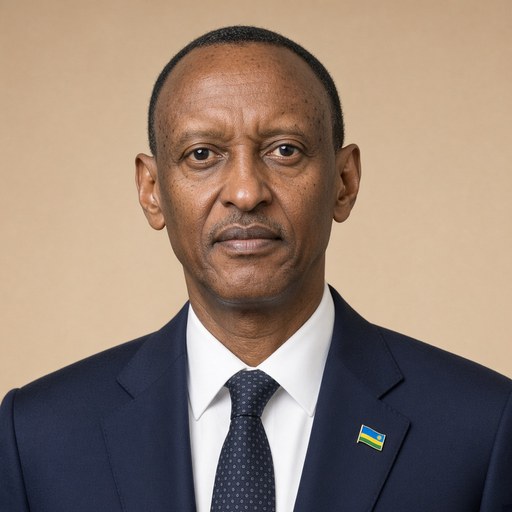
MESSAGE FROM HIS EXCELLENCY PAUL KAGAME, PRESIDENT OF THE REPUBLIC OF RWANDA, ON THE DAY OF ACCOUNTABILITY TO THE RWANDAN PEOPLE REGARDING THE STATE OF THE NATION
 Paul Kagame · President of Rwanda
- Context
- Kagame addressed the Rwandan Parliament on December 31, 2012, delivering his annual accountability address on the state of the nation and year-end review.
- Main themes
- State of the nation, economic growth, poverty reduction, foreign aid suspension, self-reliance, financial inclusion, exports and trade, population growth, governance and security, private sector investment, regional conflict accusations
- Duration
- ~20 min
- Words
- 2,380
- Sentences
- 121
- Readability
- 46
- Grade
- 11.6
- Syntax
- 2.86
- Vocabulary
- 2.11
Translated from Swahili
The broad sphere of national life a sentence belongs to. Every sentence has an Arena, so it is the denominator the other indices are read against.
Other121 sentences in 67 paragraphs
The Parliament Building, December 31, 2012
Honorable Leaders of the High Institutions of our Country;
Honorable others present here;
Honorable representatives of your countries and international organizations in Rwanda;
Rwandans; Rwandan women;
I am pleased to return to this Parliament Building for two important reasons: The first is to show all Rwandans, friends of Rwanda, and those we partner with in various activities, the current state of Rwanda. The second is to wish you a happy new year, as we usually do at this time.
Before I present an overview of our Country, let me first thank Rwandans for participating in the national census conducted this year, which revealed the number of Rwandans, their living conditions, and their assets.
This will enable the government to make sound planning and provide services based on accurate data. What has also emerged and is significant is that the population growth rate has decreased, from 2.9 percent before 2002 to 2.6 percent now.
This indicates that the measures we have taken to reduce that growth rate have been effective, and if we continue on this path, the population density will not adversely affect their economy.
Indeed, no one can deny that our Country continues to make remarkable progress in development. Various figures show that Rwanda's economy continues to grow.
In this past year, we expect our economy to grow by 7.7 percent, mainly driven by strong performance in services and industry, which increased by 13.5 percent and 6 percent in the first three quarters of this year. This is encouraging.
However, this economy could have grown even more were it not for two external factors that do not originate from Rwanda or Rwandans. The first is that the global economy has faced significant challenges, which have also impacted us. The second is the repercussions of conflicts in a neighboring country that have been wrongly attributed to Rwanda. This is not true; the conflict in the neighboring country was not caused by Rwanda, and Rwanda did not play a role in it. It is not true. Those who say so know it is not true. Those who say it are the source of the problem.
As you know, there was a report based on falsehoods that led some of our long-time partners to suspend their assistance, and this was done in a manner that is also incorrect, contrary to the principles governing international cooperation and collaboration.
I would not say that this is surprising because it aligns with what we have been saying for some time: Looking back and recalling what has been done and what we have publicly stated, this external support can be halted at any time. It should not be based on reasons grounded in truth, as those reasons are determined by the donors of that support. Our goal should be to do everything possible to reduce foreign aid. We must focus on attracting other forms of investment from the private sector. The important thing is that we do not deviate from that goal of what we must do. Halting aid could only hinder our development, but it will not prevent us from continuing to do everything possible to lift ourselves out of our current situation, to lift Rwandans out of poverty, as we have done in the past five years, where over one million people have been lifted out of poverty, as we know.
If we continue to do our utmost and rely on sound reasoning, we will continue to advance our Country, our economy will grow, and halting aid, I believe, will have taught us a valuable lesson.
And the foundation is there. Besides the commitment to work that has characterized Rwandans this year and last, we have security, peace, and good governance in our country. There are also other things we can mention. Let me provide the following examples.
The number of banks and their branches has increased and spread throughout the Country. Cooperatives, SACCOs have also increased and are benefiting their members and Rwandans in general. But we are not just talking about numbers! The way they operate has been increasingly refined to advance Rwandans.
Rwandans receiving financial services increased from 48 percent in 2008 to 72 percent this year. Loans provided by banks and other financial institutions this year reached nearly 440 billion, compared to nearly 339 billion last year. If we continue to cultivate a culture of saving and working with financial institutions, there is no doubt that our economy will continue to grow.
This year, our exports also increased by 74 percent, with their value rising by 22 percent. Imports into Rwanda this year increased by 29 percent, with their value rising by nearly 14 percent.
Although the number of our exports has risen, there is still a significant gap when looking at the large amounts we spend on imports. It is therefore essential that we increase both the quantity and value of our exports to international markets. Thus, the profits we derive will continue to rise.
In terms of the economy, we can also say that investment, whether by Rwandans or others from outside the Country, has continued to grow this year.
In the first three quarters of this year, investment reached 570 million dollars compared to 483 million dollars last year.
What is encouraging is that the investment is going into projects that will have a positive and significant impact on the development of our Country as a whole.
Here we can mention investments aimed at increasing electricity in the Country, international hotels, and Rwandair connecting us with other countries.
This is largely due to the measures we have put in place to facilitate investors to start and operate their businesses in Rwanda. Let me remind you that our Country is at the forefront in this region of East African Community countries regarding facilitating investors, and our country ranks third in Africa.
This year, we also continued to build new paved roads such as Kigali – Musanze; Kigali – Gatuna; Rusizi – Rubavu; Ntendezi – Huye; and repair others.
Large and small towns, as well as business centers across the Country, have also continued to be upgraded and beautified. Water and electricity have increased in the Country, although we must put in more effort to ensure that they reach every Rwandan.
Minerals are also playing a significant role in boosting our Country's economy. This year, these minerals generated nearly 128 million dollars, and it is evident that in the future, their production will continue to increase, providing Rwandans with many opportunities, including jobs.
Tourism has also continued to grow this year, and it remains the leading sector in generating significant foreign exchange. This shows that Rwanda has become a tourist destination, with people wanting to see what is produced in Rwanda and the natural beauty it possesses. Moreover, there is an increasing desire to work and live here.
Up to October of this year, tourists generated 232 million dollars. Compared to last year during those months, Rwanda earned 204 million dollars. The important thing is that we continue to host them well, provide them with excellent services, so that they leave with a positive image of our Country, understand it, and speak well of it as they should, and they will return bringing many others.
Rwandans, Rwandan women;
We should also celebrate the progress made in technology. It is now easy to exchange information, knowledge, send and receive money, know market prices in Rwanda and abroad, and more.
We encourage all Rwandans, especially the youth, to engage in technology as it will enhance efficiency and increase productivity in all that we do.
Regarding well-being, we can say that Rwandans in general are studying more than in previous years and receiving proper medical care when necessary.
This year, we continued to increase schools in various levels; the number of students has also risen. In primary schools, the number of students increased by 2.3 percent; they now total 2,394,674, compared to 2,341,146 last year.
In secondary schools, the number of students increased by nearly 10 percent, reaching 534,712, compared to 486,437 last year.
The number of university students increased by 4 percent, now totaling 76,629 compared to 73,674 in 2011.
This year, we also launched a 12-year basic education program, which complements the existing 9-year basic education program.
We can also be pleased that the number of vocational schools and their students has increased. The number of students in various vocational programs rose from 67,919 to 74,320. These vocational schools provide skills and capabilities for work in industries, agriculture, and livestock, and they also have opportunities for self-employment. It is essential that our Country continues to invest in these schools with all possible resources to ensure they grow in number and that the number of students continues to increase, and that what they achieve continues to advance the Country.
It is also important that we encourage Rwandan children to participate in these vocational schools because our economy will continue to rely on that practical knowledge. But I believe that before we instill this in our children, the leaders present here and other parents should first understand its foundation.
We cannot fail to mention that this year, some foreign universities have come to establish their branches in Rwanda. An example is Carnegie Mellon University from America. There are others.
This will enhance the quality of education in general; Rwandans will benefit from advanced knowledge that we previously had to seek abroad.
Regarding health, this year we continued to increase the number of health facilities and qualified health workers. In fact, if you are well aware, there is a program for doctors from abroad, especially from America, where various universities and major hospitals have sent many doctors and teachers to work with our hospitals to build the capacity of our doctors and health facilities.
We have also improved health insurance (mutuelle de santé), so that every Rwandan can receive medical care wherever they are in the Country.
Diseases that had severely affected Rwandans, such as malaria and others, including maternal and child mortality, are also continuing to decrease significantly. The data we have shows that the mortality rate for children under five was 152 per 1,000 live births in 2005, and now it is 54 per 1,000.
The maternal mortality rate has decreased from 750 per 100,000 women in 2005 to 134 now. The mortality rate due to malaria has also significantly decreased, from 54 percent in 2005 to now 6 percent.
We will continue to put efforts into combating malnutrition, which often stems from poor perceptions and ignorance. Our Country cannot be self-sufficient in nutrition while some of its areas continue to be characterized by malnutrition.
We will also enhance the skills of our doctors and provide specialized training, and we will continue to prevent and combat the HIV/AIDS epidemic and other diseases.
Regarding justice, we would be pleased to note that laws continue to be revised where necessary, and this is done based on good practices evident in the international arena.
There are international courts and foreign countries that recognize the progress our justice system has made, and they now send us Rwandans living abroad who are suspected of crimes committed in Rwanda.
We have reduced sentences and wish for prisons to truly become rehabilitation centers. This has led to a decrease in the number of inmates and prisons.
The mediation system has taken root, and citizens are involved in its operations, as it is one of the initiatives based on our Rwandan culture.
It cannot be said that it has not reduced many cases that would have gone to court. We have also established a system in every District to assist and advise citizens on legal issues.
The Gacaca courts we concluded this year have done an excellent job in terms of reconciling Rwandans. These Courts have provided us with a solution to a significant problem that Rwandans faced due to the genocide.
It is also another sign that Rwandans possess the power to seek solutions even in the future.
I would like to take this opportunity to thank Rwandans from all walks of life, both in Rwanda and abroad, as well as friends of Rwanda for another good initiative to support the "Agaciro Development Fund" that we established.
Honorable everyone present here;
Rwandans, Rwandan women;
We will continue to collaborate with other African countries, as well as outside Africa, to seek lasting peace on this continent, and we will also strive for its development so that Africans can have a better life.
Where necessary, we will continue to contribute to maintaining peace and security, especially in Africa and elsewhere in the world, as needed and as we are able.
I would like to conclude by reminding you that our Country is on the right path. The important thing is to always keep our eyes on where we are headed, to align our actions with our plans, and never to deviate from the goal of advancing our Country and Rwandans, even when we face challenges. I assure you that we will encounter challenges. But we must also assure you that we will confront them and resolve them.
The challenges, whatever they may be, should not discourage anyone; rather, they should strengthen our resolve and willingness to address them.
That strength and willingness will be evident in this coming year of 2013, making it better than the one we are concluding. Our economy will grow, and we will lift many more Rwandans out of poverty.
Let us start with the many resources we have within ourselves, and let us put in all our efforts to yield good results. Here, I would like to urge all leaders to play a significant role and show exceptional dedication. This is a reminder, but I also ask you again.
As I mentioned at the beginning, I would like to take this opportunity to wish all Rwandans and all residents of Rwanda, as well as friends of Rwanda, a happy new year in 2013.
May it bring you all and your families prosperity and many achievements, and may it continue to be characterized by cooperation aimed at taking Rwanda to another level that it deserves.
Thank you, have a good evening, and may you always have the peace of God.
The original Swahili. The tags above are read on the English translation's sentences.
Ingoro y’Inteko Ishinga Amategeko, itariki 31 Ukuboza 2012
Banyakubahwa Bayobozi b’Inzego Nkuru z’Igihugu cyacu;
Banyacyubahiro bandi muri hano;
Banyakubahwa muhagarariye ibihugu byanyu n’imiryango mpuzamahanga mu Rwanda;
Banyarwanda; Banyarwandakazi;
Nishimiye kugaruka muri iyi Ngoro y’Inteko Ishinga Amategeko kubera impamvu ebyiri z’ingenzi: Iya mbere ni ukugaragariza Abanyarwanda bose, Inshuti z’u Rwanda n’abo dufatanya mu bikorwa binyuranye, uko u Rwanda ruhagaze muri iki gihe. Iya kabiri ni ukubifuriza umwaka mushya muhire, nk’uko nanone dusanzwe tubikora muri ibi bihe.
Mbere y’uko ntanga ishusho y’Igihugu cyacu, reka mbanze nshimire Abanyarwanda ko bitabiriye ibarura rusange ryakozwe uyu mwaka, rikagaragaza umubare wabanyarwanda, imibereho yabo, n’imitungo yabo.
Ibi bizatuma Leta ikora igenamigambi rihamye, na serivisi zitangwe hakurikijwe imibare nyakuri. Icyagaragaye kandi cy’ingenzi ni uko umuvuduko w’ubwiyongere bw’abaturage wagabanyutse, ukava kuri 2.9 ku ijana mbere y’i 2002, ubu ukaba ari 2.6 ku ijana.
Ibi birerekana ko ingamba twafashe zo kugabanya uwo muvuduko zagize akamaro kandi ko nidukomeza muri iyo nzira, ubwinshi bw’Abanyarwanda butazagira ingaruka ku bukungu bwabo.
Mu by’ukuri, ntawabura kuvuga ko Igihugu cyacu gikomeje gutera intambwe ishimishije mu iterambere. Imibare inyuranye igaragaza ko ubukungu bw’u Rwanda bukomeje kwiyongera.
Muri uyu mwaka dushoje, duteganya ko ubukungu bwacu buziyongera kugipimo kingana na 7.7 ku ijana, ahanini bushingiye ku musaruro mwiza waturutse muri serivisi n’inganda, byiyongereye ku gipimo cya 13.5 ku ijana, na 6 ku ijana mu bihembwe bitatu bya mbere by’uyu mwaka. Ibi birashimishije.
Ubu bukungu ariko bwashoboraga kwiyongera iyo hataba impamvu ebyiri zitaturutse ku Rwanda,kubanyarwanda. Iya mbere ni uko ubukungu bw’isi muri rusange bwahuye n’ibibazo bitoroshye, na twe bikaba byaratugizeho ingaruka. Iya kabiri ni ingaruka z’intambara mu gihugu duturanye nacyo byitiriwe uRwanda inkomoko yabyo kandi ataribyo. Ntabwo aribyo, ntabwo intambara yabaye mu gihugu cyabaturanyi yatewe n’uRwanda, ntabwo uRwanda rwarugizemo uruhare. Ntabwo aribyo. nababivuga barabizi ko ataribyo. Abo babivuga nibo byaturutseho
Nk’uko mubizi, hari Raporo yasohotse ishingiye ku binyoma yatumye bamwe mu baterankunga tumaze igihe dukorana bahagarika inkuga yabo, kandi bikorwa mu buryo nabwo butaribwo, bunyuranyije n’amahame agenga imikorere n’imikoranire mpuzamahanga.
Ibi ntabwo jye navuga ko bitangaje kuko bihuje n’ibyo tumaze iminsi tuvuga: Musubije amaso inyuma mukibuka ibyagiye bikorwa nibyo twagiye tuvuga kumugaragaro, iyi inkunga ituruka hanze ishobora guhagarara igihe icyo ari cyo cyose. Ntanubwo bigomba kugendera kumpanvu zishingiye ku kuri, kuko izo mpanvu zigenwa nabatanga iyo nkunga. Ko intego yacu ikwiye kuba kugenda dukora ibishoboka byose tugabanya imfashanyo iva mu mahanga. Cyane cyane twibanda ko havayo ishoramari rindi ryabikorera. Icya ngombwa ni uko tudatezuka kuri iyo ntego yibyo tugomba gukora. Guhagarika imfashanyo bikaka byashobora gusa kudindiza iterambere ryacu, ariko ntibizatubuza gukomeza gukora ibishoboka byose kugirango twivane aho turi, tuvane abanyarwanda mubukene nk’uko twabuvanyemo mu myaka itanu ishize abarenga miliyoni imwe bakaba baravuye mubukene nkuko tubizi.
Nidukomeza gukora uko dushoboye kose kandi dushingira ku myunvire myiza, tugakomeza guteza Igihugu cyacu imbere, ubukungu bwacu bukiyongera, guhagarika inkunga ndakeka ko bizaba byaratuviriyemo isomo ryiza.
Kandi umusingi urahari. Uretse kwitabira umurimo byaranze Abanyarwanda muri uyu mwaka n’iyashize, dufite umutekano, amahoro n’imiyoborere myiza mu gihugu cyacu Hari n’ibindi twavuga. Reka dutange ingero zikurikira.
Umubare w’amabanki n’amashami yayo byariyongereye kandi bisakara mu Gihugu hose. Za koperative, SACCO na zo zariyongereye kandi zigirira akamaro abanyamuryango bazo n’Abanyarwanda muri rusange. Ariko ntabwo tuvuga imibare gusa! Nuburyo zigomba gukora bwagiye burushaho kunozwa biteza abanyarwanda imbere.
Abanyarwanda bahabwa serivisi z’imari bavuye kuri 48 ku ijana mu mwaka wa 2008 bagera kuri 72 ku ijana uyu mwaka. Inguzanyo zatanzwe n’amabanki n’ibindi bigo by’imari uyu mwaka zigeze kuri miliyari hafi 440, ugereranyije na miliyari hafi 339 z’umwaka ushize. Nidukomeza kugira umuco wo kuzigama no gukorana n’ibigo by’imari, nta gushidikanya ko ubukungu bwacu buziyongera kurushaho, kandi bugakomeza.
Uyu mwaka na none ibyo twohereza mu mahanga byiyongereye ku gipimo cya 74 ku ijana, agaciro kabyo kiyongera ku gipimo cya 22 ku ijana. Ibyinjiye mu Rwanda muri uyu mwaka dushoje byiyongereye ku gipimo cya 29 ku ijana, agaciro kabyo kiyongera ku gipimo cyegereye 14 ku ijana.
N’ubwo umubare w’ibyo twohereza hanze wazamutse, haracyari icyuho kinini iyo urebye amafaranga menshi dutanga ku byo tuvana hanze. Ni ngombwa rero ko twongera umubare n’agaciro mu byo twohereza ku masoko mpuzamahanga. Bityo inyungu tuvanamo igakomeza kuzamuka.
Mu bijyanye n’ubukungu twavuga na none ko ishoramari na ryo, ryaba iry’Abanyarwanda cyangwa iry’abandi baturutse hanze y’Igihugu, ryakomeje gutera imbere muri uyu mwaka.
Mu bihembwe bitatu bya mbere by’uyu mwaka, ishoramari ryageze ku madolari miliyoni 570 ugereranyije n’amadolari miliyoni 483 y’umwaka ushize.
Igishimishije ni uko ishoramari rijya mu mishinga izagira ingaruka nziza kandi nini ku iterambere ry’Igihugu cyacu muri rusange.
Aha twavuga nk’ishoramari rigamije kongera amashanyarazi mu Gihugu, amahoteri yo mu rwego mpuzamahanga, ndetse na Rwandair iduhuza n’ibindi bihugu.
Ahanini ibi biterwa n’uburyo twashyizeho bwo korohereza abashoramari gutangira no gukorera imirimo yabo mu Rwanda. Nibutse ko ubu Igihugu cyacu kiri ku isonga muri aka karere k’Ibihugu by’Umuryango w’Afurika y’Iburasirazuba mu byerekeye korohereza abashoramari, ndetse igihugu cyacu kikaba icya 3 muri Afurika.
Muri uyu mwaka kandi, twakomeje kubaka imihanda mishya ya kaburimbo nka Kigali – Musanze; Kigali – Gatuna; Rusizi – Rubavu; Ntendezi – Huye; no gusana iyindi.
Imigi minini n’imito, na Centre z’ubucuruzi hirya no hino mu Gihugu na byo byakomeje kuvugururwa no guhabwa isura nziza. Amazi n’amashanyarazi byariyongereye mu Gihugu n’ubwo tugomba gushyiramo izindi mbaraga nyinshi kugira ngo bigere kuri buri Munyarwanda.
Amabuye y’agaciro na yo aragenda agira uruhare runini mu kongera ubukungu bw’Igihugu cyacu. Muri uyu mwaka ayo mabuye yinjije amadolari hafi miliyoni 128, kandi biragaragara ko mu bihe biri imbere umusaruro wayo uziyongera kurushaho, ugaha Abanyarwanda uburyo bwinshi harimo nimirimo.
Ubukerarugendo na bwo bwakomeje gutera imbere muri uyu mwaka, ni na bwo buza ku isonga mu bitwinjiriza amadovize menshi.Ibi bitwereka ko u Rwanda rwabaye nyabagendwa, abantu bifuza kureba ibikorerwa mu Rwanda n’ibyiza nyaburanga rufite. Usibye ko hiyongeraho no gushaka kurukoreramo ndetse no kuruturamo
Kugeza m’Ukwakira uyu mwaka, haje ba mukerarugendo binjije amadolari miliyoni 232. Ugereranyije n’umwaka ushize muri ayo mezi, u Rwanda rwinjije amadolari miliyoni 204. Icya ngombwa ni uko dukomeza kubakira neza, tukabaha serivisi nziza, bakagenda bafite isura nziza y’Igihugu cyacu, bakacyumva, kandi bakakivuga neza uko bikwiye, babishobora, bakazagaruka bazanye n’abandi benshi.
Banyarwanda, Banyarwandakazi;
Dukwiye no kwishimira intambwe imaze guterwa mu ikoranabuhanga. Ubu biroroshye guhanahana amakuru, ubumenyi, koherereza no kwakira amafaranga, kumenya ibiciro byo ku masoko mu Rwanda no hanze, n’ibindi.
Turashishikariza Abanyarwanda bose, cyane cyane urubyiruko, kwitabira ikoranabuhanga kuko ari ryo rizanoza imikorere no kongera umusaruro w’ibyo dukora byose.
Mu byerekeye imibereho myiza, twavuga ko Abanyarwanda muri rusange biga ari benshi kurusha mu myaka yashize kandi bakavurwa uko bikwiye iyo bibaye ngombwa.
Muri uyu mwaka twakomeje kongera amashuri mu byiciro binyuranye; umubare wabayigamo na wo warazamutse.Mu mashuri abanza umubare w’abanyeshuri wiyongereyeho 2.3 ku ijana; ubu bagera kuri miliyoni 2, ibihumbi 394, na 674, ugereranyije na miliyoni 2 ibihumbi 341 n’i 146 b’umwaka ushize .
Mu mashuri yisumbuye, abanyeshuri biyongereye hafi 10 ku ijana, bagera ku bihumbi 534 na 712, ugereranyije n’ibihumbi 486 na 437 umwaka ushize.
Umubare w’abanyeshuri bari muri Kaminuza wiyongereyeho 4 ku ijana, ubu zifite abanyeshuri ibihumbi 76, 629 ugereranyije n’ibihumbi 73,674 bo mu 2011.
Uyu mwaka twanatangije gahunda y’uburezi bw’ibanze bw’imyaka 12, ikaba ari intambwe yuzuza gahunda y’uburezi bw’ibanze bw’imyaka 9 dusanganywe.
Na none twakwishimira ko umubare w’amashuri y’imyuga n’abayigamo byiyongereye. Umubare w’abanyeshuri mu byiciro binyuranye wavuye ku bihumbi 67 na 919 ugera ku bihumbi 74 na 320. Muri aya mashuri yimyuga havamo ubumenyingiro n’ubushobozi byo gukora mu nganda, mu buhinzi, mu bworozi ndetse bakaba bafite n’amahirwe yo kwihangira imirimo. Aya mashuri rero ni ngombwa ko iguhugu cyacu gikomeza kuyashoramo imari nubushobozi bushoboka bwose kugirango tuyagire menshi numubare wabanyeshuri uhore wiyongera kandi nibyo bageraho biteza igihugu imbere bihore byiyongera.
Ni na ngombwa ko dushishikariza abana b’Abanyarwanda kwitabira aya mashuri y’imyuga kuko ubukungu bwacu buzakomeza gushingira kuri ubwo bumenyi ngiro. Ariko ndibwirako mbere yo kubitoza abana bacu, abyobozi bari hano nababyeyi bandi dukwiye kubanza tukunva inshingiro ryabyo.
Ntitwabura kuvuga na none ko uyu mwaka hari za kaminuza zo hanze zaje gutangiza amashami yazo mu Rwanda. Urugero ninkishami rya Carnegie Melon, universite yo muri Amerika. Hari nizindi.
Ibi bizatuma ireme ry’uburezi muri rusange ryiyongera; Abanyarwanda bayungukiremo ubumenyi buhanitse twajyaga tugomba gushakisha hanze.
Mu byerekeye ubuzima, uyu mwaka twakomeje kongera umubare w’amavuriro n’uw’abavuzi babifitiye ubushobozi. Ndetse niba mubizi neza hari gahunda yabaganga baturuka hanze cyane muri Amerika, aho za universite namavuriro akomeye atandukanye yohereje abaganga benshi nabarimu baza gukorana namavuriro yacu mu buryo bwo kubaka ubushobozi bwa abaganga
bwabaganga namavuriro.
Twanavuguruye ubwisungane mu kwivuza (mutuelle de santé), ku buryo Umunyarwanda wese ashobora kwivuriza aho ari hose mu Gihugu.
Indwara zari zarazahaje Abanyarwanda nka malariya nibindi ndetse birimo n’impfu z’abana n’abagore babyara cyangwa batwite, na zo zirakomeza kugenda zigabanyuka ku buryo bushimishije. Imibare dufite igaragaza ko impfu z’abana bari munsi y’imyaka itanu zari 152 ku bana 1000 mu 2005, ubu zikaba ari 54 ku bana 1000.
Umubare w’ababyeyi bapfa babyara cyangwa batwite wavuye kuri 750 ku bagore 100,000 mu 2005, ubu ukaba uhagaze ku 134. Naho umubare w’impfu ziterwa na malariya waragabunyutse cyane, uva ku gipimo cya 54 ku ijana mu 2005, ubu ni 6 ku ijana.
Tuzakomeza gushyira imbaraga mu kurwanya imirire mibi, akenshi ituruka ku myumvire mibi no ku bujiji. Igihugu cyacu nticyakwihaza mu mirire, hanyuma ngo uduce tumwe twacyo dukomeze kurangwa n’imirire mibi.
Tuzanongerera abaganga bacu ubumenyi buhanitse kandi bwihariye, dukomeze no gukumira no kurwanya icyorezo cya SIDA nibindi byorezo.
Mu byerekeye ubutabera, twakwishimira ko amategeko akomeje kuvugururwa aho bibaye ngombwa, kandi bigakorwa hashingiwe ku mikorere myiza igaragara mu rwego mpuzamahanga.
Hari inkiko mpuzamahanga n’ibihugu byo hanze byemeye iyo ntera ubutabera bwacu bumaze kugeraho, ubu bikaba bitwoherereza Abanyarwanda babituyemo bakekwaho ibyaha bakoreye mu Rwanda.
Twagabanyije ibihano kandi turifuza ko za gereza ziba koko ibigo ngororamuco. Ibi byatumye umubare w’abagororwa ndetse na za gereza bigabanyuka.
Urwego rw’Abunzi rumaze gushinga imizi, kandi abaturage bafite uruhare mu mikorere yarwo, kuko ari kimwe mu bikorwa bishingiye ku muco wacu nyarwanda.
Ntawabura kuvuga ko rwagabanyije imanza nyinshi zari kujya mu Nkiko. Twanashyizeho urwego muri buri Karere rwunganira kandirukagira inama abaturage mu bibazo by’ubutabera
Inkiko Gacaca twashoje uyu mwaka zakoze umurimo mwiza cyane mu byerekeye ubutabera bwunga Abanyarwanda. Izi Nkiko zatubereye igisubizo cy’ikibazo gikomeye Abanyarwanda twahuye na cyo cyatewe na jenoside.
Ni n’ikindi kimenyetso cy’uko Abanyarwanda bifitemo ububasha bwo kwishakamo ibisubizo no mu gihe kiri imbere.
Nkaba mboneyeho umwanya wo gushimira Abanyarwanda b’ingeri zose, abo mu Rwanda n’abo mu mahanga, ndetse n’inshuti z’u Rwanda ikindi gikorwa cyiza cyo gutera inkunga ikigega “Agaciro Development Fund” twishyiriyeho.
Banyacyubahiro mwese muri hano;
Banyarwanda, Banyarwandakazi;
Tuzakomeza gufatanya n’ibindi bihugu by’Afurika, ndetse no hanze ya Afurika gushaka amahoro arambye kuri uyu mugabane, ndetse tunaharanire n’iterambere ryawo kugira ngo Abanyafurika barusheho kugira ubuzima bwiza.
Aho bibaye ngombwa, tuzakomeza gutanga umusanzu mu kubungabunga amahoro n’umutekano cyane muri Afurika n’ahandi ku isi, uko bizaba bikenewe kandi tubishoboye.
Ndagira ngo nsoze nongera kwibutsa ko igihugu cyacu kiri mu nzira nziza. Icya ngombwa ni uguhora duhanze amaso aho tugana, tugahuza ibikorwa nimigambi, kandi ntitwigere na rimwe dutezuka ku ntego yo guteza Igihugu cyacu n’Abanyarwanda imbere, n’iyo twahura n’ibibazo. Ibibazo byo nabasezeranya ko tuzahura nabyo. Ariko tugomba no gusezeranya ko tuzahangana nabyo kandi tukabikemura.
Ibibazo, ibyo ari byo byose twahura na byo, ntibikwiriye kugira abo bica intege, ahubwo bikwiye kutwongera imbaraga n’ubushake byo kugirango tubikemure.
Izo mbaraga n’ubushake bizagaragare muri uyu mwaka tugiye gutangira mushya w’i 2013 maze utubere mwiza kurusha uwo dushoje. Ubukungu bwacu bwiyongere, tunavane mu bukene abandi Banyarwanda benshi.
Duhere kuri byinshi dufitiye ubushobozi twebwe ubwacu, maze dushyiremo imbaraga zacu zose, tubibyaze umusaruro mwiza. Ahangaha nagirango nkangurire abayobozi bose ko bagomba kuhagira uruhare rukomeye, n’ubwitange budasanzwe. Ibyo nukubibutsa ariko nongera no kubibasaba.
Nk’uko nabivuze ntangira, mboneyeho umwanya wo kwifuriza Abanyarwanda n’abaturarwanda bose, n’inshuti z’u Rwanda, umwaka mushya muhire w’i 2013.
Uzababere mwese n’imiryango yanyu uw’uburumbuke n’ibikorwa byinshi, kandi uzakomeze kurangwa n’ubufatanye bugamije kugeza u Rwanda ku yindi ntera kandi rukwiye
Murakoze, mugire umugoroba mwiza, muhorane n’amahoro y’Imana.