




Plenary Statement : Universal Health Coverage | New York, 23 September 2019
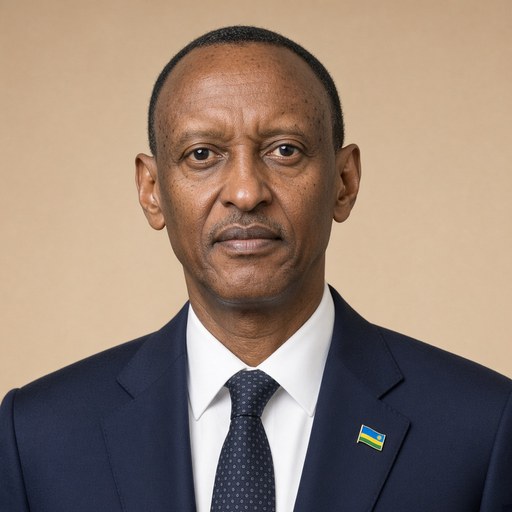
 Paul Kagame · President of Rwanda
- Context
- Kagame addressed the UN General Assembly high-level meeting on Universal Health Coverage in New York on 23 September 2019.
- Main themes
- Universal health coverage, community health workers, health insurance, domestic resource mobilisation, innovation in healthcare, gender equity, non-communicable diseases, HPV vaccination, Rwanda's healthcare experience, international partnership, affordable care, equity in access
- Duration
- ~2 min
- Words
- 264
- Sentences
- 17
- Readability
- 49
- Grade
- 10.3
- Syntax
- 2.85
- Vocabulary
- 2.10
The broad sphere of national life a sentence belongs to. Every sentence has an Arena, so it is the denominator the other indices are read against.
Other17 sentences in 13 paragraphs
Universal access to health care is a defining feature of the modern social contract. Good health affords people dignity and enables them to use their talents to the full.
Today, we renew our joint commitment to affordable care. No parent should have to choose between food and medicine for their families.
Innovation, domestic resource mobilisation, and international partnership are the key strategies for making healthcare accessible to everyone.
Allow me to share some examples from Rwanda’s experience.
First, we have expanded our network of Community Health Workers from two per village, to four.
That translates into one worker, for every 40 households, helping to ensure that no one is left behind.
Second, to improve equity in access, Rwanda set a target that the walk to the nearest health facility should be no more than 25 minutes. Half the country now meets this standard, and the work continues.
Third, 93 percent of Rwandan girls below the age of 13 have received the Human Papilloma Virus (HPV) vaccine.
This highlights the importance of gender equity, as well as the urgency of including treatment for non-communicable diseases, such as cervical cancer.
Health insurance is the foundation of our policy framework. More than 90 percent of the Rwandan population is now covered with a mixture of community-based and private schemes.
Of course, barriers to achieving high-quality Universal Health Coverage persist, in Rwanda as elsewhere around the world.
It is the responsibility of everyone gathered here, to take the lead in addressing these gaps, and leave behind a legacy of Universal Health Coverage for future generations.
I thank you.