





- Context
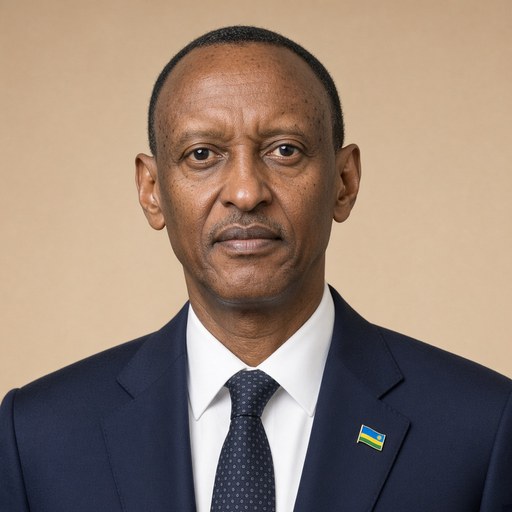
- Kagame addressed the Leaders' Summit on Peacekeeping at the UN General Assembly in New York on 28 September 2015, announcing Rwanda's new troop pledges.
- Main themes
- UN peacekeeping reform, Rwanda's troop contributions, Kigali Principles on protection of civilians, accountability and impunity, civil-military trust, female peacekeepers, clear mandates and shared norms, effective peacekeeping capacity
- Duration
- ~2 min
- Words
- 268
- Sentences
- 14
- Readability
- 50
- Grade
- 11.0
- Syntax
- 2.87
- Vocabulary
- 2.19
The broad sphere of national life a sentence belongs to. Every sentence has an Arena, so it is the denominator the other indices are read against.
Other14 sentences in 11 paragraphs
New York, 28 September 2015
I want to begin by expressing appreciation for the timely initiative shown by the United States, to focus attention on effective peacekeeping in line with the Report of the High-Level Independent Panel and the Secretary-General’s recommendations.
Let me emphasize a few key points:
First, all of us, including those seemingly with limited resources and/or capacities, have meaningful contributions to make, whether it is funding, equipment, or forces. The important thing is to cooperate and be able to fully prepare for any mission.
In this regard, I am pleased to announce that Rwanda will contribute two additional infantry battalions, total strength of 1600 troops, two attack helicopters and a Level Two Hospital. Rwanda is also ready to deploy an all-female police unit to meet the increasing demand for female peacekeepers.
Secondly, effective peacekeeping requires clear mandates and shared norms as detailed in the Kigali Principles on the Protection of Civilians, which many here-present have endorsed, hopefully with others to follow.
The third point, is that peacekeepers must not compound the problems on the ground, as evidence has shown with the surge of different forms of abuse, pointing to a deeper culture of impunity.
Accountability has to be swift both at the national and international levels, because everything is going to be conveyed by the conduct of forces.
Rwanda has been on both sides of the equation. Without a relationship of trust between the protector and the protected, peacekeeping loses its meaning and relevance.
The lesson for us is that earning and keeping that trust, and inspiring confidence, has to be the priority.
Thank you.