




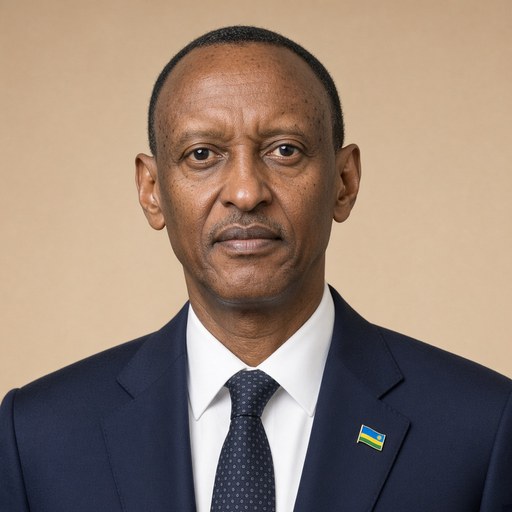
Remarks by President Kagame at the 25th Anniversary of Liberation Kwibohora25
 Paul Kagame · President of Rwanda
- Context
- Kagame addressed a national ceremony and international dignitaries in Rwanda on July 4, 2019, marking the 25th anniversary of the country's liberation from genocide.
- Main themes
- 25th anniversary of liberation, genocide against the Tutsi, Rwandan Patriotic Army, national unity and reconciliation, dignity and equal rights, transformation and development, African self-determination, sustainability of progress, military heroism and sacrifice, divisive politics, pan-Africanism
- Duration
- ~7 min
- Words
- 833
- Sentences
- 64
- Readability
- 59
- Grade
- 8.2
- Syntax
- 2.55
- Vocabulary
- 2.08
The broad sphere of national life a sentence belongs to. Every sentence has an Arena, so it is the denominator the other indices are read against.
Other64 sentences in 22 paragraphs
We are here to observe the twenty-fifth anniversary of Rwanda’s liberation.
It is a privilege to mark this occasion in the company of so many friends of Rwanda from around the world. I thank you all, on behalf of our country, for your solidarity and friendship over many years. It means a great deal to us. I most especially thank our brothers and sisters, the Heads of State and First Ladies, who have made the journey to be with us today.
For three long months in 1994, our country’s survival was in doubt. One of the worst tragedies unfolded. A segment of the population was being hunted and killed. More than a million people were murdered.
By July 4 th , the forces of the Rwandan Patriotic Army had brought the killings to an end.
Twenty-five seasons of mourning have passed since then. And with time, it is important to recall that the Campaign against Genocide became more than a military operation in the conventional sense. It became a rescue mission.
For example, there was a battalion of our soldiers stationed at the Parliament building, which is not so far away from this stadium. They came under very heavy attack, and were completely cut off from the rest of our forces. Yet those troops managed to secure this very stadium where we are, and the thousands of people sheltering here, while they were under very heavy attack. This was just one site, among many.
Around us today are some of the men and women who protected survivors and led them to safety. Our army, and those others who supported it, lived for our country, and others died. Those still alive continue to serve it with steadfast devotion. We thank you.
Many other liberation fighters are with us only in memory because they made the ultimate sacrifice.
Where did the humanity and heroism come from?
The answer is simple. We believed in our right to dignity as Rwandans. This conviction was the starting point of the liberation struggle. The aim was to build a Rwanda with equal rights for all. In other words, a republic in the real sense.
For decades and decades, Rwandans were treated as objects to be used and discarded by anyone, especially the powerful. It won’t be anymore. Both the suffering of the refugees, as well as the oppression and poverty of those who remained here, had a similar origin.
Had we ever truly been united at any point in our history? And yet our culture provides us with the tools for a successful society. Liberation was not about restoring the past, but creating something fundamentally new and better for all Rwandans.
This fight was necessary and indeed unavoidable. If there will ever be necessity for more fights, we will be there.
The vision of unity and justice attracted broad support because it resonates so strongly with the human spirit.
But the proof was in actions, not words. For the last twenty-five years, we have done our best to govern according to the liberation ideals that we fought for. The conduct of our forces is one example. Another is the bravery of those within Rwanda who opposed divisive politics. Or the energy that our people give to transforming the nation every single day, as we have seen in the past twenty-five years.
As a result, the impossible has become manageable, and even natural. Achievements like restoring trust and peace, or working together, for example.
But we cannot take anything for granted. The force that stands before us, together with other actors in the struggle, have remained true to the cause. They are a representation of the spirit of this country. It is the responsibility of every Rwandan to extend the gains we have made.
Rwanda appreciates the profound link between our liberation journey and the wider African quest for self-determination. We all share the same aspirations to be free and to improve ourselves to the fullest extent. Our continent cannot remain dependent on what happens elsewhere. Our mindset should be to rely, first of all, on ourselves and on each other.
It is worth repeating: Being Rwandan simply means being an African from a particular place. In that spirit, I salute the forces from the East African Community partners here with us today, who have been conducting medical outreach exercises. Thank you. I hail the representatives from African political parties who are attending this ceremony. And I thank the military service chiefs who have come both from our region and beyond.
The logic of liberation is to turn bad things into good things. What Rwandans have achieved is undeniably real. But we must stay humble enough to know that our main challenge is sustainability.
We left the past behind us and embraced the future by coming together as a family. We must remain solid in defence of these values through each and every generation. We will not lose our way again.
I wish you all a very happy Liberation Day.