




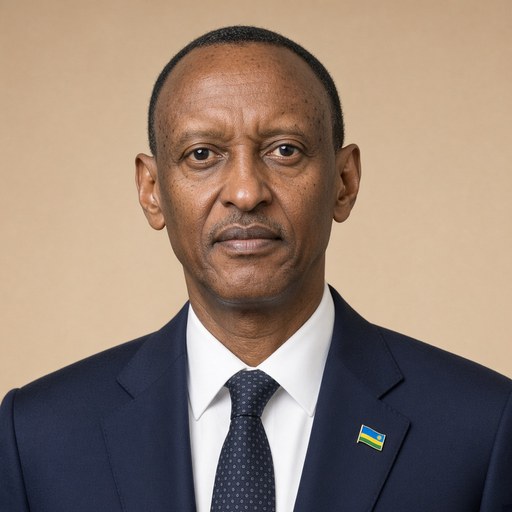
Remarks by President Kagame at TICAD 7 — Plenary Session II on “Accelerating Economic Transformation and Improving Business Environment through Innovation and Private Sector Engagement” | Yokohama, 28 August 2019
 Paul Kagame · President of Rwanda
- Context
- Kagame addressed TICAD 7's second plenary session in Yokohama on August 28, 2019, focusing on accelerating Africa's economic transformation through private sector engagement.
- Main themes
- Private sector engagement, economic transformation, governance and business environment, infrastructure and technology investment, human capital development, digital skills and innovation, Japanese-African partnership, TICAD process, Rwanda development strategy, public-private partnerships, regional trade integration, entrepreneurship
- Duration
- ~3 min
- Words
- 308
- Sentences
- 23
- Readability
- 41
- Grade
- 10.8
- Syntax
- 2.63
- Vocabulary
- 2.25
The broad sphere of national life a sentence belongs to. Every sentence has an Arena, so it is the denominator the other indices are read against.
Other23 sentences in 12 paragraphs
Yokohama, 28 August 2019
I thank you, Chair, for the floor.
I first thank Prime Minister Abe and the Government of Japan for being our gracious host. TICAD is a valuable process that has stood the test of time. Japan is an effective and dependable partner of Africa.
TICAD was born at a moment of uncertainty about our continent’s future. A spirit of optimism and partnership could not be taken for granted. Today, many of TICAD’s innovations have become standard and the forum has continued to evolve in tandem with Africa’s priorities.
The key change is the importance given to the private sector in this TICAD.
Rwanda has put private sector development at the heart of our strategy for prosperity, using three types of investment.
First, governance. Rwanda has made good use of the World Bank’s Doing Business tools to overhaul the enabling environment for enterprise. We established specialised commercial courts and worked with neighbours for deeper integration to facilitate trade in the East African Community region.
Second, we have invested in infrastructure and technology. For example, an innovative public-private partnership supplies wholesale broadband data to power the digitalisation of our economy. Rwanda has also invested in high-quality convention and tourism facilities.
Third, and most importantly, we invest in people. Producing “Made in Rwanda” and “Made in Africa” products require skilled young people who are in good health. We thank the ABE Initiative for significantly contributing toward that.
We have also expanded technical and vocational training with an emphasis on digital skills, as well as funding support for innovation and entrepreneurship.
We have seen an increase in Japanese investment in recent years, especially in horticulture, agribusiness, and technology. We appreciate the exchange with Japanese firms, and measures are in place to facilitate new ventures, particularly public-private partnerships for infrastructure and industry.
I thank you for your kind attention.