




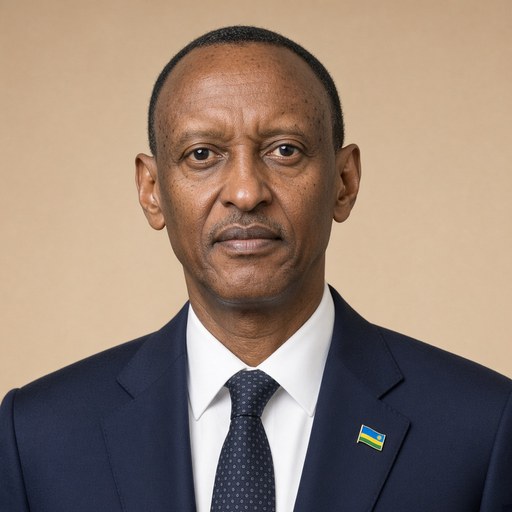
REPORT BY PRESIDENT PAUL KAGAME ON THE INSTITUTIONAL REFORM OF THE AFRICAN UNION
 Paul Kagame · President of Rwanda
- Context
- Kagame reported to the 31st African Union Summit in Nouakchott on July 1, 2018, on progress in AU institutional reform as the Assembly-mandated reform champion.
- Main themes
- African Union institutional reform, Continental Free Trade Area, AU financing and 0.2% levy, peace and security funding, speaking with one voice, NEPAD governance, Commission reform, Post-Cotonou negotiations, Agenda 2063, member state consensus
- Duration
- ~6 min
- Words
- 715
- Sentences
- 44
- Readability
- 52
- Grade
- 10.0
- Syntax
- 2.83
- Vocabulary
- 2.20
The broad sphere of national life a sentence belongs to. Every sentence has an Arena, so it is the denominator the other indices are read against.
Other44 sentences in 21 paragraphs
31ST SUMMIT OF THE AFRICAN UNION
Nouakchott, 1 July 2018
Before the Chairperson of the Commission presents the detailed report on the institutional reform of the Union, allow me to make a few observations by way of introduction.
First, I thank you for the contributions that you continue to make to the success of the reform.
I am pleased to note that robust consultations have been conducted by the Commission in the manner directed by the Assembly. Member States, as well as Regional Economic Communities, and African Union Organs, have been included. This effort has enriched the implementation process, deepened the consensus, and allowed misunderstandings to be clarified.
In particular, a good amount of the controversy surrounding the 0.2 per cent levy has dissipated, as Member States have come to appreciate the flexibility with which it can be applied. And also that they will not necessarily be paying more, and certainly not more than their fair share.
The intention is that this dialogue will continue to be our practice as we move forward.
Second, as I observed in the opening, the reform has always been about preparing Africa for future challenges. That future is now. And because of the changes that have already been implemented, we are stronger and more effective than ever before.
Because we now have a credible budget process, and a substantial Peace Fund, among other elements, a partnership with the United Nations to fund peace operations through assessed contributions is on the table. We will have a greater voice when it comes to addressing the security of our continent.
The Continental Free Trade Agreement, championed by President Mahamadou Issoufou of Niger, is among the most historic achievements of the African Union. Forty-four countries signed in Kigali. Four more are signing here in Nouakchott. It is going to become a reality before much longer.
This drive emerges from the same logic that led to the institutional reform. In a deeper sense, an African Union capable of delivering a functional free trade area is actually the end point of the reform.
Our partners welcomed the Continental Free Trade Area, in part because they doubted it would ever be implemented. Our track record provided ample evidence for that.
As that perception increasingly proves to be outdated, interests will be recalculated. This is where the reform’s emphasis of speaking with one voice as a continent will emerge as perhaps the most important provision of all.
The Post-Cotonou negotiation is the latest example, but there will be many more. We need to present ourselves as a united front and defend the interests of our people and our continent. If we fail to do so, the cost will be the viability of the Continental Free Trade Area, and everything that flows from that critical pillar of Agenda 2063.
Let me conclude by highlighting a few matters that we may wish to devote particular attention to.
One, I believe that several points of consensus have emerged with regard to NEPAD. Governance at the Head of State level should be maintained. Membership should be expanded to ensure inclusivity. And the principle of rotation should be adopted. We should discuss this today and hopefully conclude this matter.
Two, there is consensus that reform of the Commission itself is central, and it cannot perform this task alone. This chapter requires strong input and participation from Member States. The Progress Report contains options for us to study, and I would like to suggest that maybe a retreat of the Executive Council would help to enrich these proposals.
Three, Commission reform includes the future selection of its leadership. This is a serious issue that cannot be avoided. Given the questions that have been asked, it is important to note that the Progress Report presents options that can be done without amendment of the Constitutive Act.
I call upon your continued support, Your Excellencies, so that we may bring the process to a successful conclusion, as planned, by the next year, making use of the next Summit to decide.
As always, these matters are in the hands of the Heads of State and Government. I wish to thank you, once again, for the trust to lead the institutional reform and look forward to your continued engagement and support.
Thank you for your kind attention.