




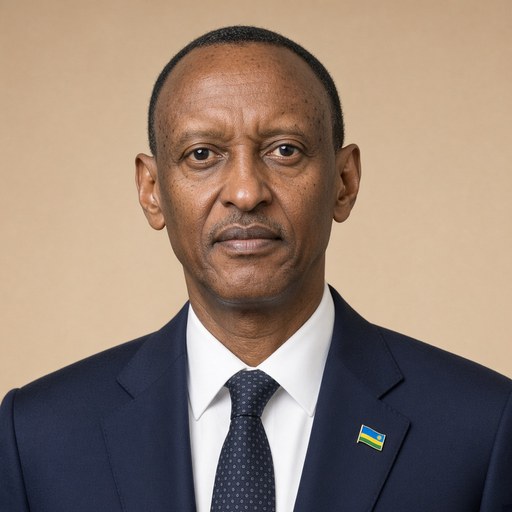
Speech by H.E. the President during the Opening of the 8th National Dialogue (Umushyikirano) – Kigali, 20 December 2010
 Paul Kagame · President of Rwanda
- Context
- Kagame addressed the 8th National Dialogue (Umushyikirano) in Kigali on 20 December 2010, defending Rwanda's governance against foreign critics and political opponents.
- Main themes
- National sovereignty and self-determination, critics and political opponents dismissed as useless, foreign interference rejected, Rwanda's development achievements, political space and democracy accusations rebutted, national dialogue and unity, security and defense of stability, refugee repatriation, healthcare and education access, threat response to destabilization attempts
- Duration
- ~7 min
- Words
- 868
- Sentences
- 51
- Readability
- 66
- Grade
- 8.2
- Syntax
- 2.60
- Vocabulary
- 2.00
The broad sphere of national life a sentence belongs to. Every sentence has an Arena, so it is the denominator the other indices are read against.
Other51 sentences in 13 paragraphs
Dear Rwandans,
Rwanda is a country that has common and unique challenges. The bottom-line is that it should be us Rwandans who should be at the forefront in solving them and this National Dialogue is all about providing an opportunity to contribute to solving the country’s problems.
Those who wish to contribute their ideas elsewhere, away from this meeting and other conventional forums, have their rights. However, they don’t have the right to interfere with our goals. Such people are very few but we cannot afford to be complacent. Even a needle, as small as it is, can be painful when it pricks the skin. We have to protect ourselves and our achievements as we look at where we came from and where we are headed.
These few people should be considered useless. When you play a game of cards, there are cards that are useless and those that have value in the game. These people are like the useless cards in a card game. They have been useless and they will always be useless. Those who support and encourage them – those who give them the prominence they don’t deserve – are also useless.
I should put emphasis on African nations that may try to support them; they should know that these people are useless. If you live in a grass-thatched house, you should avoid playing with fire because your own house may catch fire.
Those who assist us in one way or another to build our nation should know that it is not good to build and then go round and destroy what you have helped build. This happens as a result of people wanting to live their lives and at the same time want to live ours. No one can live two lives. Rwanda wants to live its own life. We at this National Dialogue are Rwandans who are trying to live our own lives and whoever does not have the blessing of Rwandans should not try to talk on their behalf. We can speak for ourselves.
Sometimes I hear people talk ill of us and I try to sit and look at what makes them criticize us but I always fail to see the reason. They only criticize us because we simply want to live the way we choose; they want us to live the way they want. They see us in the mirror provided to them by the useless people I mentioned but Rwandans have people who represent them who are right here.
The talk of dictatorship, authoritarianism or political space is utter rubbish and we are tired of it. But the only way to express our feelings properly is to continue doing what we are supposed to do. This dialogue is political space – those who say there is no political space in Rwanda are not providers of political space and should know that they are actually denying us our political and even breathing space.
I am telling our friends to give us our space. We don’t owe anything to anyone but to ourselves. Nobody should pretend to care for us more than we do because we know what we want. That is why we were able to repatriate so many refugees; achieve food security; ensure our children go to school in big numbers; make healthcare accessible to all. That is how we are building institutions, developing infrastructure and establishing laws that allow us to advance.
What I am emphasizing is that those foreigners who want to teach us how we should live are merely misleading us. They want to live their lives and ours. There are some Rwandans who say that a real man is one who eats his own and eats what belongs to others. I will not allow anyone to eat what belongs to them and what belongs to me. Those who deal in rumours and falsehoods – the likes of Rusesabagina, Kayumba, Karegeya, Rudasingwa, Gahima – these are all useless characters. They don’t represent anyone among our more than 11 million Rwandans.
Those trading in falsehoods and their foreign backers –like some human rights organisations and foreign media practitioners – should know that nobody loves Rwanda and Rwandans more than we do. Look at how many refugees we repatriated, how many problems we solved. How many people are able to feed themselves today? How many children are going to school? How many people have access to healthcare?
If you declare war on Rwanda with intention to destabilise the country, the people and their property, never complain if you get a beating. You are bound to get what you want. The peace and stability that we enjoy today were attained at a high price and the sacrifice of many and nobody should be allowed destroy what has been built. We are ready and waiting to defend ourselves. Dialogue should be the way forward in expressing our different views on national issues because we want to build, not destroy. Whoever wants to destroy will our enemy. The enemy should be able to know us and in case they may have forgotten us, they will be reminded and it will be too expensive for them.
May you have a pleasant dialogue.