




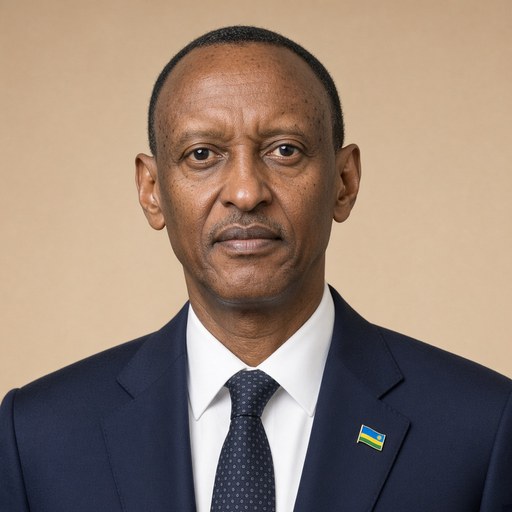
Speech by the President of the Republic Addressed to the Citizens Affected by the Disasters | Rubavu, May 12, 2023
 Paul Kagame · President of Rwanda
- Context
- Kagame addressed flood disaster victims in Rubavu on May 12, 2023, offering condolences and reassurances of government support amid severe flooding.
- Main themes
- Disaster relief and humanitarian aid, flood damage, condolences to victims, government response and accountability, resilience and community solidarity, protection of children and vulnerable populations, rebuilding and recovery, unusual weather conditions
- Duration
- ~4 min
- Words
- 538
- Sentences
- 16
- Readability
- 52
- Grade
- 14.3
- Syntax
- 3.17
- Vocabulary
- 1.61
Translated from Swahili
The broad sphere of national life a sentence belongs to. Every sentence has an Arena, so it is the denominator the other indices are read against.
Other16 sentences in 13 paragraphs
Hello everyone.
I would like to take a little time for people to come inside and stop being exposed to the elements.
I came here with other government officials, but it was to visit you, to greet you, and to express our condolences so that you can continue to endure as you have been enduring.
These events have overwhelmed us, the floods, the damaged houses, the loved ones we have lost, which is a very significant issue, the injured, I know that those who are still able are facing these challenges.
The reason I came here was to visit you and I want to tell you that we are thinking of you. Your distress is also a source of concern for us as we see how you are doing, and we are seeking all possible means to help you during these difficult times you are experiencing.
Even perhaps in the shortest possible time, those who can return to their homes may be able to do so, but right now, especially, we are still facing challenges to ensure that you can at least have some semblance of life even during this time when you are not in your homes, or when you cannot carry out your usual activities, or when you cannot feed yourselves as you normally would, that is what we are committed to seeking all possible means to assist you.
Where things are not going well or have not gone well, we are also addressing those issues during this time, because there are many possibilities. Sometimes people do things but do not do them as they should, so we want to ensure that we do everything possible, especially to help children, infants who have nothing to eat, who are in poor condition, their mothers, their parents, and so on, we are truly prioritizing that, so please continue to endure and bear with us, especially that is what brought me here.
Finally, other weather conditions, rain, sun, come in unusual ways, taking lives or destroying crops, these unusual conditions destroy everything including human life, there are times when we cannot do anything to prevent flooding or to stop the rain from falling, but helping those who are alive, those who can do so, that is within our capacity and we must do it.
I want to assure you that the leaders who come to visit you regularly, various agencies, that is what brings them here, sometimes they do not do everything they should be doing, so we are following up to know what can be corrected and what that is, and we will do it.
Earlier, I took a moment to see the damage that has occurred, whether it is houses where people live, schools, industries, there is a lot here in this area, there is a lot in other regions that are similarly affected.
Please bear with us and let us work together on many things, we will overcome these challenges just like we have with others.
Thank you very much, I do not want to keep you here longer, look, more rain is coming, I hope you can stay safe.
Is there anything you would like to tell me? Who wants to say something to me?
The original Swahili. The tags above are read on the English translation's sentences.
Muraho neza.
Nagira ngo rero dukoreshe umwanya muto kugira ngo abantu bave hanze bareke kunyagirwa.
Naje hano n’abandi bayobozi ba Leta, ariko byari ukubasura no kubasuhuza no kubihanganisha kugira ngo mukomeze mwihangane nk’uko n’ubundi mwihanganye.
Ibi biza byatugwiririye, imyuzure, amazu yangiritse, abacu twatakaje ari cyo kibazo kinini cyane, abakomeretse, ibyo byose ndabizi ko abagishoboye kuba bariho muhanganye na byo.
Icyanzanye hano kwari ukubasura kandi ngira ngo mbabwire ko tubatekereza. Uko muhangayitse natwe biraduhangayikishije kubona uko mumeze, ndetse dushakisha ibishoboka byose, kugira ngo dushobore kubafasha muri ibi bihe bitoroshye murimo.
Ndetse wenda mu gihe gito gishoboka, abashobora gusubira mu byabo bashobore kuba babisubiramo, ariko cyane ubu cyane cyane turacyahanganye no kugira ngo mushobore kugira nibura ubuzima no muri iki gihe mutari mu ngo zanyu, cyangwa se mudashobora kwikorera imirimo musanzwe mukora, mudashobora kwigaburira uko bisanzwe, ibyo ni byo twahagurukiye kugira ngo dushake ibishoboka byose tubafashe.
Aho bitagenda neza cyangwa bitagenze neza, na byo muri iki gihe turabikosora kugira ngo,… kuko ibishoboka ni byinshi. Hari ubwo abantu bakora ibintu ariko ntibakore uko bingana, turagira ngo rero ibishoboka, ibidushobokera byose tubikore uko bishobotse, cyane cyane gufasha abana, impinja zidafite icyo kurya, zidafite uko zimeze, ababyarwa, ababyeyi babo n’ibindi, ibyo rwose turabyihutisha mukomeze mwihangane mutwihanganire, cyane cyane ni cyo cyanzanye hano.
Hanyuma ibindi by’ibihe, imvura, izuba, biza ku buryo budasanzwe, bigahitana ubuzima bw’abantu cyangwa se bikangiza imyaka, ibyo bihe bidasanzwe bikangiza byose harimo n’ubuzima bw’abantu, ibyo hari aho biturenga ntacyo twari gukora kugira ngo tubuze umwuzure cyangwa tubuze imvura kugwa, ariko gufasha abariho, abashoboye kubikora ibyo ngibyo, ibyo byo biri mu bushobozi bwacu tugomba kubikora.
Ngira ngo rero abayobozi baza kubasura buri gihe, inzego zitandukanye ni cyo kibazana, hari ubwo badakora byose ibyo bagakwiye kuba bakora, ubwo turabikurikirana natwe kugira ngo tumenye icyakosorwa icyo aricyo kandi tuzabikora.
Mu kanya nafashe umwanya ngenda mbona ibyagiye byangirika, ari amazu ayo abantu batuyemo, ari amashuri, ari inganda, ni byinshi hano muri aka karere, ni byinshi hari n’utundi turere natwo tumeze gutyo.
Mutwihanganire rero namwe mwihangane hanyuma dukorere hamwe byinshi, ibi biza turabitsinda nk’ibindi byose.
Mwakoze cyane, sinshaka kubatindana hano, dore imvura yindi iraje, ndagira ngo mushobore kugama.
Hari ibyo mushaka kumbwira? Ni nde ushaka kugira icyo ambwira?