




SPEECH DELIVERED BY PRESIDENT KAGAME BEFORE THE PARLIAMENT OF THE REPUBLIC OF CONGO | Brazzaville, April 11, 2022
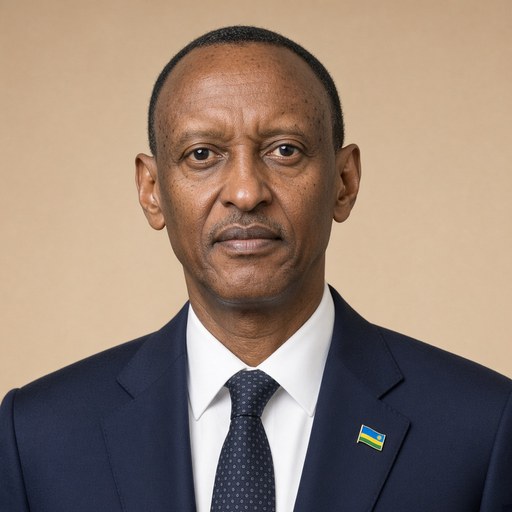
 Paul Kagame · President of Rwanda
- Context
- Kagame addressed the Parliament of the Republic of Congo in Brazzaville on April 11, 2022, to strengthen bilateral ties and discuss regional cooperation.
- Main themes
- Rwanda-Congo bilateral relations, African unity and regional cooperation, genocide commemoration, peace and security in Africa, COVID-19 pandemic response, African health infrastructure, mRNA vaccine production, UN peacekeeping missions, Great Lakes regional security, continental integration
- Duration
- ~10 min
- Words
- 1,215
- Sentences
- 61
- Readability
- 37
- Grade
- 13.1
- Syntax
- 3.03
- Vocabulary
- 2.21
Translated from French
The broad sphere of national life a sentence belongs to. Every sentence has an Arena, so it is the denominator the other indices are read against.
Other61 sentences in 41 paragraphs
Brazzaville, April 11, 2022
Thank you, Honorable Isidore Mvouba, for that kind introduction.
I am honored to be here today. First of all, I would like to thank you for inviting me to speak before this august Parliament.
Allow me to express my sincere gratitude to the Republic of Congo, as well as to the brotherly Congolese people for the warm welcome I have received in your beautiful country.
This visit is an opportunity to deepen the friendship between Rwanda and Congo, and to strengthen cooperation for the benefit of the citizens of our two countries.
The peoples of Rwanda and the Republic of Congo are united by a common vision of a stable and prosperous region. We also share the will to bring together African countries and peoples, working towards a strong and prosperous continent.
Over the years, these goals have served as the foundation of our friendship. But today, more than ever, we must go even further.
This week in Rwanda, as every year during the month of April, marks a dark period. Indeed, we commemorate the twenty-eight years since the genocide perpetrated against the Tutsis in 1994. For Rwandans, it is a time to remember, but also to recommit to strengthening our national unity.
We thank our friends and partners from around the world for the solidarity expressed towards us during this time. We greatly appreciate the support of the Government of Congo, represented by the Minister of International Cooperation, Denis Christel Sassou Nguesso, at the commemoration ceremony held here in Brazzaville.
Rwandans want to ensure that the hard lessons of our tragedy are not lost, but rather used to make us better people, capable of building a country that Rwandans deserve, and contributing to the well-being and success of our continent.
Today, our continent faces challenges on multiple fronts.
The Covid-19 pandemic has shown us that no country has the capacity to tackle global challenges alone, and that we must work together to save lives and manage the consequences of threats that concern us all.
It has reminded us once again of the importance of a strong national health system and the urgency of preparing for future health crises.
We should also apply this type of preparation to any other type of crisis.
On the health front, an important element is the increase in national funding, a priority for the African Union that monitors progress made each year.
A strong regulatory environment is also essential to our collective efforts. The newly established African Medicines Agency will enable our continent to regulate and approve its own high-quality vaccines and medicines. Our two countries are signatories to this treaty, and we hope that Congo will soon proceed with its ratification.
It is in this context that Rwanda – along with Ghana and Senegal – is setting up an mRNA vaccine production facility, in partnership with BioNTech, the African Union, and the European Union.
With these new capabilities, access to vaccines and other medicines will be improved at the national level and across the region. This initiative will also facilitate the transfer of knowledge and expertise, which is important for Africa's health security.
Peace and security in Africa remain a priority, and both Rwanda and Congo are committed to efforts to resolve current difficult situations, particularly in the Sahel region, in Ethiopia, and in Somalia. We commend the role played by His Excellency Denis Sassou Nguesso as the chair of the African Union High-Level Committee on the situation in Libya.
Rwanda continues to be active in United Nations peacekeeping missions. Currently, over five thousand soldiers are serving in the Central African Republic and South Sudan.
Rwanda has also responded to a request from Mozambique to help combat terrorism in the north of the country, which threatened to destabilize the entire region.
Since last July, Rwandan defense forces, in collaboration with Mozambican forces and the Southern African Development Community (SADC) forces, have succeeded in restoring security in the Cabo Delgado region.
We continue to work with Mozambique to mobilize the additional support needed to maintain positive advances and achieve long-term peace and stability, which are essential for socio-economic development.
Furthermore, at the invitation of the government of the Central African Republic, Rwandan defense forces contributed to ensuring that the presidential elections took place peacefully at the end of 2020, and they continue to help strengthen security.
In our Great Lakes region, pockets of insecurity persist, and the fight against armed groups, particularly in eastern DRC, requires close and consistent regional collaboration, especially within the organizations and structures established to oversee this difficult task.
Regional and continental integration, as well as cooperation, is an important aspect of Rwanda's development plans.
Within the Economic Community of Central African States, to which our two countries belong, progress is being made on many fronts. Parliamentarians have an important role to play in advancing our regional development goals, particularly in harmonizing laws and regulations across ECCAS.
A few days ago, the East African Community welcomed the Democratic Republic of Congo as its 7th member. This brings the population of the East African Community to approximately 300 million people, opening up opportunities in all sectors for the people of our region and beyond.
This is an important development, as strong regional economic communities are essential elements for successful continental integration. There are also immense opportunities offered by the African Continental Free Trade Area (AfCFTA).
Tomorrow, here in Brazzaville, our two countries will advance their bilateral relationship by signing several agreements in key sectors focused on economic cooperation and cultural exchanges. We look forward to continuing to work together in a mutually productive and beneficial partnership for the peoples of Congo and Rwanda.
In particular, our joint efforts should continue to provide opportunities for young Africans, who are the most important and valuable resource of Africa, and enable them to utilize and benefit from their energies and talents.
Allow me to reiterate Rwanda's commitment to further strengthening our friendship and cooperation with Congo.
In the face of the uncertainty of the current global security situation and the Covid-19 pandemic, our partnership can serve as a positive driver for stability, growth, and prosperity in our region and on our continent.
I cannot conclude without mentioning the most important point.
We know the problems that Africa faces. And we also know the solutions. What is needed is for us to move together from words to action, with a sense of urgency.
We cannot take pride in having said what needed to be said for decades only to find ourselves, in several years, realizing that we have not accomplished much. We must act to fulfill the promises we have made to ourselves, but most importantly to our citizens.
Africa has been talking about integration and unity since its inception. We must continue to move forward quickly. With the vast knowledge and resources our continent possesses, there is no reason to still be where we are today.
Some conflicts on the continent have lasted for decades, and there is no explanation for this, other than that we are not doing what we know is right.
It is high time to do better.
Once again, dear parliamentarians, I would like to thank you for the honor of addressing this Parliament and for your kind attention.
Thank you.
The original French. The tags above are read on the English translation's sentences.
Brazzaville, 11 avril 2022
Merci, Honorable Isidore Mvouba, pour cette aimable présentation.
Je suis honoré d’être ici aujourd’hui. Je voudrais tout d’abord vous remercier de m’avoir invité à prendre la parole devant cet auguste Parlement.
Permettez-moi d’exprimer mes sincères remerciements à la République du Congo, ainsi qu’au peuple frère congolais pour l’accueil chaleureux qui m’a été accordé dans votre si beau pays.
Cette visite est une occasion d’approfondir l’amitié entre le Rwanda et le Congo, et de renforcer la coopération au profit des citoyens de nos deux pays.
Les peuples du Rwanda et de la République du Congo sont unis par une vision commune d’une région stable et prospère. Nous avons également en commun la volonté de rassembler les pays et les peuples africains, en œuvrant en faveur d’un continent fort et prospère.
Au fil des ans, ces objectifs ont servi de base à notre amitié. Mais aujourd’hui, plus que jamais, nous devons aller encore plus loin.
Cette semaine au Rwanda, comme chaque année pendant le mois d’avril, marque une période sombre . En effet, nous commémorons les vingt-huit ans du génocide perpétré contre les Tutsis en 1994. Pour les Rwandais, c’est le moment de se souvenir, mais aussi de s’engager à nouveau à renforcer notre unité nationale.
Nous remercions nos amis et partenaires du monde entier pour la solidarité exprimée à notre endroit pendant cette période. Nous apprécions à sa juste valeur le soutien du Gouvernement du Congo, représenté par le Ministre de la Coopération Internationale, Denis Christel Sassou Nguesso, à la cérémonie de commémoration qui s’est tenue ici à Brazzaville.
Les Rwandais veulent s’assurer que les dures leçons de notre tragédie ne soient pas perdues, mais plutôt utilisées pour faire de nous des personnes meilleures, capables de construire un pays que les Rwandais méritent, et de contribuer au bien-être et au succès de notre continent.
Aujourd’hui, notre continent fait face à des défis et ce, sur une multitude de fronts.
La pandémie de Covid-19 nous a démontré qu’aucun pays n’a la capacité de relever, seul, les défis mondiaux, et que nous devons travailler ensemble pour sauver des vies et gérer les conséquences de menaces qui nous concernent tous.
Ça nous a rappelé, une fois de plus, l’importance d’un système de santé national solide et l’urgence de se préparer aux futures crises sanitaires.
Nous devrions également appliquer ce type de préparation à tout autre type de crise.
Sur le front de la santé, un élément important est l’augmentation du financement national, une priorité pour l’Union africaine qui suit les progrès réalisés chaque année.
Un environnement réglementaire solide est également essentiel à nos efforts collectifs. L’Agence africaine du médicament, récemment créée, permettra à notre continent de réglementer et d’approuver ses propres vaccins et médicaments de haute qualité. Nos deux pays sont signataires de ce traité, et nous espérons que le Congo procédera bientôt à sa ratification.
C’est dans ce contexte que le Rwanda – ainsi que le Ghana et le Sénégal – est en train de mettre en place une usine de production de vaccins à ARNm, en partenariat avec BioNTech, l’Union africaine et l’Union européenne.
Grâce à ces nouvelles capacités, l’accès aux vaccins et aux autres médicaments sera amélioré au niveau national et dans l’ensemble de la région. Cette initiative permettra également de transférer des connaissances et du savoir-faire, ce qui est important pour la sécurité sanitaire de l’Afrique.
La paix et la sécurité en Afrique demeurent une priorité, et le Rwanda et le Congo sont tous deux engagés dans les efforts visant à résoudre les situations difficiles actuelles, notamment dans la région du Sahel, en Éthiopie et en Somalie. Nous saluons le rôle joué par Son Excellence Denis Sassou Nguesso en tant que président du Comité de haut niveau de l’Union africaine sur la situation en Libye.
Le Rwanda continue d’être actif dans les missions de maintien de la paix des Nations Unies. Actuellement, plus de cinq mille soldats servent en République Centrafricaine et au Soudan du Sud.
Le Rwanda a également répondu à une demande du Mozambique, pour l’aider à combattre le terrorisme dans le nord du pays qui menaçait de déstabiliser toute la région.
Depuis juillet dernier, les forces rwandaises de défense, en collaboration avec les forces mozambicaines et les forces de la Communauté de développement de l’Afrique australe (SADC), ont réussi à rétablir la sécurité dans la région de Cabo Delgado.
Nous continuons à travailler avec le Mozambique afin de mobiliser le soutien supplémentaire nécessaire pour maintenir les avancées positives et obtenir la paix et la stabilité à long terme, indispensables au développement socio-économique.
En outre, à l’invitation du gouvernement de la République Centrafricaine, les forces rwandaises de défense ont contribué à ce que les élections présidentielles se déroulent dans le calme à la fin de 2020, et elles continuent de contribuer à renforcer la sécurité.
Dans notre région des Grands Lacs, des poches d’insécurité persistent et la lutte contre les groupes armés, en particulier dans l’est de la RDC, exige une collaboration régionale étroite et cohérente, notamment au sein des organisations et des structures mises en place pour superviser cette tâche difficile.
L’intégration régionale et continentale ainsi que la coopération, est un aspect important des plans de développement du Rwanda.
Au sein de la Communauté économique des États de l’Afrique centrale, à laquelle nos deux pays appartiennent, des progrès sont enregistrés sur de nombreux fronts. Les parlementaires ont un rôle important à jouer dans l’avancement de nos objectifs de développement régional, en particulier dans l’harmonisation des lois et des règlements à travers la CEEAC.
Il y a quelques jours, la Communauté d’Afrique de l’Est a accueilli la République démocratique du Congo comme 7 è membre. Cela porte la population de la Communauté d’Afrique de l’Est à environ 300 millions d’habitants, ouvrant ainsi des possibilités dans tous les secteurs, pour les habitants de notre région et au-delà.
Il s’agit d’un développement important, car des communautés économiques régionales fortes sont des éléments essentiels pour une intégration continentale réussie. Il y a également les immenses possibilités offertes par la zone de libre-échange continentale africaine (ZLECAf).
Demain, ici à Brazzaville, nos deux pays feront progresser leur relation bilatérale en signant plusieurs accords dans des secteurs clés axés sur la coopération économique et les échanges culturels. Nous nous réjouissons de continuer à travailler ensemble, dans le cadre d’un partenariat mutuellement productif et bénéfique, pour les peuples du Congo et du Rwanda.
En particulier, nos efforts conjoints devraient continuer à offrir des opportunités aux jeunes Africains, qui sont la ressource la plus importante et la plus précieuse de l’Afrique, et leur permettre d’utiliser et de tirer profit de leurs énergies et de leurs talents.
Permettez-moi de réitérer la volonté du Rwanda de renforcer davantage notre amitié et notre coopération avec le Congo.
Face à l’incertitude de la situation sécuritaire mondiale actuelle et de la pandémie de Covid-19, notre partenariat peut servir de moteur positif pour la stabilité, la croissance et la prospérité dans notre région et sur notre continent.
Je ne peux pas conclure sans mentionner le point le plus important.
Nous connaissons les problèmes auxquels l’Afrique est confrontée. Et nous connaissons également les solutions. Ce qu’il faut, c’est qu’ensemble, nous passions des paroles aux actes, avec un sentiment d’urgence.
Nous ne pouvons pas nous enorgueillir d’avoir dit ce qu’il fallait pendant des décennies pour nous retrouver, dans plusieurs années, à faire le constat de ne pas avoir accompli grand-chose. Nous devons agir pour tenir les promesses que nous nous sommes faites à nous-mêmes, mais surtout à nos citoyens.
L’Afrique parle d’intégration et d’unité depuis qu’elle existe. Nous devons continuer à avancer rapidement. Avec les vastes connaissances et ressources dont dispose notre continent, il n’y a aucune raison d’être encore là où nous sommes aujourd’hui.
Certains conflits sur le continent durent depuis des décennies, et il n’y a aucune explication à cela, à part que nous ne faisons pas ce que nous savons être juste.
Il est grand temps de faire mieux.
Une fois de plus, chers parlementaires, je tiens à vous remercier pour l’honneur qui m’est fait de m’adresser à ce Parlement et pour votre aimable attention.
Je vous remercie.