




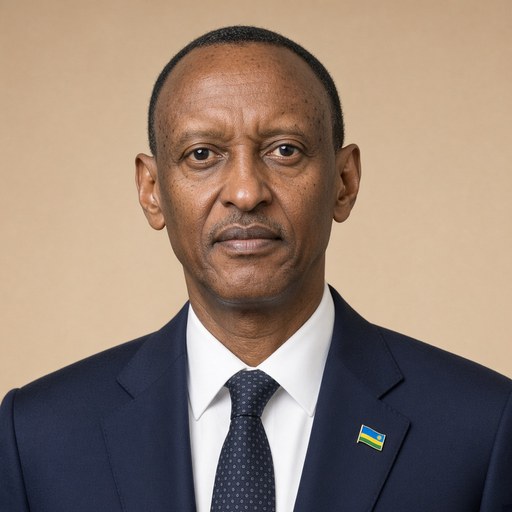
The speech of President of the Republic Paul Kagame addressing the youth participating in the Itorero Inkomezamihigo.
 Paul Kagame · President of Rwanda
- Context
- Kagame addressed Rwandan youth participating in the Itorero Inkomezamihigo national civic program in Kigali on August 27, 2016, speaking on identity and unity.
- Main themes
- Rwandan national identity, unity in diversity, education and culture, youth responsibility, shared national values, history of division and reconciliation, citizenship, Itorero cultural institution, peace and development, collective responsibility
- Duration
- ~37 min
- Words
- 4,440
- Sentences
- 298
- Readability
- 81
- Grade
- 5.6
- Syntax
- 2.54
- Vocabulary
- 1.71
Translated from Swahili
The broad sphere of national life a sentence belongs to. Every sentence has an Arena, so it is the denominator the other indices are read against.
Other298 sentences in 39 paragraphs
Kigali, August 27, 2016
Good morning,
How are you?
I cannot read a speech to such a youth audience. I want us to have a conversation; when people hear a speech, they do not engage in conversation but seem to take instructions, they listen, they understand, and they leave. It should not be like you came to take instructions. Let’s change that a bit; I want us to talk.
I would like to greet and thank the other leaders who are here, leaders from various sectors including youth organizations. I take this opportunity to say what I want to say. First, the church signifies education; when you are in the church, you are in an educational environment. What does it mean to educate? To educate means to bring together culture, ideas, and actions, so that you become what you want to be, or for people to go on a path that leads them to where they want to go together; that is what the church is, that is what education means. Therefore, as Rwanda, I think the Minister has already mentioned it, he spoke about the issue of identity; when you mention Rwanda, when you mention a Rwandan, people must understand what you are saying, it is what defines you. What defines you? It is defined by culture, it is defined by actions, it is defined by what you want to be. As Rwandans, as the country of Rwanda, we have chosen, or we will always choose a path that leads us to what we have chosen to be. Rwandans have a history, we have a culture.
In the past, in that history, there were times when we did not agree on what we wanted to be. Some agreed on what they wanted to define Rwanda differently from what others wanted it to be. In that history, some chose for Rwanda to be characterized by division, or to be a country for only some people, while others should be part of Rwanda but were marginalized or not only marginalized but also exterminated, exterminated so that they do not exist. Some chose to be defined by that, but instead of liberation being a reality, Rwanda’s liberation meant saying, “No, Rwandans can have differences,” and people generally, even if you take one part of Rwanda of people who claim to be one, when you go into it you find that there are things that differentiate them, one person is not the same as another, if you stand two people here, however they identify themselves, even if they claim to be in one part of Rwanda, you find they are different. Therefore, what we chose is not to separate according to our differences because a person is not the same as another; the path we chose is to say, “Even though we do not look alike, even though we are not equal, even though we do not have the same capabilities, even though we do not have the same religion, even though we do not have the same beliefs, we use those differences, we connect them, and we have one Rwanda.” Rwanda is one, the interests of Rwandans are one. In that differentiation I was talking about, when you take each one of us, and you ask them what they want to have a good life, everyone, however you put them aside and ask them individually, you ask all the people here in this room, when you connect them, you will find that what they tell you they want is the same, you will find that it is the same. They want security, they want development, they want peace, that is what everyone will tell you. No one can be asked among all of them and you find that they tell you, “But you know, I want my life to end tomorrow morning, and I will no longer be alive.”
And as a sign, that person may want that, they would not come to tell you, they would wait until morning, and give their life away, because it is easy, so that your life does not end if that is what you want. Now, if we are different in so many ways, why is it that when everyone is put aside and asked what they want, it comes to coincide with what another wants, even though they are different? Isn’t that what unites people then! Isn’t that what makes Rwanda, what makes Rwandans be Rwandans then! Isn’t that the path that people should be following then? Therefore, if that is understood, the church helps us analyze and understand these things I am saying, which are otherwise easy to understand. I do not know how people take it lightly, going into other things that are more complicated or difficult while there are essential, fundamental, and easy-to-understand things to implement.
That is what the church means. But the church does not stop there; the church also means; if you understand your functioning, what is your role then? – everyone sitting here and all those over there. What is your role? What you want, it will come out of what the whole country wants, you achieve it because there is another who contributed to it, not just you? Or how does it go?
The church, therefore, reminds us of the responsibilities we have, everyone has. It also reminds us of the responsibilities we have together, that we share. If you want peace and another wants it too. You cannot have peace without wishing it for another or giving it to another. It reminds us of the responsibilities we have.
Now, youth, what does youth mean? I have finished talking about the church, maybe I will come back to it. Youth, here as youth. What does it mean to be youth? Is it enough to be called youth? When we leave here knowing that we have met the youth, do you also know that you are youth then? What does it mean? Is it enough? Youth that does not understand or does not want to understand the responsibilities it has and where it should be heading? – Even youth should understand that as long as you are called youth, as you go out into the world, that standard of youth, that is how your responsibilities increase, you have for yourself, you have for the country. That is how they keep increasing, that is how they keep becoming heavier.
So if that is the case, how prepared are you to fulfill that responsibility? That is to say, when you are youth as you are here, this is the time to build yourself. Build yourself in mindset, build yourself in action, in activities, and learn to confront challenges. Because we have heard that everyone has their role, they have their contribution. But just saying “youth, youth we are still young, we are young,” and then what? Someone asks you, “and then what?” You are young, you are youth, and then what? What do you answer them? This is what I am asking! In all youth we have heard, we have even celebrated. And then what? Is there anyone who can answer me among you? Tell me among the youth, we have seen you, we have heard you. And then?
Bony Bahati: Thank you, Your Excellency the President of the Republic,
My name is Bony Bahati, and I am the coordinator of the National Youth Council in Gatsibo District.
As you asked us if we are youth, I feel we are a youth with building power and quickly when used well.
That is true but in general. That is general. Do you really have it? What I want to achieve is to say, is it enough to be called youth? Is it enough just to be called youth? I return to the point that when you are youth, it is an opportunity, but that opportunity can be lost or used well. Do you understand what I mean? Just being called youth is not enough. There is something you must invest. It is not enough to be called youth. There are things you must invest in. The youth of this country and elsewhere, you used to talk about the youth of Africa, and other Africans, but for me, those I am responsible for first are Rwandans, others come later. You, the youth of Rwanda, others listen to you. There is a capital you must take on, you must invest your energy, your willingness and ability, the knowledge you can use to confront the challenges of your lives, you yourselves and the life of the country. There are problems the country is facing – when I say the country, I mean you are in it. Isn’t that so? Therefore, you cannot confront problems without first building yourself to have the strength to confront them and seek solutions.
Now, can you solve a problem without understanding it? Can you solve a problem without understanding its answer and how it should be sought? This time of youth, you are young, is where that capital is built. It is built on two levels: One level is the individual level. Every person, you, and your conscience, has something to tell you that you must respect, you must feel that it is wrong, you have something you must feel is what you should be doing, you should feel that you must build yourself, so that when you go out, when you go out there where you meet others to confront the problems they face, you have your contribution to make in solving that problem, or problems in general.
The second level, the first one I mentioned is the individual level. The second level comes from others, or elsewhere, and that is where it comes from – in the country. In investing in a functioning country. Investing in a functioning country is not aimed at solving the problems of just one individual. It aims to solve problems in general for everyone. If it is in education, schools are not established thinking of just one child or another. No, they are for the children of the country. If it is related to health, you think of the health of Rwandans, of citizens, you do not think of just one person or another. You do not think of them. And others. Therefore, these must be connected. That is to say, every individual must be prepared or preparing and then the country must have what it prepares, at that time opportunities arise, opportunities, you must connect them with how you are prepared and what the country has prepared for you, and the country you are in. Do we understand each other?
That is what I wanted to achieve. To ask if being called youth is enough for you to think you can go out into the street and walk around saying you are youth. That is what I was asking, isn’t it? Youth, I want to see something in you. I want to see in you that desire to know. To want to participate. To want to understand, to want to make a contribution. Then you use the opportunities that are there provided at that second level I mentioned, and they connect. So we have youth, at the individual level, and at the national level fully. That is the youth we want.
The youth that the country reaches out to you saying, but you know, we have a bright future because we have youth now, at that time they will be grown up, they will have responsibilities and will be well prepared to fulfill them. That is how people’s lives exist, that is how the country progresses, that is how its people and their desires can endure.
The church, therefore, the education you see in parents, in homes, those you live with. That is what should be given great value. That is what tells us about the future, we are doing well. Because we have leaders who want to know, who want to work, who want to build the good of the country we find ahead. Do not take this lightly. Do not ever take it lightly.
That is truly what I wanted to tell you, do not ever take it lightly just because you say we are youth – you sing about youth but I want something that has substance. What is in it? I want something that has substance. For me, saying you are youth is not enough. What does it mean? What is in it?
Being called youth is not enough. That is to say, youth, how old are these people? If it is from 18 to 30. Let that be what we use but it can also be from 16 to 30. You see that is not enough. Just telling me it is from this age to that age? What is in it? Just telling me that people called youth are those between the ages of 16 to 30. But what is in it? What do I have in it? In that age where people are, what do they give me? Or what do they give? How do they behave? That is what has substance. The important thing is: what does that youth give to the country? What does it give to itself? What does it have?
Let me put that aside. I have other things that go along with that. Our country and the history we know, and the problems it has gone through or is going through and will go through tomorrow. Clarisse used to tell us about the strategies people have taken including protecting what we build, isn’t that so? Protecting what we build, what we do well for the country, do not think of it in the way of thinking that it is soldiers taking guns going to guard and spending their time guarding. No. Building, protecting the country, protecting citizens, protecting the future, the beginning of it, the heart of it is all of us together, whether youth or all people with responsibilities that must be fulfilled. When they do it well, the citizens in Rwanda here, twelve million.
The first thing that protects them, the first thing that protects what they own, gives them what they want, it comes back to that responsibility of everyone, to those actions of everyone, to those actions of state institutions, from ministers, those in parliament, to all levels. The private sector, investors, always looking for ways to do good things. When you do good things, the problems of the citizens are solved, they participate in it, it becomes protected.
Because when a person has a role in solving problems, our citizens, the role and the conversations we have with them, how we live with them, leaders at different levels, citizens see in you that what you wish for them is a solution to the problems they have, they see in you that you bring them together to seek solutions to the problems they have, security is found. Indeed, security is found.
Even when a problem comes from elsewhere and you go to them and tell them to help, they come. They come running because they know what they are coming to protect, isn’t that so? You tell them to help, to hurry here where a problem has arisen that we must confront, they all come quickly because they know what it is. They know their interest in it. They see in the leaders what they do, how they behave, they see in them that they work for their interests.
When they do not see that, everyone does their own thing as they wish, they see actions that are in the interests of a few, not all as they should want, when a problem arises when they call, they do not come. They do not come. It is like saying those others have an interest in it, they will go there. Do you understand? Do we understand, those over there, do you hear me? No, you look like you are asleep, you do not hear me. Did you hear me? Did you hear? You here in the middle, do you hear or are you asleep? Protecting, the first protection of actions, giving them security and the heart of it, is how everyone has a role in it, is how everyone has an interest in it. It goes back to the issues of education, in the church, and in how everyone’s interest is seen as not hindering the interest of another. It has gone into governance, governance in general, governance that includes leaders, and also includes youth, but it also includes leadership. Governance is based on the interests of people. But as people, you also understand, you are aware. Think for a few minutes, do you read the news? Do you follow the news around the world?
When you look at the problems in the world, you see them; I will not go into many details, because the problems of some concern them, not me. I will not dwell on them because they told me that it does not concern me, they have defeated me. But sometimes they also come into my affairs, and they do not concern them. However, even if I do not respond to them, I respond in two ways. The first way is that you and I together work on what concerns us and do it well so that it benefits us. That is the first answer. The other way of responding or of insulting or whatever, do not spend too much time on it; you look at what concerns you, what you want, do it as you wish, do it well so that it benefits you, and then one answer will be found.
The other answer they see that does not come from me comes from those they lead. When they have problems like these, these problems come from those they lead who tell them that what you are doing for us is not what we want; rather, you go beyond and tell others what they should do, but you do not do for us what we want. Indeed, when you look at that chaos, that is what it means; they are going to solve the problems of others while forgetting to solve their own. That is how it is! In the morning, when they wake up, what they are used to, the citizens tell them that you know, you have gotten used to us, you are protecting us, but you have not done for us what pleases us. We gave you trust, we gave you responsibilities, and then you go to work for your own interests. You, the leaders who lead us. You finish and go to take care of the countries of others, you leave us behind, you forget us, and now you come to seek our votes. No, today we will not vote for you. That is what they are telling you! You have abandoned us, you have lied to us, we have given you leadership, we have given you everything, and you have left us. You know yourselves, and then you go elsewhere for your own interests. On the other hand, I do not want to sound sarcastic, but these things happen, and they please me. Indeed, it is the answers they have found that do not come from me, but I am not the one who told them. Because we always tell you that you will come to tell us what is good for us. You should let us be the ones to tell you. How do you tell me what is good for me? If you want to have someone to tell, go to those you lead? What do you tell me? But because he did not do it where he has responsibilities, that is where it comes back to you.
Do you hear me? All these things you see, I will not spend time mentioning their names, where they are and who they are. You understand. Yes, but they will come to wake up and be real people and start to listen to us. They will start to ask us, “But you, you have intelligence, you think, really, can you solve your own problems? It will benefit them and last, while ours will come back to us.” But when they ask those questions, they will find the answers, but they will look at those who the other day were criticizing them there…
So, youth, the first thing they mentioned regarding who we are, our identity. Your identity is not your appearance; it is what you aspire to become. What do you want to be? Do you want to find the ability within yourself to achieve that? Sometimes they come and select from this youth and take them on a journey, taking them where I do not know, to teach them how to live better than being Rwandan. No!
Never have a moment when you do not want to be Rwandan, because you are one. Instead, seek to be a progressive Rwandan. They will take you to their home to teach you to be like them, and there you will have lost. It is like doing business; all the money you may have earned goes away, and you end up with nothing. You have lost. When you are taken to become someone else’s, you are nothing. In reality, you are caught in between, and you collapse. You know what it means to collapse? Farmers, cooks, and everyone knows what it means to collapse? Something is no longer green; it is not thriving; it is stuck in between.
Beware of collapsing because when you want to be Rwandan, when you are yourself, you are not collapsing. You are a real person. But when you want to be Rwandan, you want to be those outsiders, mixing it up, you will collapse. Indeed, some of the politics you see in Africa have collapsed. Africans are not Africans; they are not outsiders; they collapse and go there. You press it; it is not green; you press it; it does not thrive; you do not know what it is. Something that has collapsed should not be something we should identify with.
This is where it starts. When you are in this youth, those things I used to seek for quality, what has benefits for the youth is where people can thrive or collapse. Let us avoid collapsing; there is no reason. No one should choose to be something that has collapsed. These gatherings attended by the youth are to help us understand so that we do not collapse. You must take it and keep it; do not let it slip away. The mindset to ensure that people do not collapse is what we want. Politics that leads people to collapse is not what Rwanda wants.
You should also believe in yourselves. God created all people equally. He did not create some people to give them different abilities from ours, unless we do not see it or understand it in a way that some people are always above others, pointing fingers at them. Our answer is not to quarrel or to respond to each other. Let us focus on doing what benefits us. When you look at what concerns you and seek to fulfill it, seeking to fulfill your responsibilities, that is what you stand on, and it shows that you are progressing; that is the answer to the one who disrespects you, to the one who insults you, to the one who wishes you ill. Do not engage with your opponent to respond in words, to insult. Let it be. You do what concerns you, do it well, and derive benefits from it. When he comes back, he will come back as a different person.
Remember, in the past, in 1994, 1995, 1998, 2000, but especially from 1994 to 1999. Worldwide, no one gave us a chance to say that these people would come out. Rwanda was what they called a small country that did not exist. That is what you could call having two misfortunes. But I believe that those who spoke like that, if they came now, they would not speak like they did back then. We rejected that; it is not possible. We refused to be defeated; we refused to be small; we are not a small country. When an idea has quality, it cannot be small; good ideology cannot be small. People, a country cannot be small. Unless they want it to be. If they want it, it can become so at that moment. Now you want to be small; it will take no time for you to be small indeed. But when you want to be big, to have quality, it has a price you must pay; it does not come for free. Being small, being cowardly is free; you can even find those who lend you without asking for any interest to keep you down. Do you understand? They really reward you. But when you refuse that, it requires you to pay a heavy price.
In short, you must make a decision. Do you want to be a coward or do you want to be strong? What do you choose? Do you choose to be small and have people encourage you that you have become nothing, or do you choose to be strong people with quality? Even if it requires a price? It will require you to stay up nights working, collaborating with others, and no one will thank you for it. No one will reward you for it. Making a decision, therefore, you see that it is not easy.
Meanwhile, there is that collapsing. You can say, “No, I do not want to be a coward.” But do you accept what is required to advance? There are others caught in between who want to continue being in between. They want to remain cowards and even be rewarded for it, but they also want to advance without much effort. In the end, they collapse in between. We also carry them. You see them all over the world; they are all there. But what I wish for Rwanda, what I ask of you is to make one decision. A decision that will cost us but will benefit us greatly. And I think that is where we should be. We must be where there is quality. Do you want to fight? We will fight. Do you want peace? There we are together. Isn’t that so? Is there anything else you want from me?
Thank you very much!
The original Swahili. The tags above are read on the English translation's sentences.
Kigali, I 27 Kanama 2016
Mwaramutse,
Muraho neza,
Ntabwo nasoma ijambo nsomera urubyiruko rungana rutya. Ndashaka ko tuganira, iyo abantu bumva ijambo ntabwo baganira ahubwo basa nabafata amabwiriza, bagatega amatwi bakumva, bagataha. Ntibibe nkaho mwaje gufata amabwiriza. Reka tubihindure gato, ndagira ngo tuganire.
Nagira ngo ndamutse kandi nshimire abandi abayobozi bari hano, abayobozi b’inzego zitandukanye harimo n’inzego z’urubyiruko. Ndaheraho mvuga icyo nshaka kuvuga. Icya mbere, itorero rivuze uburezi, iyo uri mu itorero, ni urwego rw’uburezi uba urimo. Kurera byo bivuze iki? Kurera ni ugushyira hamwe umuco, ibitekerezo, n’ibikorwa, kugira ngo ube icyo ushaka kuba cyo, cyangwa se abantu bajye mu nzira ibaganisha aho bifuza kujya bari hamwe; ni cyo itorero, ni cyo uburezi bivuze. Rero nk’u Rwanda, ngira ngo Minisitiri amaze kubivuga, yavuze ikibazo cy’ ikituranga, iyo uvuze u Rwanda, ukavuga Umunyarwanda, abantu bagomba kumva icyo uvuga, ni ikikuranga. Urangwa n’iki? Urangwa n’umuco, urangwa n’ingiro, urangwa n’icyo ushaka kuba cyo. Nk’Abanyarwanda, nk’igihugu cy’u Rwanda, twahisemo, cyangwa tuzahora duhitamo inzira ituganisha na none ku cyo twahisemo kuba cyo. Abanyarwanda dufite amateka, dufite umuco.
Mu bihe byashize muri ayo mateka, hari aho tutumvikanye icyo twifuza kuba cyo. Hari abumvikanye icyo bashaka kiranga u Rwanda kinyuranye n’icyo abandi bifuza ko cyaranga u Rwanda. Muri ayo mateka, abahisemo ko u Rwanda rurangwa n’amacakuburi, cyangwa rurangwa no kuba urw’abantu bamwe gusa, abandi bari bakwiye kuba nabo ari igice cy’u Rwanda bagahezwa cyangwa ntibibe no guhezwa gusa bikaba noneho no kurimburwa, kurimburwa ngo batanabaho. Hari abahisemo kurangwa n’ibyo, ariko aho kwibohora bibereyeho, kwibohora k’u Rwanda byari ukuvuga ngo “Oya, Abanyarwanda dushobora kuba dufite ibidutandukanyije,” n’abantu ubusanzwe, niyo wafata igice kimwe cy’u Rwanda cy’abantu biyita ko ari bamwe, ubagiyemo usanga hari ikibatandukanyije, ntabwo umuntu aba kimwe n’undi, uhagurukije abantu babiri hano, uko baba biyita kose, niyo baba biyita ko bari mu gice kimwe cy’u Rwanda, usanga batandukanye. Ntabwo rero icyo twahisemo ari ugutandukana dukurikije ibidutandukanya n’ubundi kubera ko umuntu ntamera kimwe n’undi, inzira twahisemo ni ukuvuga ngo “Nubwo tudasa, nubwo tutareshya, n’ubwo tudafite ubushobozi bumwe, nubwo tudafite idini rimwe, n’ubwo tudafite ibyo twemera bimwe, dukoresha ibyo bidutandukanya, tukabihuza, tukagira u Rwanda rumwe.” U Rwanda ni rumwe, inyungu z’Abanyarwanda ni zimwe. Muri kuriya gutandukana navugaga, iyo ufashe buri umwe muri twe, ukamubaza icyo yifuza kugira ngo agire ubuzima bwiza, buri wese uko umushyize iruhande ukamubaza ukwe, ukabaza abantu bose bari hano muri iki cyumba, nujya kubihuza, urasanga ibyo bakubwiye ko bifuza ari bimwe, uraza gusanga ari bimwe. Barashaka umutekano, barashaka amajyambere, barashaka amahoro, buri wese nibyo ari bukubwire. Nta n’umwe ushobora kubaza muri abo bose ngo usange akubwiye ngo “Ariko urabizi, njyewe ndashaka ko ubuzima bwanjye burangira ejo mu gitondo, nkazaba ntakiriho”.
N’ikimenyimenyi, uwo nguwo waba abishaka, ntiyakwirirwa aza kubikubwira, yategereza bugacya, ubuzima bwe akabutanga, kuko biroroshye, kugira ngo ubuzima bwawe butakare niba ari ko ubishaka. None se niba dutandukanye ku buryo bwinshi, kuki buri wese bamushyize ku ruhande bakamubaza icyo yifuza, biza guhura n’icy’undi batandukanye? Si icyo gihuza abantu ubwo! Si icyo kigize u Rwanda ubwo, si cyo kigize Abanyarwanda kuba Abanyarwanda noneho! Si iyo nzira se abantu bakwiye kuba banyuramo noneho. Ibyo rero niba byumvikana, itorero icyo ridufasha ni ugusesengura no kumva neza ibi ngibi mvuga n’ubundi byoroshye kumva. Sinzi uko abantu babiteshukaho, bakajya mu bindi ahubwo bigoranye cyangwa bikomeye kurushaho hari ibintu bya ngombwa, by’ibanze, byoroshye kumva ndetse no gushyira mu ngiro.
Nicyo itorero rivuze. Ariko itorero ntabwo rigarukira aho ngaho, itorero ikindi rivuze; niba ubyumva imikorere yawe, ingiro yawe ibaye iyihe noneho? Uruhare rwawe rubaye uruhe wowe? – buri wese wicaye aha n’abandi bose bari hariya. Uruhare rwawe ni uruhe? Ibyo wifuza, biza kuvamo ibyo igihugu cyose cyifuza, ubigeraho kubera ko hari undi wabigizemo uruhare gusa, atari wowe? Cyangwa bigenda bite?
Itorero rero, riba ritwibutsa inshingano dufite, buri wese afite. Noneho bikanatwibutsa n’inshingano dufite hamwe, duhuriraho. Niba ushaka amahoro n’undi arayashaka. Ntabwo wagira amahoro utayifuriza undi cyangwa utayaha undi. Biratwibutsa rero inshingano dufite.
Noneho urubyiruko rero, urubyiruko bivuze iki? Iby’Itorero ndabirangije, wenda ndaza kuba mbisubiraho. Urubyiruko, muri aha nk’urubyiruko. Kuba urubyiruko bivuze iki? Kwitwa ko uri urubyiruko birahagije? Ubwo tuve aha tuzi ko twahuye n’urubyiruko, namwe muzi ko muri urubyiruko hanyuma? Bivuze iki? birahagije? Urubyiruko rutumva cyangwa rudashaka kumva inshingano rufite n’aho rukwiye kuba rugana? – Ndetse urubyiruko rukwiye kuba rwumva ngo uko uba witwa urubyiruko, uko ugenda urusohokamo, urwo rugero rw’urubyiruko, niko n’inshingano ufite, wifitiye ubwawe, ufitiye igihugu zigenda ziyongera. Niko zigenda zirushaho kwiyongera, niko zigenda zirushaho kuremera.
Nonese niba ariko bimeze, witeguye ute kuzuza iyo nshingano? Ni ukuvuga ngo iyo uri urubyiruko nkuko muri hano, iki ni igihe cyo kwiyubaka. Kwiyubaka mu myumvire, kwiyubaka mu ngiro, mu bikorwa no kumenya guhangana n’ibibazo. Kuko twamaze kumva ngo buri wese afite uruhare rwe, afite umusanzu we. Naho kuvuga gusa ngo urubyiruko, urubyiruko turacyari bato, turi bato, hanyuma se? Umuntu akubajije ati “hanyuma se?” Uri muto, uri urubyiruko none se? Hanyuma? Umusubiza iki? ubu nicyo ndiho mbaza ga! Muri urubyiruko rwose twabyumvise, twanabishimye. Hanyuma se? Hari uwansubiza muri mwe? mumbwire muri urubyiruko, twababonye, twabyumvise. None?
Bony Bahati: Urakoze Nyakubahwa perezida wa repubulika,
Nitwa Bony Bahati, nkaba ndi umuhuzabikorwa w’inama y’igihugu y’urubyiruko mu Karere ka Gatsibo.
Nkuko utubajije ngo turi urubyiruko, njye numva turi urubyiruko rufite imbaraga zubaka kandi vuba mu gihe zikoreshejwe neza.
Ibyo nibyo ariko ni muri rusange. Ibyo ni ibya rusange. Ese koko murabifite? Icyo nshaka kugeraho, ni ukuvuga ngo ese birahagije kwitwa urubyiruko? Birahagije gusa kwitwa urubyiruko? Ndagaruka ku kintu cy’uko iyo uri urubyiruko, ni amahirwe, ariko amahirwe ashobora gutakara cyangwa agakoreshwa neza. Urumva icyo nshaka kuvuga? Kwitwa urubyiruko gusa ntibihagije. Hari icyo ugomba gushora. Ntibihagije kwitwa urubyiruko. Hari ibyo ugomba gushoramo. Urubyiruko rwo muri iki guhugu ndetse n’ahandi, mwahoze muvuga urubyiruko rwa Afurika, nabo Banyafurika bandi, ariko njye abo nshinzwe ba mbere ni u Rwanda, abandi bakaza nyuma. Mwebwe urubyiruko rw’u Rwanda ubwo n’abandi barumviraho. Hari igishoro mugomba kwikoraho, mugomba gushora imbaraga zanyu, ubushake n’ubushobozi, ubwenge mushobora gukoresha kugirango muhangane n’ibibazo by’ubuzima bwanyu, mwebwe ubwanyu ndetse n’ubuzima bw’igihugu. Hari ibibazo igihugu gihangana nabyo – iyo mvuze igihugu namwe murimo. Sibyo? Ntabwo rero ushobora guhangana n’ibibazo ngo ubinyuremo, ubikemure, utabanje kwiyubaka ngo ugire imbaraga zo guhangana nabyo ngo ubishakire ibisubizo.
Nonese wakemura ikibazo utacyumva? Wakemura ikibazo utumva igisubizo cyacyo n’ukuntu gikwiye kuba gishakwa. Iki gihe rero cy’urubyiruko, muba muri bato, niho icyo gishoro gikorerwa. kigakorwa ku nzego ebyiri: Urwego rumwe ni urwego rw’umuntu ku giti cye. Buri muntu wese, we, n’umutimanama we, ufite icyo umubwira agomba kubahiriza, yumva ko kizira, afite icyo agomba kumva ko aricyo akwiriye kuba akora, akwiye kumva ko akwiye kwiyubaka, kuburyo ubwo aribwo bwose, we. Kugirango noneho, najya mu rubuga, najya hanze hariya aho ahurira n’abandi kugirango ibibazo bahangane nabyo babikemure, abe afite umusanzu we atanga muri uko gukemura icyo kibazo, cyangwa ibibazo muri rusange.
Urwego rwa kabiri, ubwo urwambere navuze ni urwa buri wese. Urwego rwa kabiri ruturuka mu bandi, cyangwa ahandi, ninaho bituruka – mu gihugu. Mu gushora igihugu gikora. Ugushora igihugu gikora ntabwo biba igamije gukemura ibibazo by’umuntu umwe gusa runaka. Biba bigamije gukemura ibibazo muri rusange kuri buri wese. Niba biri mu burezi, amashuri ashyirwaho ntabwo ashyirwaho atekereza umwana wa kana n’uwa kanaka gusa. Oya ni abana b’igihugu. Niba ari ibijyanye n’ ubuzima uratekereza ubuzima bw’Abanyarwanda, bw’abanyagihugu, ntabwo utekereza kanaka na kanaka gusa. Ntabwo aribo utekereza. N’ibindi. Ibyo rero bigomba guhuzwa. Ni ukuvuga ngo buri muntu ku giti cye agomba kuba yiteguye cyangwa yitegura hanyuma n’iguhugu kiba gifite ibyo gitegura, icyo gihe amahirwe yabonetse, amahirwe, ugomba kuyahuza uko witeguye n’ibyo igihugu cyaguteguriye, kandi igihugu nawe urimo. Turumvikana?
Nicyo nahoze nshaka kugeraho. Cyo kubaza ngo kwitwa urubyirko gusa wowe ukumva ko ushobora kujya mumuhanda ugenda wivuga ko uri urubyiruko. Nibyo nabazaga nti none? Urubyiruko njye ndashaka kukubonamo ikintu. Ndashaka kukubonamo iyo nyota yo kumenya. Yo gushaka kugira uruhare. Yo gushaka kumva neza yo gushaka kugira umusanzu utanga. Noneho ugakoresha amahirwe ariho yatanzwe kuri rwa rwego rwa kabiri navugaga, bigahura. Ubwo dufite urubyiruko, ku muntu ku giti cye, no ku rwego rw’igihugu byuzuye. Urwo nirwo rubyiruko dushaka.
Urubyiruko igihugu kigeraho kikumva ngo ariko urabizi, dufite ejo hazaza heza kuberako dufite urubyiruko ubu icyo gihe ruzaba rukuze rufite inshingano kandi rwiteguye neza kuzuza. Niko ubuzima bw’abantu bubaho, niko igihugu gitera imbere niko abantu bacyo n’ibyo bifuza bishobora kuramba.
Itorero, rero, uburere mubona mu babyeyi, mu ngo, mubo mubana. Ibyo nibyo bikwiriye guhabwa agaciro kanini. Nibyo bitubwira ngo ejo hazaza, tumeze neza. Kuko dufite intore zishaka kumenya, zishaka gukora, zishaka kubaka ibyiza by’igihugu dusanga imbere. Ntabwo ibi mwabipfusha ubusa. Ntimuzigere mubipfusha ubusa.
Nicyo rwose nashakaga kubabwira, ntimuzigere mubipfusha ubusa ngo kuko eeh ngo turi urubyiruko -, mukaririmba urubyiruko ariko njye ndashaka ikirimo gifite ireme. Harimo iki? Ndashaka ikirimo. Kuri njye kuvuga ngo uri urubyiruko ntabwo bihagije. Bivuze iki? Ni iki kirimo?
Kwitwa rubyiruko ntibihagije. Ni ukuvuga ngo rubyiruko harya ni abantu bafite imyaka ingahe? Niba ari 18 kugeza kuri 30. Reka abe aribyo tuba dukoresheje ariko bishobora no kuba 16 kugera kuri 30. Urumva ibyo ntibihagije. Kumbwira gusa ngo ni ukuva ku myaka iyi ukagera aha? Ni iki kirimo? Kumbwira gusa ngo abantu bitwa urubyiruko ni abantu bo hagati y’imyaka 16 kugera kuri 30. Ariko se ni iki kirimo? Mfitemo iki? Muri iyo myaka aho abantu barimo barampa iki? cyangwa biha iki? Bameze bate? Icyo nicyo gifite ireme. Igikomeye ni: urwo rubyiruko ruha igihugu iki? Rwiha iki? Rufite iki?
Ibyo nabyo reka mbe mbishyize ku ruhande. Njye mu bindi nabyo bijyana n’ibyo. Igihugu cyacu n’amateka tuzi, n’ibibazo cyanyuzemo cyangwa kinyuramo n’ubu kizanyuramo n’ejo. Clarisse yahoze atubwira ingamba abantu bafashe harimo kurinda ibyo twubaka, sibyo? Kurinda ibyo twubaka, ibyo dukora byiza by’igihugu ntimubyumve mu buryo bwo kwibwira ko ari abasirikare bafata imbunda bakajya ku burinzi bakirirwa barinze. Oya. Burya kubaka, kurinda igihugu, kurinda abanyagihugu, kurinda ejo hazaza, intangiriro yabyo, umutima wabyo ni twese hamwe, rwaba urubyiruko rwaba, abantu bose bafite inshingano bagomba kuzuza. Iyo bazikora neza, abanyagihugu mu Rwanda hano, miliyoni cumi n’ebyiri.
Ikintu cyambere kibarinda, ikintu cya mbere kirinda ibyo batunze, kibaha ibyo bashaka, biragaruka kuri ya nshingano ya buri wese, kuri bya bikorwa bya buri wese, kuri bya bikorwa by’inzego z’igihugu, guhera kuri ba minisitiri, abo mu nteko, kugera, inzego zose. Abikorera abashoramari, guhora dushakisha uburyo ubwo aribwo bwose bwo gukora ibintu bizima. Iyo ukora ibintu bizima, ibibazo by’abaturage bigakemuka, bakabigiramo uruhare burya biba byabonye uburinzi.
Kuko iyo umuntu afite uruhare mu gukemura ibibazo, abaturage bacu, uruhare ndetse n’ibiganiro tugirana nabo uko tubana nabo, abayobozi ku nzego zitandukanye, abaturage bakakubonamo ko icyo ubifuriza ari igisubizo cy’ibibazo bafite, bakakubonamo ko ubazana mu gakorera hamwe mu gushaka ibisubizo by’ibibazo bafite burya umutekano uba wabonetse. Burya uba wabonye umutekano.
Niyo haje ikibazo giturutse ahandi ukabajyamo ukababwira uti nimutabare, baraza. Baza biruka kuko bazi icyo baje kurinda, sibyo? Ukababwira uti nimutabare, nimutebuke hano havutse ikibazo duhangane nacyo, baraza bose bihuta kubera ko bazi icyo aricyo. Bazi inyungu yabo babifitemo. Babona mu bayobozi ibyo bakora uko bitwara, bababonamo ko bakorera inyungu zabo.
Iyo batabibona buri wese yikorera ibye uko abyishakiye bakabona ibikorwa biri mu nyungu z’abantu bake, atari bose nk’uko bakwiye kuba babyifuza, iyo haje ikibazo iyo bahamagaye ntibaza. Ntabwo baza. Ni nko kuvuga ngo ba bandi babifitemo inyungu nibajyeyo. Urabyumva? Turumvikana, abo hakurya hariya muranyumva? Oya murasa nk’abasinziriye ntago munyumva. Mwanyumvise? Namwe mwumvise? Namwe hano hagati murumva cyangwa murasinziriye? Ibyo kurinda, kurinda kwa mbere ibikorwa, kubiha umutekano n’umutima ubikorana, ni ukuntu buri wese abigiramo uruhare, ni ukuntu wese abigiramo inyungu.Biragenda bigasubira mu bibazo by’uburere, mu itorero, no mu kuntu buri wese inyungu ye igaragara ko itabangamiye inyungu y’undi. Bikaba byagiye mu miyoborere, imiyoborere muri rusange, imiyoborere irimo abayobozi, irimo noneho n’urubyiruko, ariko ubwo irimo n’ubuyobozi. Imiyoborere ishingira ku nyungu z’abantu. Ariko nk’abantu nyine namwe musobanukiwe mujijutse. Mwibaze mu minota mikeya, musoma amakuru? Mukurikira amakuru ari ku Isi yose?
Iyo ugiye kureba ku Isi yose ibibazo bihari, murabibona, ntago ndibujye muri byinshi cyane, kuko ibibazo bya bamwe birabareba ntago bindeba, sinirirwa bijyamo kuko babwiye bati ntibikureba baba bantsinze. Ariko nuko rimwe na rimwe nanjye bajya mu byanjye kandi bitabareba. Ariko nubwo ntabasubiza, mbasubiza mu buryo bubiri. Uburyo bwa mbere, njyewe namwe mwese dufatanyije nuko dukora ibitureba kandi tukabikora neza bikaduhira. Icyo nicyo cya mbere ni cyo gisubizo. Ibindi byo kujya gusubizanya cyangwa byo gutukana cyangwa ngo ugire gute, ntukabiteho umwanya munini cyane, wowe reba ibikureba, ibyo ushaka ubikore nkuko ubishaka, ubikore neza biguhire, ubundi igisubizo kimwe kiba kibonetse.
Igisubizo kindi babona kitanturutseho gituruka kubo bayobora, iyo bagize ibibazo nkabiriya, biriya bibazo bituruka mubo bayobora bababwira ngo ariko ibyo mudukorera ntago aribyo dushaka, ahubwo murarenga mukabwijya kubwira abandi ibyo bakwiriye gukora ariko twe ntago mudukorera ibyo dushaka. Buriya, ureba kariya kavuyo nicyo kavuze bagiye gukemura iby’abandi bibagirwa gukemura iby’iwabo. Niko bimeze! Bwajya gucya mu gitondo ibyo bamenyereye, abaturage bakababwira bati ariko murabizi, mwaratumenyereye cyane, murarengera ariko ntago mwadukoreye ibidushimishije. Twabahaye icyizere, tubaha inshingano murangije mujya gukorera mu nyungu zanyu. Mwebwe abayobozi batuyobora. Murangije mujya kwita ku bihugu by’ahandi twebwe muradusiga, muratwibagirwa, none muje kudushakamo amajwi yo kubatora. Oya uyu munsi ntabwo tubatora.Buriya nibyo bariho bababwira ga! Mwaradutaye, muratubeshya, twarabahaye ubuyobozi, twarabahaye ibintu byose muraduta. Murimenya murangije mujya n’ahandi ku nyungu zanyu. Ku rundi ruhande ntabwo nshaka kumvikana nkushinyagura ariko biriya bibabaho njye biranshimisha. Buriya ni ibisubizo babonye binturetseho ariko atarinjye ubibabwiye. Kuberako duhora tubabwira ngo ariko muraza kutubwira ibitubereye duhari. Mwaretse tukaba aritwe tubibabwira. Wowe urambwira ute ibimbereye waretse nka bikubwira. Niba ushaka kugira abo ubwira jya abo uyobora? Njyewe urambwira iki? Ariko kubera ko atabikoze aho afite inshingano niyo iyigaruka ureba.
Muranyumva se? Ibi byose mureba sinirirwa mvuga amazina yabo, y’ahariho n’abaribo. Murabyumva. Nibyo Ariko buriya baraza gukanguka babe abantu bazima batangire batwumve natwe. Buriya bazatangira kutubaza bati “burya ariko namwe, burya mufite ubwenge muratekereza, burya koko, namwe burya mushobora kwikemurira ibibazo? Bikabahira bikaramba twebwe ahubwo ibyacu bikatugaruka.” Ariko ubwo ibibazo barabyibaza, ibisubizo bakabyiha, ariko barebeye kubo ejo bundi bagayaga baraho birirwa ba…
Rubyiruko rero, icya mbere bavuze ibyerekeranye nicyo turicyo, ikíturanga. Ikikuranga si isura ni icyo wifuza kuzaba cyo. Urashaka kuba iki? Wakwishakamo ubushobozi bukikugezaho ko ubufite? Hari ubwo baza rero bagatoranya muri uru rubyiruko bakabishyirira urugendo, bakabatwara aho babajyana sinzi aho ariho, ngo bagiye kubigisha, uko babaho neza kurusha kuba Umunyarwanda. Oya!
Ntuzagire na rimwe igihe udashaka kuba Umunyarwanda, kuko uri we. Ahubwo uzashake kuba Umunyarwanda muzima uteye imbere. Uzagutwara iwabo ngo arashaka kukwigisha kuba nk’uw’íwabo, ahongaho uba wahombye. Ni nkuko ukora ubucuruzi amafaranga yose waba wabonye akagenda akazimira, ugatwara ubusa. Uba wahombye. Iyo utwawe kujya kugirwa uw’abandi , burya ntacyo uba uricyo. Mu by’ukuri ufatirwa hagati, ugapfuba. Ibintu bipfubye murabizi? Abahinzi, n’abatetsi, n’abandi bose murabizi gupfuba? Ikintu ntikikiri kibisi, ntabwo gihiye, kiri aho hagati.
Muzirinde gupfuba kuko iyo ushaka kuba Umunyarwanda, iyo uriwe, ntabwo uba upfubye. Uba uri umuntu muzima. Ariko iyo ushatse kuba Umunyarwanda, ugashaka kuba bariya bo hanze bera, ukabivangavanga urapfuba. Buriya na politke zimwe ubona za Afurika, zarapfubye. Abanyafurika ntibaba Abanyafurika, ntibaba abera, barapfuba bakajya aho. Ukagikanda si kibisi, ukagikanda ntigihiye, ukayoberwa icyo ari cyo. Ikintu gipfubye ntidukwiye kumvikana nacyo.
Ni aha bihera rero. Iyo muri muri uru rubyiruko, bya bindi nahoze nshakisha by’ireme, ikirimo gifite inyungu mu rubyiruko niho abantu bashobora guhira cyangwa bagapfuba. Tuzirinde gupfuba, nta n’impamvu. Ntawe ukwiye kuba yahitamo ngo ahitemo kuba ikintu gipfubye. Aya matorero yitabirwa n’urubyiruko, ni ukuduha kumva neza kugira ngo tudapfuba. Mugomba kubifata mukabikomeza rero, ntibibacike. Imyumvire yo kugira ngo abantu badapfuba niyo dushaka. Politike irera abantu bagapfuba ntago ariyo u Rwanda rushaka.
Muzajye kandi mwiyizera. Imana yaremye abantu bose kimwe. Ntabwo yaremye abantu bamwe ngo ibahe ubushobozi butandukanye n’ubwacu, keretse iyo tutabibonamo cyangwa tutabyumva ku buryo abantu bamwe bahora bari hejuru y’abandi bababwira, babatunga agatoki. Igisubizo cyacu ntabwo ari ugutongana cyangwa gusubizanya. Mureke twibande ku gukora ibidufitiye inyungu. Iyo wowe ureba ikikureba ugashaka kucyuzuza , ugashaka kuzuza inshingano yawe, akaba aricyo uheraho ndetse bikagaragara ko utera imbere, nicyo gisubizo cy’ugusuzugura, cy’uwagututse, cy’ukwifuriza nabi. Ntugate umwanye wawe ujya gusubiza mu magambo, gutukana. Bihorere. Wowe kora ibikureba, ubikore neza ubivanemo inyungu. Aho azajya kugarukira, azaza ari undi umuntu.
Wibuke, mu bihe byashize muri 1994, 1995,1998, 2000 ariko cyane cyane guhera 1994 kugeza 1999. Ku Isi hose nta muntu waduhaga amahirwe ngo avuge ati aba bantu bazavayo. U Rwanda rwari, icyo bita agahugu gato kandi katanariho. Nicyo wakwita kugira ibyago bibiri. Ariko ndibwira ko abavugaga gutyo iyo baje ubu batavuga nkibyo bavuze icyo gihe. Ibyo twarabyanze, ntago bishoboka. Twanze gutsindwa, twanze kuba bato, ntago turi agahugu gato. Iyo igitekerezo gifite ireme nticyaba gito, ingengabitekerezo nziza ntiyaba nto. Abantu, igihugu nticyaba gito. Keretse iyo babishatse. Iyo babishatse náko kanya bihita biba. Ubu mwashatse kuba bato, nta mwanya byatwara mwaba bato nyine. Ariko iyo ushaka kuba munini, kugira ireme bifite igiciro ugomba kwishyura, ntago biza ku busa. Kuba muto, kuba ikigwari byo ni ubuntu, ushobora no kubona abakuguriza nta n’ínyungu bagusaba ngo ukomeze ugume hasi. Urabyumva? Rwose banaguhemba. Ariko ibyo iyo ubyanze, bigusaba gutanga ikiguzi gikomeye.
Muri make ugomba gufata icyemezo. Urashaka kuba ikigwari cyangwa urashaka gukomera? Murahitamo iki? Murahitamo kuba bato ndetse abantu bakabibahembera ko mwabaye ubusa, cyangwa mugahitamo kuba abantu bakomeye bafite ireme? Nubwo hari ikiguzi byabasaba? Bizagusaba kurara amajoro ukora, ukorana n’abandi, kandi ntanuzabigushimira. Ntanuzabiguhembera. Gufata icyemezo rero urumva ko bidakomeye.
Hagati aho ngaho harimo kwa gupfuba rero. Ushobora kuvuga uti “Oya rwose njye sinshaka kuba ikigwari.” Ariko se ibisabwa ngo utere imbere urabyemeye? Hari abandi bafatirwa hagati aho rero, bagashaka gukomeza kuba bari hagati aho. Bagashaka kuguma ari ibigwari kandi bakanabihemberwa, ariko bagashaka no gutera imbere, ariko bitabavunnye cyane. Birangira rero bapfubiye hagati ahongaho. Abo nabo turabagwije. Urababona ku Isi hose abo bose barahari. Ariko njye icyo nakwifuriza u Rwanda, icyo nabasaba ni ugufata icyemezo kimwe.Icyemezo kizaduhenda ariko kikatwungura cyane. Kandi ndatekereza ko aho ariho dukwiriye kuba turi. Tugomba kuba turi ahari ireme. Urashaka kurwana, tuzarwana. Urashaka amahoro, aho ho rwose turi kumwe. Sibyo? Hari ikindi munshakaho?
Murakoze cyane!
Save
Save