





- Context
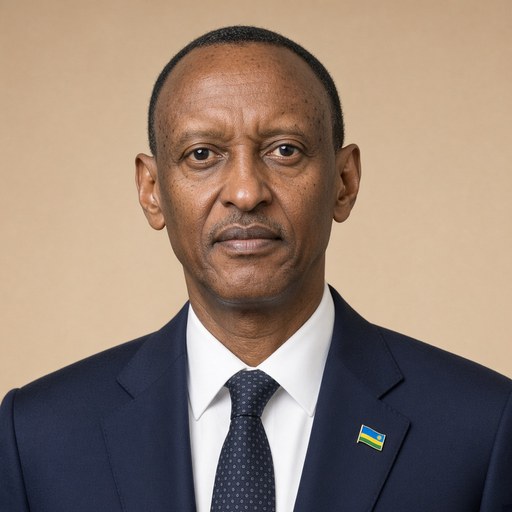
- Kagame addressed the annual Umushyikirano in Kigali on 21 December 2020, delivering his State of the Nation address amid the COVID-19 pandemic.
- Main themes
- COVID-19 pandemic response, state of the nation, national resilience, economic performance, healthcare development, social protection, agriculture, education, infrastructure, security and international cooperation, citizen-government trust, Rwandan diaspora contributions
- Duration
- ~10 min
- Words
- 1,217
- Sentences
- 71
- Readability
- 60
- Grade
- 9.2
- Syntax
- 2.71
- Vocabulary
- 1.88
The broad sphere of national life a sentence belongs to. Every sentence has an Arena, so it is the denominator the other indices are read against.
Other71 sentences in 37 paragraphs
I would like to start by greeting you all.
At this time last year, we were gathered together for our annual Umushyikirano. I was able to report to you that the state of our nation was good and it was true.
Even after that when we were ending the year, I told you that 2019 had been a good year for us, and that my hope was that the following year will also be good, and I even added that it was possible that 2020 will be even better. If you remember well, I also added that it is not easy to know what lies ahead, what the future holds. This second one is what actually happened. We didn’t know what would happen in this year, 2020. The Covid-19 pandemic struck.
Only a few months later, we were confronted by a global pandemic, which has been with us for most of this year.
Despite the shock of Covid-19, and the many adjustments we have had to make, I want to reassure Rwandans that the state of our nation remains strong. The reason is clear.
I want to thank all Rwandans for the commitment, collaboration, and hard work, which you have demonstrated, as well as your willingness to help in dealing with this challenge.
I thank all of us, at the different levels of our country’s leadership. Rwandans responded to the challenge, and so did our institutions. The pandemic is still here and it is still not clear where it is headed.
We have to get used to living with this pandemic as it is still here, and keep on fighting for our lives to continue as they should as we deal with it.
This was based on the trust between citizens and leaders, through our institutions. It was also based on our history, our politics that promotes hard work, solidarity, a shared vision, and striving to achieve our goals.
We saw benefits from the investments that Rwanda has been making. These magnified the natural resilience of our people, and helped to mitigate the negative impacts of the pandemic.
On social protection:
On agriculture:
On health:
There are also a lot of other developments in the health sector. There is this modern hospital in Kigali, the King Faisal Hospital, I would like to inform you that we have also invested a lot of resources in it, in capacity building, looking for doctors with specialized skills, with skills in treating different kinds of illnesses, highly knowledgeable personnel. We were able to find some, most of them have already arrived while others are still on their way.
Those illnesses that were making Rwandans or foreigners living in Rwanda fly out to get treated will be amongst those treated in the country. We will also have enough capacity to help treat our fellow East Africans, people from across the region who will be able to come to Rwanda, instead of travelling to very expensive places far from this region.
On education:
This is what I was referring to when I said that we need life to continue as it should but bearing in mind that we need to be careful about certain things. We need to conduct ourselves in a certain way to be able to fight this pandemic. The two might conflict but we have to do all that is possible.
On infrastructure:
There are disasters that disrupt the lives of people, but there are also cases where lives are affected due to the mistakes made. People settled in uninhabitable areas, illegal exploitation of land resources and doing it in a way that results in disasters, caused by erosion or heavy rains, taking a heavy toll. We are also correcting this. But as we try to solve this issue, there are instances where it affects people’s lives because when families are relocated from wetlands to residential areas which cannot be affected by erosions, that relocation affects lives, and sometimes people don’t seem to understand it very well, but in reality, it is an issue that we are trying to solve. We don’t want to cause even more problems. Most of the times, the people we are trying to help are the same people who have caused that problem.
On the economy:
On security & international cooperation:
We thank those who contributed directly to these achievements; those who have supported us in different ways, as well as those who were doing their job as they should, here I am talking about Rwandans or others who live in Rwanda, including our frontline and community health workers, our youth volunteers, the private sector, and our development partners.
I also want to thank you for the solidarity you have shown with fellow Rwandans.
This includes Rwandans living abroad, who contributed financially to support people whose livelihoods were affected by the pandemic. Rwandans living abroad have been doing a lot of things, even in that regard they have a lot they have done, we are grateful to them.
I commend the local government leaders who are completing their mandate. We thank you for your service, and ask you to continue contributing, in your future endeavours.
Resilience is the capability to withstand hard times, and not accepting to overwhelmed or be taken hostage by them. It is good that we continue on this path, review what we have not done well and keep on improving where we are doing well. I hope that we will keep this culture.
But all this should be done without compromising long-term health and well-being, or the ability to prosper in the future.
We have come too far, to let our prevention efforts go to waste. This is not the time to relax, to reduce our efforts. This is the time to protect our gains and strive for what we want to achieve, and do everything possible to continue to make progress.
Every one of us has the responsibility to play their part, to work with each other, to continue rebuilding and protecting our gains with the understanding that this is our main goal as a people. We have to complement each other.
We have had to make many sacrifices this year. It has not been easy. This includes not coming together as families during this festive season to celebrate. All those other things that would have brought us together to celebrate as families in these past months were not possible. Even as we come to the end of this year, it is still not possible.
But, without these sacrifices, it will end up costing us much more, including lives because lives were lost.
We don’t just talk about this pandemic as something that has disrupted our economy and our ways of life. It is something that affects the lives of people to the extent that people lose their lives. This has happened.
Together, we will recover and return to the path of growth, and continue expanding the well-being of all families.
Once again, I would like to thank all of us Rwandans, along with our friends and partners, for staying along on this journey. Let us do more and keep the momentum.
I would like to conclude by wishing you all a happy Christmas and a prosperous new year.
May the peace of God be upon you all.
Thank you.