




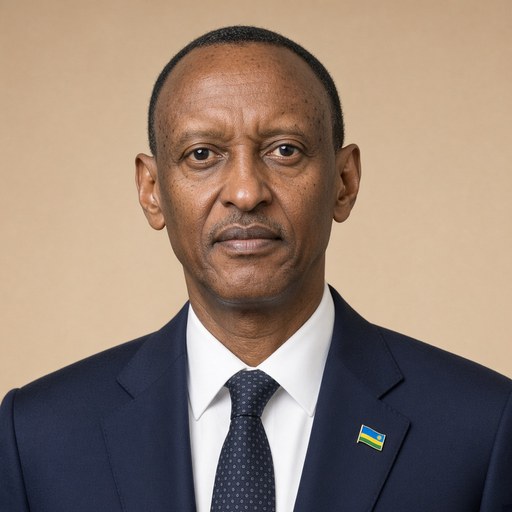
Rwanda — Statement to the General Debate of the 72nd Session of the United Nations General Assembly (2017)
 Paul Kagame · President
- Context
- Paul Kagame delivered the statement of Rwanda in the general debate of the 72nd session of the United Nations General Assembly in 2017.
- Main themes
- UN reform and accountability, sexual exploitation and abuse prevention, trust deficit in international institutions, UN-African Union cooperation and peacekeeping, Sustainable Development Goals and Agenda 2063, women's empowerment, digital divide and broadband access, Kigali Amendment to the Montreal Protocol
- Duration
- ~5 min
- Words
- 540
- Sentences
- 25
- Readability
- 41
- Grade
- 12.7
- Syntax
- 2.95
- Vocabulary
- 2.08
UN General Assembly Translated from French
The broad sphere of national life a sentence belongs to. Every sentence has an Arena, so it is the denominator the other indices are read against.
Other25 sentences in 8 paragraphs
Every year, the United Nations channels billions of dollars in humanitarian assistance. It also sets the global agenda on key policy issues from development to women's rights, while providing a platform for major international agreements. Those are signs of an Organization that is both relevant and, in many cases, effective. And yet there is a sense that the United Nations is not meeting our needs and expectations. In that context, I would like to commend the Secretary-General, and to congratulate the President of the General Assembly, Mr. Miroslav Lajčák, on the two important initiatives that the Secretary-General championed this week — his initiative on United Nations reform and his response to sexual exploitation and abuse.
Those steps go to the heart of the matter, which is the deficit of trust and accountability in the international system. To be truly effective in delivering a decent life for all, the United Nations must treat all the people it serves with impartiality and respect, and it must be a good steward of the funds entrusted to it. Abuse and waste are therefore not a mere public-relations problem but an existential challenge that must be tackled head- on.
The Secretary-General deserves our full support in his efforts to make the United Nations not only effective but transformational. We have the tools and the mandates to address the global challenges of our day, from climate change to peacebuilding to human equality and development. Where we fall short is in getting things done.
Institutional reform is not a one-off event like applying a fresh coat of paint. The essence of reform is a mindset of constantly striving to improve performance and delivery and holding ourselves responsible for shortcomings and results. In that sense, the reform spirit that has started to take root in both the United Nations and the African Union is encouraging, and Rwanda is happy to be associated with both. This positive momentum is also positioning the United Nations and the African Union to work more closely together.
Concrete steps can be taken on both sides to improve the quality of coordination and consultation. The African Union and the United Nations are already good partners in peacekeeping, and Rwanda is happy and proud to have forces serving under both flags. But we can do much more and do it better.
We also share the common objective of meeting the Sustainable Development Goals and Africa's Agenda 2063 targets, and of continuing to enhance women's empowerment. Closer collaboration will help us bridge the growing digital divide through universal broadband access, which can connect our people to networks of knowledge and prosperity.
Canada and Rwanda, together with other stakeholders, are working to raise awareness of the tremendous impact we can have right away by ratifying and implementing the Kigali Amendment to the Montreal Protocol. This is among the most important actions that a country can take in directly tackling climate change and reaffirming its commitment to the Paris Agreement. Fewer than 15 additional ratifications are needed in order for the Kigali Amendment to come into force in 2019.
Our world is facing difficult challenges, but no more than in the past. Working together in a constructive spirit, we can ensure for our children the future they deserve.