




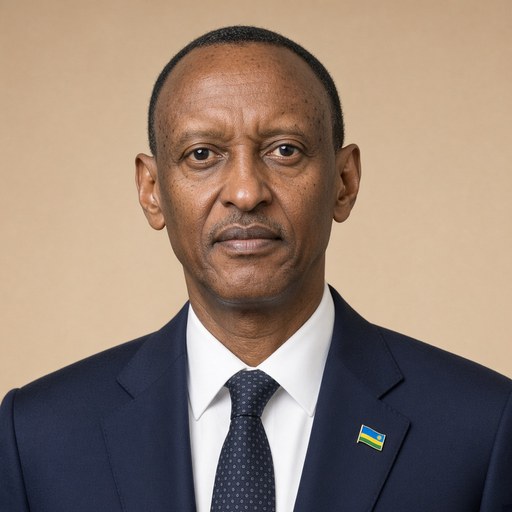
Rwanda — Statement to the General Debate of the 78th Session of the United Nations General Assembly (2023)
 Paul Kagame · President
- Context
- Paul Kagame delivered the statement of Rwanda in the general debate of the 78th session of the United Nations General Assembly in 2023.
- Main themes
- COVID-19 pandemic recovery and global health emergency, slow SDG implementation and economic disparities, debt crisis and high borrowing costs in developing countries, reform of global financial institutions, Green Climate Fund and climate change in Africa, ongoing conflicts and migration crisis, effective multilateral engagement and peacekeeping, Africa's representation in global decision-making, digital innovation and inclusive infrastructure initiatives, genocide against the Tutsi commemoration
- Duration
- ~7 min
- Words
- 805
- Sentences
- 48
- Readability
- 45
- Grade
- 11.1
- Syntax
- 2.72
- Vocabulary
- 2.10
UN General Assembly Translated from French
The broad sphere of national life a sentence belongs to. Every sentence has an Arena, so it is the denominator the other indices are read against.
Other48 sentences in 13 paragraphs
This year the World Health Organization declared that the coronavirus disease pandemic is no longer a global health emergency. Recovery is well under way.
Unfortunately, the starting line was not the same for all of us across different regions. This year's Sustainable Development Goals (SDG) Summit once again raised the alarm about the slow pace of SDG implementation, and I commend the Secretary-General for the sharp focus he is bringing to that issue. Developing countries are constrained by a debt crisis, including higher costs of borrowing. That is causing economic disparities to widen and slowing down our collective progress towards the Sustainable Development Goals.
The primary cause of this crisis is high interest rates in developed economies in order to correct for years of quantitative easing. At the same time, developing countries face exaggerated currency and political risk premiums that are simply unjustified. We need serious cooperation to address this issue.
In developing countries, we also have a responsibility to be accountable for the quality of our financial governance and the management of our natural resources. Increasing access to finance also requires reform of our global financial institutions. In that regard, we welcome the proposals of the Bridgetown Initiative, as well as the Paris Summit for a New Global Financing Pact.
Rwanda also supports the second replenishment of the Green Climate Fund to create the fiscal space for vulnerable nations to tackle climate change. Africa and small island developing States, many of which are represented in the Commonwealth, want to work with partners and be part of the solution. That is an important outcome of the recent Africa Climate Summit, held in Nairobi under the leadership of President William Ruto.
However, we must not only cool down our climate, but we must also cool down our conflicts. Today there is no sign of ongoing conflicts ending anytime soon. We do not even see hope, from those with the most influence, that an end is in sight. Innocent lives are left alone to carry the burden of this instability. That is a profound injustice.
The migration crisis is a case in point. Every year, migrants and refugees undertake dangerous journeys in search of a better future. Rwanda remains committed to working with partners, including the United Nations High Commissioner for Refugees, to contribute to a durable solution. That decision is informed by our experience, knowing first-hand the pain of losing everything and not having a place to call home. That is part of our promise to leave no one behind. We continue to need a more effective forum to manage global crises. That is why the United Nations was created in the first place.
However, that does not absolve any country or region of the responsibility to address the governance shortfalls that are the root causes of instability. In that regard. I welcome the Secretary-General's report on a New Agenda for Peace.
Bilateral interventions, to which Rwanda contributes actively in various places, can provide a rapid response to a crisis situation. But to have lasting effect, they need to pave the way for multilateral engagement and internal political progress. No matter the number of troops deployed, the mindset should be to get results that serve the interests of the people on the ground. Paying lip service to peace and getting lost in the process and formalities serve only to confirm the selective attention of some in the international community.
We still have a long way to go. Africa urgently needs to be fully represented in entities where decisions concerning our future are made. Just as urgently. Africa must be fully prepared to speak with one voice. Ultimately, a more effective development cooperation framework must give equal weight to everyone's needs and priorities. That is what builds fair and equal partnerships and a more just and peaceful world. That is what we all claim to want, even as we too frequently fall short.
In that spirit, allow me to commend the United Nations Development Programme (UNDP), led by Achim Steiner, for the Timbuktoo initiative to strengthen the African start-up innovation ecosystem. This week, the International Telecommunication Union, led by Doreen Bogdan-Martin, together with UNDP, unveiled a major new initiative on inclusive digital public infrastructure. Rwanda is very happy to be associated with those efforts, which reflect the United Nations at its best.
For Rwanda, the source of our solidarity comes from our commitment to never allowing a repetition of the tragedy that was inflicted on us nearly 30 years ago. We continue to remain grateful to all those who have accompanied us on our journey as we plan to commemorate the genocide against the Tutsi for the thirtieth time in April 2024.
In conclusion. I look forward to welcoming leaders to the third United Nations Conference on Landlocked Developing Countries, which Rwanda will host in June 2024.