




Brain Research could become the Flagship of the Hungarian Innovation Area
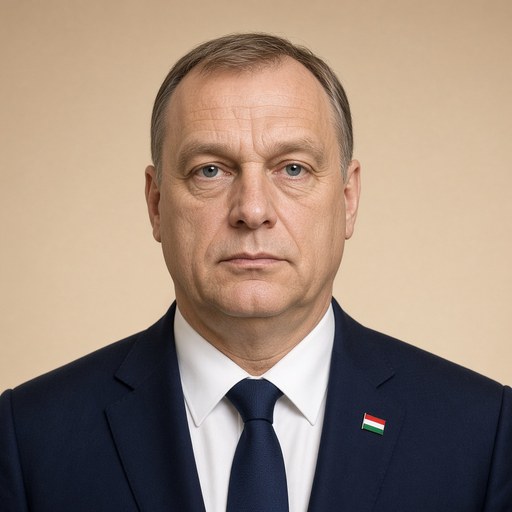
 Viktor Orbán · Prime Minister of Hungary
- Context
- Orbán addressed a symposium on brain research in Hungary, advocating for retaining scientific talent and linking academic innovation to the national economy.
- Main themes
- Brain research and innovation, retention of Hungarian scientific talent, brain drain reversal, utilization of scientific discoveries in Hungarian economy, academic-government cooperation, Momentum Programme, corporate support for science, Hungarian intellectual history, economic development strategy, university-industry knowledge transfer
- Duration
- ~18 min
- Words
- 2,125
- Sentences
- 69
- Readability
- 37
- Grade
- 15.7
- Syntax
- 3.28
- Vocabulary
- 2.21
The broad sphere of national life a sentence belongs to. Every sentence has an Arena, so it is the denominator the other indices are read against.
Other69 sentences in 18 paragraphs
Ladies and Gentlemen,
The third thing that the Government considered is the application of Hungarian intellectual capabilities within the Hungarian economy and the social sphere. It is not difficult to find a book on the bookshelf at home that speaks in a bittersweet tone about the fact that while we have had outstanding researchers and scientists, very little of the ideas they developed and the scientific theories and discoveries they formulated were utilised in Hungary and within the Hungarian economy. This is a painful topos of Hungarian intellectual history. We have recently been working with President Pálinkás [President of the Hungarian Academy of Sciences] to establish an alliance so that this will not continue to be the case, but that instead we try first of all to find a method of understanding how the discoveries of science are utilised within the Hungarian economy and secondly to recognise the key points where we can intervene to ensure that the discoveries and creations of the Hungarian intellect and Hungarian science may be incorporated not only here, but also into the Hungarian economy. And we attempted to recognise the Western European, and primarily university mechanisms with which we can somehow keep our scientific discoveries and innovations within our own sphere of interest in a legal and economic sense. We hope that this research will be one which, in addition to of course formulating scientific discoveries, is also coupled with a kind of scientific organisation that enables the intellectual products developed here to also be utilised in Hungary. This is why it was important for the Momentum Programme to be launched here in Hungary, so that we might first conquer the feeling that you can be clever in Hungary, but you can't get ahead, not even with a lot of brains, because everything is forever flowing out of the country: thoughts, money and science too. And if these are flowing out of the country, then so will the people, because they follow these things that are important to our lives: furthering our career, proving oneself, a passion for knowledge, scientific pride and financial interest. If all these are flowing out of the country then our clever people will also flow out of the country, and this process must be stopped and reversed somehow. We don't want to isolate anyone from the outside world, all we want is for it to at least be a two-way street, for it to flow in just as it flows out: scientists, science, discoveries and research centre colleagues. We are grateful to Professor Pálinkás for having realised this programme with an iron resolve and for having squeezed the required budgetary funding out of us.
And this is the point where I perhaps should also say thank you to Richter [Hungarian pharmaceutical giant Richter Gedeon] and Mr. Eric Bogsch [CEO of Richter Gedeon], because I cannot attend a symposium, signing or announcement concerning scientific research without them being present or assuming some role in at least some areas of Hungarian scientific development. This is not general behaviour within Hungarian business life at present. There are some corporations who are at the forefront within this field, but certainly not as many as there should be, and so from this perspective the behaviour of Richter Gedeon is exemplary and we are grateful to Chief Executive Officer Erik Bogsch for this.
Ladies and Gentlemen,
I would like to speak a little more comprehensively about what national objectives we have set ourselves recently, and about how this agreement is linked to them. As I have mentioned, we had to deal with the present over the past few years because the economic crisis was endangering our everyday lives and our tomorrow mornings. And so we grappled with the crisis, but in the meantime we kept in mind the fact that we don't only need to win these everyday struggles, but to a much greater extent we need also to win the future. Perhaps you remember, and political communication is always a little repulsive to intellectuals such as yourselves, because it describes complicated relationships in simplified terms and this is something of a negative to scientists, while of course it is more of a positive in our profession and also requires some skill, in recent years we described our goals by stating that Hungary must stand on its own two feet and we must recognise that production will have a huge significance in the future of the European economy. This was something that was previously neglected. And I am sure you all know the story of what followed, from the public work programme to the influx of large Western European corporations, strategic partnership agreements and the National Bank's loan programme for small and medium-sized enterprises, I could begin listing the figures for you.
European Union data clearly shows that we have to all intents and purposes achieved our goal, or at least Hungary is moving in the right direction, of guaranteeing that Hungary becomes a production centre. But this is today, or perhaps tomorrow. The question is, what happens the day after tomorrow? And our idea is that once we have succeeded in making Hungary a production centre we need to take a step upwards in quality and we must also turn Hungary into a research and development centre and innovation region. This is the next step. This is why you can see me so often in the company of Professor Pálinkás and this is why you can regularly hear announcements that are related to scientific investment projects. This is why we are slowly laying the foundations for a new institutional system on which a scientific and innovation area can be constructed here in Hungary. I will mention for you CERN's Wigner Data Centre that has been established here. President Pálinkás also mentioned the Research Centre for Natural Sciences. I was in Szeged recently, where we laid the foundation stone for the ELI [Extreme Light Infrastructure] research centre. Now we are concluding this agreement, and I would like to continue this process to establish a network, a network of institutions, with the help of which Hungary, in addition to being a production centre, can also become a region for research an innovation within Europe.
Ladies and Gentlemen,
This is why the Government decided to sign this agreement today, because although we have an idea of this kind, that I have just described for you in a slightly unkempt manner, but we feel that a large drive of this kind requires a flagship. The performance of Hungary's brain researchers leads us to believe that during the upcoming period brain research can be a flagship in which we can achieve distinction, in which we can show the world our talent and in which our researchers can achieve socially important discoveries and scientific results.
Ladies and Gentlemen,
We hope that this research will be utilised in one of Hungarian industry's leading sectors, pharmaceuticals production, and we hope that when this occurs, then the Hungarian researchers who are successful within this field will also become the role models and later possibly the mentors of the younger generation of scientists.
You have just heard the figures that formed the basis for the next area of consideration on the part of the Government. These are very simple mathematical calculations on various illnesses, the burdens posed by these illnesses and their related costs. Professor Freund has already spoken about these prior to my speech. All I would mention myself is that the costs and expenses relating to diseases of the brain add up to more than the total costs and expenses of the next five most prevalent illnesses. This represents several burdens all at once. It is a burden on the individual, who suffers from such and illness, and this was also taken into consideration, because we aren't just talking about expenses, but also about human lives. And then these diseases also pose a burden to society, to the healthcare and social care system and ultimately to the whole Hungarian economy, and in fact to the whole European economy. I learned from one of the Professor's lectures that if we want to lessen these burdens then we first require new diagnostic methods, new pharmaceuticals, new treatments and new preventive procedures. Dear Tamás, We hope that your research will also provide us with these results.
And so it is perhaps not an exaggeration to say that the Government acted in good faith when it believed those who proposed the Programme, including Professor Freund, when they said that the upcoming period in Europe will be the decade of brain research and we Hungarians have every reason to play an important role during that decade. This is the reason we voted to provide 12 billion forints for this Programme over a period of four years, and Professor Pálinkás is undoubtedly correct in saying that there is not much point in spending 12 billion forints on something if we don't plan on spending a penny on it in future. Although I will be making no promises here, but the President of the Academy argued wisely when he voiced his hope that the Programme would not stop after four years, but you know that four years is a magic number in my profession. We cannot stretch further than our blanket reaches, as they say.
Ladies and Gentlemen,
One of the other reasons the Government supported this form of cooperation was because we felt that despite the fact that we may have less money that the EU and the Americans, although if we calculate the averages this 12 billion forints is a tidy sum and I'm sure you were also adding things up when you heard the figures a little earlier, it is our opinion that this field has the distinct advantage of operating in a well-organised and concentrated manner. It is perhaps not relevant here, before the full public gaze, but when the first concepts were put forward with regard to how to utilise the money, if funding were to be made available for this field, then it wasn't this consortium-type approach that first appeared but instead what is the usual approach in Hungary, and quite understandably. It seemed to me that the powers that cropped up at the time were divisive rather than cooperative. And we are grateful to Professor Freund for having kept those involved, because we are talking about the same institutions, who else could be involved, after all, than the institutions that have already achieved results within this field, and for having succeeded in creating a consortium-like form with regard to which the Government feels certain that the funding provided will not be dispersed and divided, and will not turn into social welfare expenditure, although of course the social welfare of scientists is important too, but that we are instead realising a research and performance-based programme due to which these 12 billion forints in budgetary funding will achieve results thanks to the well-organised work. And so it will not be dispersed and disappear, and will not simple have a sporadically beneficial effect, but because we are talking about well-organised work the strengths involved will reinforce each other and the financial handicap, which as we have heard is significant in view of our size, may be successfully decreased through good work organisation.
Ladies and Gentlemen,
I would like to encourage my signatory partners to, although this is Hungarian money, not spend it only on the Hungarians. It is usual to argue the opposite in Hungary, and there is some truth in it, that if there is money available we should spend it all on ourselves to the last penny, but in the world of science this is not a valid statement. There can be no world-class Hungarian science if it is isolated from the outside world. And so I would like to encourage you, Professor Freund and President Pálinkás, to involve foreigners in this Programme. Yes, we will also be using this money to link into research that is going on abroad, and so do not keep the money available from invited foreign lecturers and researchers. Please also use these funds to enable Hungary to link into international science as a full member. Now that we are not distributing poverty, as is often the lot of Hungarian politicians, but can instead distribute opportunity, let us distribute it in a way that reinforces Hungary's influence in international science.
These are the points that we considered. These were the points of consideration based on which the Government signed this agreement. I wish Professor Freund and his team a comfortable 'journey round our skulls' [a reference to the title of the novel by Hungarian writer, Frigyes Karinthy].
Thank you for your kind attention.