




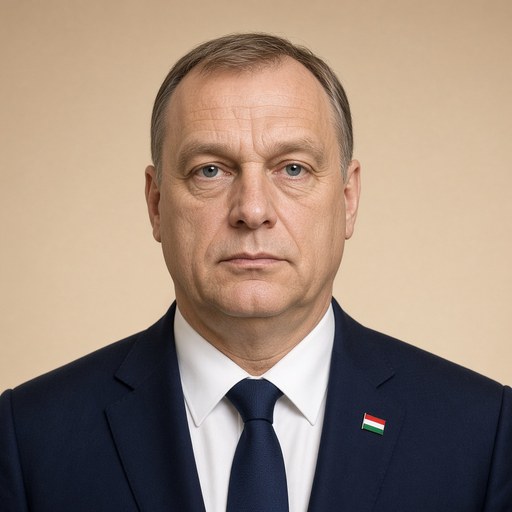
Viktor Orbán's exclusive interview on TV2's program "Tények"
 Viktor Orbán · Prime Minister of Hungary
- Context
- Orbán was interviewed on Hungarian TV2's 'Tények' program on June 30, 2025, discussing the NATO summit in The Hague and Hungary's peace diplomacy.
- Main themes
- NATO summit outcomes, Ukraine-Russia war and peace negotiations, Hungary's foreign policy stance, arms race prevention, Donald Trump's influence on NATO, Tibor Kapu and Hungarian astronaut, Hungarian national achievements, third world war risk
- Duration
- ~27 min
- Words
- 3,251
- Sentences
- 185
- Readability
- 66
- Grade
- 8.3
- Syntax
- 2.82
- Vocabulary
- 1.91
Translated from Hungarian
This is an interview, press conference or exchange with other speakers. It is split into sentences and counted in the corpus, but its sentences are not tagged on the twelve indices.
185 sentences in 40 paragraphs
Gábor Gönczi: I welcome Viktor Orbán, the Prime Minister of Hungary, to the "Facts" studio. Thank you for coming to us!
Good afternoon!
Let me start with the latest news. A few hours ago, a recording was posted online, an interview in which you were not the one being asked questions, but rather you were the one asking questions, specifically to Tibor Kapu at the International Space Station. This role suits you well, by the way. We didn't know you would be an excellent journalist, Mr. Prime Minister.
It is easier to ask than to answer.
It is easier to ask than to answer.
I learned that yesterday.
You told Tibor Kapu that now everyone wants to be Tibor Kapu. Do you also want to be Tibor Kapu now?
Everyone has childhood dreams, I do too; it would have been nice, or it would be nice to see the whole thing at once. Not just Hungary, not just our village, the capital or the country, and not just our continent, but to see the whole Earth all at once, I think that could be a fantastic experience. Perhaps we should say that when a business gets going, it is hard to stop it, because in the last year or two, we have had two Nobel laureates, and we have an astronaut. This does not happen every year with Hungarians. So we have had great years, and thanks to these outstanding individuals, Hungary's recognition in the international world is today higher than it has been before. And let us not forget, because we will obviously be talking about politics, that there is finally a person whom every Hungarian looks up to, literally. In the evenings, I also always look up.
That's right, so we are definitely making history, and we will return to this history later. Let's move to the battleground! You just returned from The Hague, from the NATO summit, and then you went to Brussels. You stated that the winds of change have reached NATO as well, and more and more of us are standing up for peace. What are these changes?
There is a new sheriff in town; perhaps that is the simplest answer. A year ago, there was a NATO summit in Washington, where everyone—except for us—was enthusiastically talking about Ukraine's NATO membership, arming Ukraine, and continuing the war. A year has passed, and everything has turned upside down. There was no mention of this at this NATO summit. The new American president made it clear that he is pro-peace. NATO was not created to wage war, but to defend, to create peace; therefore, Ukraine's NATO membership cannot even be on the table, and NATO cannot get involved in the Ukrainian-Russian war; NATO must focus on itself, strengthen itself, and make our own lives safer. This is a completely new situation. Finally, there is a place, NATO, where we have won. So from the previous isolated, losing position, we have suddenly found ourselves on the side of the majority or at least the stronger position: the United States, Turkey, Hungary, Slovakia; together, this is already a serious group.
Many were afraid that if Donald Trump decided that NATO is no longer needed in this form, oh my God, what will happen to us? But that did not happen. In the end, what happened was what you said earlier, that Donald Trump will be our ally, a strong ally. I think that is the most important thing.
The most important thing is that a majority has formed in NATO that believes that any conflict with Russia could lead us to a third world war. So if NATO intervenes in the war on Ukraine's side, it risks a third world war. If it accepts Ukraine, it will enter into a continuous conflict with Russia, which poses a constant threat of world war. This must be avoided. NATO has not yet reached that point; even the new sheriff has not said that we need to sit down and negotiate with the Russians, because we do not want a war, nor do we want an arms race, at least we Hungarians, or I personally, certainly do not. So if we do not want to enter a "who is stronger?" competition and spend all the money that could be used elsewhere on armament, military building, then sooner or later we must come to an agreement with the potential enemy, the threat—NATO views Russia this way—about how much weaponry we keep operational or in service, how much we spend on military expenditures, because otherwise, the sky is the limit. So we must also avoid an arms race. We need to strengthen ourselves, but we must avoid the arms race. This can only be done if we, the Westerners, agree with the Russians. This has not yet happened; we are not there yet. No one else is saying this besides me.
Yet, we have seen this arms race since the 1980s; what was the end result? Exactly nothing, and we could have done it all over again, yes.
That is why I dare to intervene in the matters of the big boys, because in the end, it will be the big ones who will decide, but there are a few of us who usually share our personal life experiences with the big ones. Once, our world was already destroyed by an arms race. Well, of course, the communists fell because of this, and this led to the end of the Soviet Union; there was some benefit to it, but in the meantime, an enormous amount of money and energy was wasted on a pointless arms race. Now that we are free and belong to the West, it is not in our interest to repeat that. So it is good for Hungarians if the money we generate goes as much as possible to where the needs of everyday life require it, to the economy, healthcare, families, education, and so on. We need an army, we need armaments, but we do not need a senseless arms race.
So it seems that we are managing to keep Ukraine out of NATO with the right allies. However, the situation, or the battlefield, looks completely different in Brussels, so let’s move on to the EU summit, where completely different things happened.
Because, as I told you, excuse me, if you allow me, the NATO meeting was different because a new sheriff came to town. But that did not carry over to Brussels, because there it was a European Union meeting. Suddenly, everything changed; only Europeans were present there, and they want war. So as the Turkish and American counterweights that were present in NATO are removed from the system, the Europeans—except for the Slovaks, together with us, except for the Slovaks—almost everyone wants to continue the war, and the situation changes immediately. Just as in NATO, where the American president, the Turks, and we successfully prevented Ukraine from being accepted, that power is no longer available to us in Brussels. In Brussels, I had to fight alone. I am not saying it well; I had to fight on behalf of more than two million Hungarians, so there were many of us, if I count it that way, because Voks2025 supported me in this battle, where I had to clearly state that I had to veto and say that for fundamental and strategic reasons, not bilateral reasons, for fundamental and strategic reasons, Hungary does not support Ukraine's EU membership now or in the future.
You said that this was one of the ugliest or perhaps the ugliest EU summits. Why did you phrase it that way?
These are, you know, internal matters, how such a meeting goes; it is not like the locker room...
We do not know about these; we do not see this.
...one does not reveal the secrets of the locker room, but I can say that if looks could kill, I would have been dealt with by a volley of gunfire there.
Yet you had the result of Voks2025, where 2.1 million people say and approve that Ukraine should be kept out of the European Union.
Yes, because Hungarians do not want to get dragged into a war. We have a very clear position, and among the Hungarian people, I see that this is a general opinion. If we were to accept Ukraine into the European Union, we would also be accepting the war along with it. The European Union is not a security organization; it has no military capabilities. If we accept Ukraine into the European Union while there is a war with Russia on our eastern borders, we will immediately find ourselves at war with Russia. This is not hard to see; Hungarians see this, and that is why we do not want to bring the war into the European Union. We understand the Ukrainians; they are a country under attack, there are many problems, we try to be fair to them, we help them where we can, but we cannot help in a way that destroys ourselves. Do not ask that of us! Ask for help, but do not want us to destroy ourselves. If we accept them into the union, we are not helping them; we will be destroying ourselves and pushing ourselves into a war conflict with Russia. Not to mention the other unpleasant economic consequences of the accession, which would put the entire European economy in a difficult situation or destroy it. So we represent a very clear position. What really hurt the others there is that the Hungarian position is not an emotional or sentimental position, but a cold and rational one. And I am the longest-serving person there among the Brussels prime ministers, where I usually say that I had the honor of negotiating the final phase of Hungary's NATO accession. And I also had the honor of negotiating the beginning of Hungary's EU membership. So I know what both negotiations are about; the others sitting there do not. And I know exactly how it happened. It happened that first, in the case of the former Soviet bloc countries, the rule was stated: you must first enter NATO. Because as long as your eastern borders are not militarily secured, we cannot be sure of your eastern borders. Just like in the case of Ukraine now. Ukraine wants to enter the union without us knowing how large the country is, where its eastern borders are. This was resolved in our case by promising that we would be accepted into NATO; they laid a realistic scenario before us, we executed it, we entered NATO, and then the European Union could come. But this guarantee is not available now, since we have stated that we will not accept Ukraine into NATO because that would mean world war. Therefore, the European Union cannot secure the eastern borders of a future member state. That is why Ukraine cannot be accepted; we do not know how many inhabitants it has, how large its territory is, when it is at war with whom; it is impossible to accept a member state under such circumstances. Our case was different. And I calmly and quietly stated this as a witness, that this is how it was, and this is how it must be. And if there is no NATO membership, there is no EU membership for the former countries of the eastern bloc.
What would happen to Hungarian families if this were to occur, and Ukraine were indeed accepted into the union through an expedited process? What would happen to us, what would happen to our utility bills, what would happen to our lives? What would happen to agriculture?
We have Voks2025 behind us, where the whole country could think this through. I myself participated in several campaign events, I met many people, we were able to tell everyone, partly with your help, I mean through the media, partly directly. Our peace would be endangered. Ukraine's membership is equivalent to entering into war. A war-torn European Union would be created. If everyone from Ukraine had free access to Hungary, since there is free movement within the European Union, citizens of a fully armed country, with well-developed mafia capabilities and networks, would come and go in Hungary; we would become a transit hub. I think our security, our internal security would also be endangered. And finally, there is the money. A lot of money is already going to Ukraine, which we need here in the European Union, for example in Hungary. A lot of money is already going there. If we accept them, all the money will go to Ukraine. The Hungarian people do not know this, although I try to say it; today, we are supporting the Ukrainian state. So the Ukrainian state would not function today without Western money. There would be no pensions, state employees would not be paid. The Ukrainian economy does not have the capacity to sustain itself. So we are sustaining the entire Ukrainian state, and we are sustaining a Ukrainian army. And Zelensky demands that we not only sustain it now but also in the future. The European Union should finance a Ukrainian army of one million. He even says that we should give a certain percentage of our national GDP to Ukraine to keep it operational. I think this is not a good idea. So I want to say that after EU membership, it will be impossible to limit the amount of money flowing to Ukraine, because then, based on the membership relationship, it will be due to them; all our money will go to Ukraine. Let’s not do this! I have another proposal: let’s make a strategic agreement with Ukraine on how the European Union will support it, but let’s not create a legal basis for Ukraine to siphon off money, for its dubious businessmen or mafia members to come here, to Hungary and the European Union, and let’s completely exclude with a contract any participation in the war by the European Union. So I am not saying to forget Ukraine. I am not saying not to support them. But let’s not support them in a way that destroys ourselves in the process.
Mr. Prime Minister, the Pride parade took place over the weekend. What do you think about the fact that it happened, that it took place, that it was allowed to happen, and what did you see there?
I was not there, so I cannot speak about the credibility of the eyewitnesses, because what the hell would I have been doing there?! I belong to those who do not consider what happened to be a matter of pride; when I am in Felcsút, I say it is a shame, and when I am here in Budapest, I say it is a prejudice. Not pride, but prejudice. Moreover, in this matter, the country has already made a decision once. Not everyone remembers, but in 2022, there was not only a parliamentary election, but there was also a referendum, where the Hungarian people could express their opinions on the issue of Pride, on self-serving sexuality in general, on child-rearing, on child protection, and on lifestyles that differ from the usual. And three hundred seventy thousand people said no to what Pride describes, to gender. So Hungary has a decision, a decision made with tremendous force. No one has ever participated in a NATO referendum, an EU referendum, or any referendum in such numbers and expressed an opinion in one direction as they did on the issues of family protection, child protection, and Pride. Of course, a few tens of thousands of people go out onto the streets because they did not agree with this even in 2022. There were about 190,000 who voted in favor of gender, and many did not vote at all or voted invalidly. So there is support for gender in Hungary, for gender reassignment surgeries, for same-sex marriage, for the adoption rights of children; thus, there is support for this topic of Pride in Hungary. But there are many more who reject it. And we decided this once in 2022, and no protest or Pride parade will change my position on this matter. So now the whole country could see, and I hope many understood how this system works. Now the system works in such a way that Brussels has decided that there must be a Pride. They openly stated it; they did not decide it in secret, but openly. They found those people who organized this here. Since the capital is now governed by the opposition, well, it was the capital. Brussels decided, the capital, and the opposition executed it. Then they rallied their supporters behind this, as there are indeed a good number of people behind every issue. And I want to say that it would be the same in other matters as well. So this happened now in the case of Pride. But it would be the same in migration. Brussels decides, and if there is no national government, as there is now, but a Brussels government, it executes it, and people will even applaud it; there are many who feel sorry for the migrants. But it would be the same in the case of Ukraine if we did not have a national government. In Brussels, they decide, here the puppet government executes it, and even those who sympathize with Ukraine might go out onto the streets, and that's it. And we are done. The country is finished. There is gender, there is migration, and we are neck-deep in war. So I want to say that now, regardless of Pride, everyone can see that they have manufactured a model for us. This is how the Brussels-directed European politics works. That is why they want to arrange from Brussels that there should not be a government defending national sovereignty in Hungary, but a Brussels- and Ukraine-friendly government. Because then they can implement everything, just as they did with Pride.
I promised that we would return to Kapu Tibor for one sentence. You spoke with him, and this interview is already available on the internet; by the way, it is a very good conversation.
Thank you!
What do you think was the most important?
It is not thanks to me, but to him...
The reporter was good.
Yes, but there are matches that are already won. So after forty-some years, talking to a person orbiting in space, it is hardly possible to fail there...
What was the most important thing Tibor said to you?
What struck me the most was that he said they have sixteen times day and night. And he said that yesterday's dawn was such that they were circling the Earth together, and it was morning for them just as it was in Hungary. So Hungary was right above them, and he saw it. And he saw Lake Balaton, and he saw Lake Fertő, and he saw the Danube Bend; in other words, there is a Hungarian person from there, the whole world is at his feet, and what interests him? Well, Hungary!
And Lake Fertő and Lake Balaton...
I think that is a big thing.
Yes, yes, yes. So Kapu Tibor is watching us from up there, Donald Trump is in NATO and from America, and you are here.
I am trying from Karmelita, yes.
Yes. Thank you very much for coming to us!
I am glad to have been here.
The original Hungarian. The tags above are read on the English translation's sentences.
Gönczi Gábor
: Köszöntöm a „Tények” stúdiójában Orbán Viktort, Magyarország miniszterelnökét. Köszönjük, hogy eljött hozzánk!
Jó napot kívánok!
Hadd kezdjem a legfrissebbekkel. Pár órája került fel az internetre az a felvétel, egy interjú, amelyben most nem Önt kérdezték, hanem Ön kérdezett, mégpedig Kapu Tibort a Nemzetközi Űrállomáson. Jól áll Önnek ez a szerep egyébként. Nem tudtuk, kiváló újságíró lenne, Miniszterelnök úr.
Kérdezni könnyebb, mint válaszolni.
Kérdezni könnyebb, mint válaszolni.
Ezt tegnap megtanultam.
Azt mondta Kapu Tibornak, hogy most mindenki Kapu Tibor szeretne lenni. Ön is Kapu Tibor szeretne most lenni?
Mindenkinek vannak gyermekkori álmai, nekem is, egyszer jó lett volna, vagy jó lenne az egészet egyben látni. Nemcsak Magyarországot, nemcsak a falunkat, a fővárost vagy az országot, sőt nemcsak a kontinensünket, hanem az egész Földet egyszerre egyben látni, az szerintem egy fantasztikus élmény lehet. Talán azt azért mondjuk el, hogyha egy üzlet beindul, akkor nehéz megállítani, mert az elmúlt egy-két évben mégiscsak lett két Nobel-díjasunk, és van egy űrhajósunk. Ez nem szokott megtörténni minden évben a magyarokkal. Tehát nagy éveink vannak, a nemzetközi világ elismertsége Magyarországnak ezeknek a kiváló embereknek köszönhetően ma azért magasabban van, mint korábban volt. És arról se feledkezzünk el, mert nyilván politikáról fogunk beszélgetni, hogy végre van egy ember, akire minden magyar felnéz, szó szerint. Esténként én is mindig fölnézek.
Így van, tehát mindenképpen történelmet írunk, és erre a történelemre még vissza is fogunk térni. Térjünk át a küzdőtérre! Nemrég jött haza, ugye, Hágából a NATO-csúcsról, aztán utána ment át Brüsszelbe. Ön úgy fogalmazott, hogy a NATO-ba is elért a változás szele, egyre többen állunk ki a béke mellett. Mik ezek a változások?
Új seriff van a városban, talán ez a legegyszerűbb válasz. Egy évvel ezelőtt NATO-csúcs volt Washingtonban, akkor mindenki – bennünket leszámítva – lelkesen Ukrajna NATO-tagságáról, Ukrajna felfegyverzéséről és a háború folytatásáról beszélt. Eltelt egy év, minden az ellenkezőjére fordult. Ezen a NATO-csúcson erről szó sem volt. Az új amerikai elnök világossá tette, hogy békepárti. A NATO nem azért jött létre, hogy háborúzzon, hanem azért, hogy védekezzen, békét teremtsen, ezért szóba se kerülhet Ukrajna NATO-tagsága, szó sem lehet arról, hogy a NATO belekeveredjen az ukrán–orosz háborúba, a NATO-nak magával kell foglalkoznia, saját magunkat kell erősebbé tenni, és a saját életünket kell biztonságosabbá tenni. Ez egy teljesen új helyzet. Végre van egy hely, a NATO, ahol győztünk. Tehát a korábbi elszigetelt, vesztő pozícióból hirtelen a többségi vagy legalábbis az erősebb pozíció oldalán vagyunk: Egyesült Államok, Törökország, Magyarország, Szlovákia, ez így együtt már egy komoly csoport.
Sokan féltek attól, hogyha majd Donald Trump úgy dönt esetleg, hogy a NATO-ra már így ebben a formában nincs szükség, Úristen, mi lesz velünk? Hát nem ez történt. Végül az történt, amit Ön mondott korábban, hogy Donald Trump, ugye, a szövetségesünk lesz, erős szövetségesünk lesz. Azt gondolom, ez a legfontosabb.
A legfontosabb, hogy olyan többség alakult ki a NATO-ban, amely úgy gondolja, hogy az Oroszországgal vállalt bármilyen konfliktus elvezethet bennünket a harmadik világháborúhoz. Tehát ha Ukrajna oldalán beavatkozik a NATO a háborúba, akkor a harmadik világháborút kockáztatja. Ha Ukrajnát fölveszi, akkor folyamatos konfliktusba kerül Oroszországgal, ami állandó világháborús veszélyt jelent. Ezt tehát el kell kerülni. Oda még nem jutott el a NATO, még az új seriff se mondta ezt be, hogy akkor le kell ülni megegyezni az oroszokkal, mert nemcsak háborút nem akarunk, hanem fegyverkezési versenyt sem akarunk, legalábbis mi, magyarok vagy én személy szerint biztosan nem. Tehát ha nem akarunk egy „ki az erősebb?” versenybe benevezni és elkölteni az összes pénzt, aminek máshol is meglenne a helye fegyverkezésre, hadseregépítésre, akkor előbb-utóbb a potenciális ellenséggel, fenyegetéssel – a NATO így tekint Oroszországra – meg kell állapodni arról, hogy mennyi fegyverzetet tartunk működésben vagy hadrendben, mennyit költünk katonai kiadásokra, mert egyébként a határ a csillagos ég lesz. Tehát egy fegyverkezési versenyt is el kell kerülnünk. Meg kell erősödnünk, de el kell kerülni a fegyverkezési versenyt. Ez nem megy másképpen, csak ha mi, nyugatiak megegyezünk az oroszokkal. Ez még nem történt meg, itt még nem tartunk. Ezt rajtam kívül még nem is mondja más.
Pedig, ugye, végignéztük a nyolcvanas évektől ezt a fegyverkezési versenyt, hát mi lett a vége? Pontosan semmi, és csinálhattuk az egészet vissza, igen.
Ezért merek a nagyfiúk dolgába beleszólni, mert ezt végül majd a nagyok fogják eldönteni, de ott vagyunk néhányan, akik meg szoktuk osztani a nagyokkal a mi saját személyes életünknek a tapasztalatait. Egyszer a mi világunkat már tönkretette egy fegyverkezési verseny. Jó, persze ezzel megbuktak a kommunisták, meg ezzel vége lett a Szovjetuniónak, volt ennek haszna is, de közben iszonyatos mennyiségű pénz és energia ment el pocsékba, felesleges fegyverkezési versenyre. Ezt most, hogy már szabadok vagyunk, a Nyugathoz tartozunk, nem érdekünk megismételni. Tehát a magyaroknak az a jó, hogyha a megtermelt pénzünk minél nagyobb arányban oda megy, ahol a mindennapi élet szükséglete azt megkívánja, gazdaságba, egészségügyre, családokhoz, oktatásra és így tovább. Kell hadsereg, kell fegyverzet, de nem kell értelmetlen fegyverkezési verseny.
A NATO-ból tehát, úgy néz ki, hogy sikerül kint tartani Ukrajnát a megfelelő szövetségesekkel. Nem ez a helyzet azonban, vagy a harctér az egészen másképp néz ki, ugye, Brüsszelben, és akkor térjünk át az EU-csúcsra, ahol egészen más dolgok történtek.
Mert ahogy mondtam Önnek, bocsánat, ha megengedi, hogy a NATO-ülés azért volt más, mert új seriff jött a városba. De Brüsszelbe nem jött át, mert ott az egy európai uniós tanácskozás volt. Hirtelen minden megváltozott, ott az európaiak voltak kizárólag jelen, és ők háborút akarnak. Tehát ahogy a török és az amerikai ellensúly, ami a NATO-n jelen volt, kikerül a rendszerből, az európaiak – a szlovákokat leszámítva, velünk együtt a szlovákokat leszámítva –, szinte mindenki folytatni akarja a háborút, azonnal megváltozik a helyzet. Ahogy a NATO-ban az amerikai elnök, a törökök és mi sikeresen akadályoztuk meg, hogy Ukrajnát fölvegyék, ez az erő már nem áll rendelkezésünkre Brüsszelben. Brüsszelben már egyedül kellett harcolnom. Nem mondom jól, több mint kétmillió magyar nevében kellett harcolnom, tehát azért sokan voltunk, ha így számolom, mert a Voks2025 támasztott meg engem ebben a csatában, ahol világosan meg kellett mondani, vétózni is kellett, és el kellett mondani, hogy fundamentális és stratégiai okokból, tehát nem kétoldalú okokból, fundamentális és stratégiai okokból Magyarország sem most, sem a jövőben nem támogatja Ukrajna európai uniós tagságát.
Ön azt mondta, hogy ez volt az egyik legcsúnyább vagy talán a legcsúnyább európai uniós csúcs. Miért fogalmazott így?
Ezek, ugye, belső ügyek, hogy hogy’ zajlik egy ilyen tanácskozás, nem olyan, mint az öltöző…
Ezekről mi nem tudunk, mi ezt nem látjuk.
…az öltöző titkait nem adja ki az ember, de annyit mondhatok, hogyha szemmel lehetne ölni, akkor ott egy sortűzzel elintéztek volna engem.
Pedig Önnél volt, ugye, a Voks2025-nek az eredménye, 2,1 millió ember mondja azt és helyesli azt, hogy Ukrajnát kívül kell tartani az Európai Unión.
Igen, mert a magyarok nem akarnak belesodródni egy háborúba. Nagyon világos álláspontunk van, és a magyar emberek körében, úgy látom, hogy ez egy általános vélemény. Ha felvennénk Ukrajnát az Európai Unióba, akkor vele együtt felvennénk a háborút is. Az Európai Unió nem biztonsági szervezet, nincs katonai képessége. Ha fölvesszük az Európai Unióba Ukrajnát, miután a keleti határain háború van Oroszországgal, azonnal háborúba kerülünk Oroszországgal. Ezt nem olyan nehéz belátni, a magyarok ezt be is látják, és ezért mi nem akarjuk fölvenni a háborút az Európai Unióba. Értjük az ukránokat, megtámadott ország, sok baj van, igyekszünk méltányosak lenni velük szemben, segítünk is nekik ott, ahol tudunk, de nem segíthetünk úgy, hogy azzal tönkretesszük saját magunkat. Ezt ne kérjék tőlünk! Segítséget kérjenek, de azt ne akarják, hogy tönkretegyük magunkat. Ha fölvesszük őket az unióba, nem rajtuk segítünk, hanem magunkat fogjuk tönkretenni, és kergetjük bele egy háborús konfliktusba Oroszországgal. Nem beszélve a felvétel egyéb kellemetlen gazdasági következményeiről, amely egyébként az egész európai gazdaságot is nehéz helyzetbe hozná vagy lerombolná. Tehát mi egy nagyon világos álláspontot képviselünk. Ami fájt igazából ott a többieknek, hogy a magyar álláspont nem egy indulati vagy érzelmi álláspont, hanem hideg és racionális. És én vagyok a legrégebb óta hivatalban lévő ember ott, a brüsszeli miniszterelnökök körében, ahol el szoktam mondani, hogy nekem megadatott az a tisztesség, hogy Magyarország NATO-csatlakozásának utolsó fázisát én tárgyaltam végig. És az a tisztesség is megadatott, hogy Magyarország európai uniós tagságának az elejét is én tárgyalhattam le. Tehát én mind a két tárgyalásról tudom, hogy mi fán terem, a többiek, akik ott ülnek, nem. És én pontosan tudom, hogy ez hogyan történt. Az úgy történt, hogy először a volt szovjet blokk országainak az esetében az a szabály mondatott ki: nektek először a NATO-ba kell bekerülni. Mert amíg a ti keleti határaitok nincsenek katonailag lebiztosítva, addig nem vehetjük biztosra a ti keleti határaitokat. Mint Ukrajna esetében most. Ukrajna úgy akar bekerülni az unióba, hogy nem tudjuk, mekkora az ország, hol vannak a keleti határai. Ezt úgy oldották meg a mi esetünkben, hogy megígérték, hogy felvesznek bennünket a NATO-ba, egy reális forgatókönyvet tettek le elénk, azt mi végrehajtottuk, bekerültünk a NATO-ba, és utána pedig jöhetett az Európai Unió. De ez a biztosíték most nincsen meg, hiszen Ukrajnáról kimondtuk, hogy nem fogjuk fölvenni a NATO-ba, mert az világháborút jelentene. Tehát nem tudja az Európai Unió lebiztosítani egy leendő tagállam keleti határait. Ezért Ukrajnát nem lehet fölvenni, nem tudjuk, mennyi a lakosa, mekkora a területe, mikor kivel van háborúban, szóval lehetetlen ilyen körülmények között fölvenni egy tagállamot. A mi esetünk más volt. És ezt én higgadtan és nyugodtan, szemtanúként mondtam el, hogy ez így volt, és ennek így is kell lennie. És ha nincs NATO-tagság, nincs európai uniós tagság a keleti blokk volt országai esetében.
Mi történne a magyar családokkal, hogyha mégis bekövetkezne ez, és Ukrajnát tényleg gyorsított eljárással felvennék az unióba? Mi történne velünk, mi történne a rezsiszámláinkkal, mi történne az életünkkel? Mi történne a mezőgazdasággal?
Van mögöttünk egy Voks2025, ahol az egész ország ezt végiggondolhatta. Én magam is több kampányrendezvényen vettem részt, nagyon sok emberrel találkoztam, el tudtuk mondani mindenkinek, részben az Önök segítségével, mármint a médián keresztül, részben közvetlenül. Veszélybe kerülne a békénk. Ukrajna tagsága egyenlő a háború felvételével. Egy háborús Európai Unió jönne létre. Ha szabad bejárása lenne mindenkinek Ukrajnából Magyarországra, hiszen az Európai Unión belül szabad mozgás van, egy állig felfegyverzett ország polgárai, jól fejlett maffiaképességekkel és hálózatokkal ki-be járnának Magyarországon, átjáróház lennénk. Szerintem a biztonságunk, a belbiztonságunk is veszélybe kerülne. És végül itt a pénz. Hát így is rengeteg pénz megy Ukrajnába, amire itt, az Európai Unióban, például Magyarországon lenne szükségünk. Már most is rengeteg pénz megy oda. Ha fölvesszük őket, minden pénz Ukrajnába megy. A magyar emberek ezt nem tudják, bár én próbálom mondani, ma mi tartjuk el az ukrán államot. Tehát az ukrán állam nem működne ma nyugati pénz nélkül. Nem lennének nyugdíjak, az állami alkalmazottak nem lennének kifizetve. Az ukrán gazdaságnak nincs olyan teljesítménye, hogy fönn tudja tartani saját magát. Tehát fönntartjuk az egész ukrán államot, és fönntartunk egy ukrán hadsereget. És azt követeli Zelenszkij, hogy egyébként ne csak most tartsuk fönn, hanem a jövőben is. Egy egymilliós létszámú ukrán hadsereget az Európai Unió finanszírozzon. Meg is mondja, hogy a nemzeti össztermékünk bizonyos százalékát adjuk oda Ukrajnának, hogy az működőképes legyen. Szerintem ez nem jó ötlet. Tehát én azt akarom mondani, hogy az európai uniós tagság után már lehetetlen lesz az Ukrajnába áramló pénzmennyiséget korlátozni, mert akkor a tagsági jogviszony alapján ez jár majd nekik, minden pénzünk odamegy Ukrajnába. Ezt ne csináljuk! Énnekem más javaslatom van: kössünk Ukrajnával stratégiai megállapodást, az Európai Unió hogyan fogja támogatni, de ne teremtsünk jogalapot Ukrajna számára, hogy kiszívja a pénzt, bejöjjenek a kétes hátterű üzletemberei vagy maffiaemberei ide, Magyarországra és az Európai Unióba, és végképp zárjuk ki egy szerződéssel azt, hogy bármilyen háborús részvételt vállalna az Európai Unió. Tehát én nem azt mondom, hogy felejtsük el Ukrajnát. Azt sem mondom, hogy ne támogassuk őket. De ne támogassuk úgy, hogy azzal közben tönkretesszük saját magunkat.
Miniszterelnök úr, a hétvégén lezajlott a Pride felvonulás. Egyáltalán: mit gondol arról, hogy lezajlott, hogy ez megtörtént, hogy megtörténhetett, és mit látott ott?
Nem voltam ott, úgyhogy a szemtanúk hitelességével nem tudok erről beszélni, mert mi a fészkes fenét is kerestem volna én ott?! Én azok közé tartozom, akik ezt nem büszkeségnek, ami történt, azt nem büszkeségnek tartjuk, hanem ha Felcsúton vagyok, akkor azt mondom, hogy szégyen, ha itt vagyok Budapesten, akkor azt mondom, hogy balítélet. Nem büszkeség, hanem balítélet. Ráadásul ebben az ügyben az ország már egyszer döntött. Nem mindenki emlékszik rá, de 2022-ben nemcsak egy parlamenti választás volt, hanem volt egy népszavazás is, ahol a Pride kérdésében, általában az öncélú szexualitás, a gyermeknevelés, a gyermekvédelem kérdésében, a szokásostól eltérő életformák kérdésében a magyar emberek elmondhatták a véleményüket. És hárommillió-hétszázezer ember arra, amit a Pride leír, a genderre, erre nemet mondott. Tehát Magyarországnak van egy döntése, egy hatalmas erővel meghozott döntése. Se a NATO-népszavazáson, se az európai unióson, sem semmilyen népszavazáson soha annyi ember nem vett részt, és nem mondott egy irányban véleményt, mint a családvédelem, a gyermekvédelem és a Pride kérdésében. Persze néhány tízezer ember kimegy az utcára, mert ők már 2022-ben sem értettek ezzel egyet. Volt vagy 190 ezer, aki egyébként a gender mellett szavazott, és sokan egyáltalán nem is szavaztak, vagy érvénytelenül szavaztak. Tehát van Magyarországon a gendernek támogatottsága, a nemátalakító műtéteknek, az azonos neműek házasságának, a gyerekek örökbefogadási jogának, tehát van ennek, a Pride témakörnek létezik egy támogatottsága Magyarországon. De sokkal többen vannak azok, akik ezt elutasítják. És ezt eldöntöttük egyszer 2022-ben, és az én álláspontomat semmilyen tüntetés vagy Pride parádé nem fogja megváltoztatni ebben az ügyben. Tehát azért most az egész ország láthatta, remélem, sokan meg is értették, hogy hogy’ is működik ez a rendszer. Most a rendszer úgy működik, hogy Brüsszelben eldöntötték, hogy Pride-nak lenni kell. Meg is mondták nyíltan, nem titokban döntötték el, nyíltan. Megtalálták azokat az embereket, akik ezt itt megszervezték. Miután a fővárost ma az ellenzék kormányozza, hát a főváros volt az. Brüsszelben eldöntötték, a főváros, az ellenzék pedig végrehajtotta. Majd utána a híveiket e mögé fölsorakoztatták, hiszen minden ügy mögött azért vannak szép számmal emberek. És azt akarom mondani, így lenne más ügyekben is. Tehát most a Pride ügyében történt ez. De ez lenne a migrációban is. Brüsszel eldönti, ha nem nemzeti kormány van, mint most, hanem egy brüsszeli kormány van, az végrehajtja, és az emberek még tapsolni is fognak hozzá, sokan vannak, akik sajnálják a migránsokat. De ez lenne Ukrajna ügyében is, ha nem nemzeti kormányunk lenne. Brüsszelben eldöntik, itt a bábkormány végrehajtja, még az Ukrajnával szimpatizálók esetleg ki is mennek az utcára, és kész. És végünk van. Az országnak vége van. Gender van, migráció van, és benne vagyunk nyakig a háborúban. Tehát azt akarom mondani, hogy most a Pride-tól függetlenül mindenki láthatja, hogy legyártották számunkra a mintadarabot. Így működik a Brüsszel irányította európai politika. Ezért akarják Brüsszelből elintézni azt, hogy Magyarországon ne nemzeti szuverenitást védő kormány legyen, hanem egy Brüsszel- és ukránbarát kormány legyen. Mert akkor mindent végre tudnak hajtani, minthogy a Pride-dal ezt megtették.
Ígértem, hogy egy mondatra még visszatérünk Kapu Tiborra. Ön beszélgetett vele, és ez az interjú már kint van az interneten, egyébként nagyon jó kis beszélgetés.
Köszönöm!
Ön szerint mi volt a legfontosabb?
Nem nekem köszönhető, hanem neki…
Jó volt a riporter.
Igen, de vannak eleve megnyert meccsek. Tehát egy negyven-egynéhány év után az űrben keringő emberrel beszélgetni, ott kudarcot aligha lehet vallani…
Mi volt a legfontosabb, amit mondott Tibor Önnek?
Az, ami engem leginkább megfogott, hogy azt mondta, hogy tizenhatszor van nappal meg éjszaka nekik. És azt mondta, hogy a tegnapi hajnal olyan volt, amikor együtt úgy estek körbe a Földön, hogy pont akkor volt náluk is reggel, mint amikor Magyarországon. Tehát pont fölötte volt Magyarországnak, és látta. És látta a Balatont, és látta a Fertő tavat, és látta a Dunakanyart, szóval, hogy van egy magyar ember onnan, ott van a lábai előtt az egész világ, és mi érdekli? Hát Magyarország!
És a Fertő-tó és a Balaton…
Szerintem ez egy nagy dolog.
Igen, igen, igen. Tehát Kapu Tibor odaföntről figyel ránk, Donald Trump a NATO-ban és Amerikából, Ön pedig itt.
Én meg a Karmelitából próbálkozom, igen.
Igen. Köszönjük szépen, hogy eljött hozzánk!
Örülök, hogy itt lehettem.