




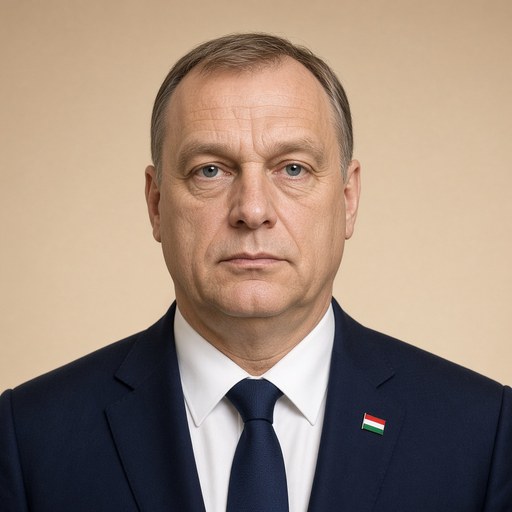
Viktor Orbán’s Press Conference After His Talks with Vjekoslav Bevanda, Prime Minister of Bosnia and Herzegovina
 Viktor Orbán · Prime Minister of Hungary
- Context
- Orbán held a joint press conference with Bosnian Prime Minister Bevanda in Budapest in November 2013 to discuss bilateral economic and transport cooperation.
- Main themes
- Bosnian-Hungarian economic cooperation, transport infrastructure, direct flights between Sarajevo and Budapest, Budapest-Belgrade high-speed railway, M6 motorway extension, Bosnia's EU integration, bilateral relations, regional connectivity to Western Europe
- Duration
- ~3 min
- Words
- 398
- Sentences
- 16
- Readability
- 42
- Grade
- 13.5
- Syntax
- 3.36
- Vocabulary
- 2.19
The broad sphere of national life a sentence belongs to. Every sentence has an Arena, so it is the denominator the other indices are read against.
Other16 sentences in 3 paragraphs
Ladies and Gentlemen,
I sincerely hope that if we are able to translate this spiritual approach into the language of day-to-day operations, Bosnian-Hungarian economic cooperation has a bright future. As part of the two countries’ economic cooperation – if the Prime Minister allows me –, I must also say a few words about transport because in order for Bosnia and Herzegovina to become a part of the European Union, not only politically but also actually, and in order for Bosnian-Hungarian relations to function well, we must be able to reach one another. As a target, we agreed that there must be direct flights between Sarajevo and Budapest; although I am not sure what timescale this may require. It is a grave problem that there is at present no direct aerial communication between the two cities. As to how this situation came about – the termination of the Hungarian airline under pressure from the EU obviously played a major part in this – is now irrelevant. However, we must now attempt to revitalise relations. I was able to report to the Prime Minister that negotiations regarding the construction of a high-speed railway link between Budapest and Belgrade are well under way with Serbia. This will take us closer to Bosnia as well. I also informed the Prime Minister that the Hungarian Government decided on the construction of the last incomplete section in Hungary of the Budapest–Eszék–Sarajevo–Ploče motorway, a transport route that is crucial for the Bosnians as well as for the Hungarians; in other words that the M6 Hungarian motorway should extend to the state borders. We shall reach the southern state borders at two points. The Government adopted a decision on this and allocated funds for the construction works. These projects will therefore be implemented in the years ahead of us, and upon their completion, members of the Hungarian business community will be able to reach Sarajevo and Ploče by motorway, and conversely, members of the Bosnian business community will be able to reach us in Budapest by motorway. At the same time, transport by motorway will also open the way for Bosnia towards the regions of Western Europe.
On the whole, I wish to repeat words of gratitude to the Prime Minister. I wish to thank him for visiting us and offering us the opportunities which I have just had the chance to briefly outline to you.