




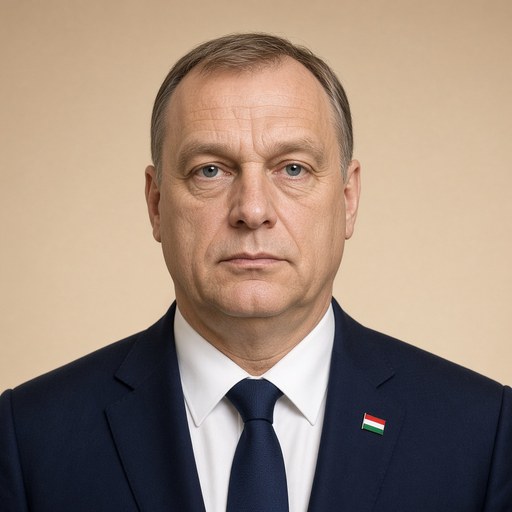
Viktor Orbán's press conference after the meeting of the operational group.
 Viktor Orbán · Prime Minister of Hungary
- Context
- Orbán held a press conference on day seven of Hungary's flood defense operations, reporting on Danube and Lajta water levels and mobilization efforts.
- Main themes
- Flood defense operations, Danube and Lajta river flood levels, personnel mobilization, water recession monitoring, dam safety and seepage risks, flood peak forecasting, volunteer coordination, Hungary flood response, Austria weather conditions
- Duration
- ~13 min
- Words
- 1,533
- Sentences
- 72
- Readability
- 50
- Grade
- 11.5
- Syntax
- 3.00
- Vocabulary
- 2.21
Translated from Hungarian
The broad sphere of national life a sentence belongs to. Every sentence has an Arena, so it is the denominator the other indices are read against.
Other72 sentences in 8 paragraphs
Good afternoon, Ladies and Gentlemen!
I can provide you with the following report. It is the seventh day, so according to our calculations, we are in the seventh day of the defense. First, I would like to mention two things about the Lajta. The first is that the Lajta will peak at Mosonmagyaróvár this morning. Come on, Director General! This indicates the highest water level ever recorded for the Lajta. The peak of the Danube flood wave is expected today in the Dunaremete area, somewhere around the height of Mosonmagyaróvár. Yesterday, I told you that the water would peak at Dévény. If we measure the distance between today’s peak location and yesterday’s, it is about 54-55 kilometers. So it is evident that the highest water level is moving southward at this pace. We are monitoring Austria; there are two important things we need to know from there that also affect our situation. The first is that the recession in Austria is slow. So we are facing two dangers. The first is the challenge of defending against the highest water level, which is working, and I will say a few words about that shortly. You can see that we have the capability to keep the water in the riverbed both at the Lajta and the Danube, but there is a second challenge, which is related to the slow recession, because a significant portion of flood damage events does not usually occur at the highest water level, but rather during the decrease due to the slow recession. This is when those flood protection phenomena occur, which the Director General will inform you about professionally: seepage, boil, and others, which can compromise the dam even after the peak. So the slow recession, the slow recession in Austria, draws attention to the fact that we must not let our guard down even after the highest water level has passed, because there may still be problems afterward. This will need to be enforced by the Director General with the water management officials. The second important experience from Austria, and this is good news, is that no rain or precipitation is expected in the coming week. So our hope is that the flood will not receive replenishment from Austria, and therefore the recession will be final, not temporary.
I will say a few words about the current basic data on flood defense. We had to increase the length of the areas under protection. We had to increase the length of the areas under second-level protection by 33 kilometers, and the length of the areas under third-level protection by 3 kilometers, and we had to introduce extraordinary readiness over 37 kilometers due to the Lajta. This means that we have increased the length of the areas under protection by a total of 70 kilometers.
What can be expected? As I mentioned to you yesterday, the water management can determine with considerable accuracy where and at what level the Danube will peak. Minor corrections may be necessary. I report to you that these corrections are within a few centimeters, so we can still consider the forecasts we received earlier from the water management as authoritative. This means that we still believe that the peak will leave the country in a southerly direction by the middle of next week. We still expect that the water level in Budapest will peak on Saturday, probably Saturday night, and then, depending on the decision of the Mayor, the embankment may be cleared by the middle of next week.
I will say a few words about the personnel status and background of the defense. We have mobilized an additional 200 people in the water management sector, so now 1,472 people are defending, compared to 1,288 yesterday. We have mobilized another 200 soldiers, so 1,936 soldiers are defending. We have mobilized another 130 police officers. We have increased the number of law enforcement students from 200 to 253. We are also increasing the number of those deployed from the correctional system. Yesterday, 117 inmates were working, and this will increase to 200 today, and I see that additional forces will be mobilized for sandbag filling within the walls of the correctional institutions. We now have data on the civil guards: 152 people are working there, we have 151 public workers, and the volunteer firefighters have arrived, totaling 171. In total, I must say that yesterday, 4,392 professionals were working on the dikes, and today 5,828 are working, so we have increased the number of professional personnel by 1,436. As for the volunteers, 4,012 volunteers participated in the work yesterday, and we have 15,353 registered volunteers. So we can still mobilize 15,353 volunteers from the reserves, in addition to the thousands of professionals. We see that people are orderly in applying for this work. Perhaps here, in the midst of the flood, it can already be stated that Hungary has learned the profession of defense during previous floods, and not only the professionals but also the volunteers know exactly what and how they need to do. I would like to tell you that based on consultations with the Director General, I can say that opening the emergency reservoir at the Lajta was a good decision. Of course, it is not surprising that we think this way, as he suggested it, and I ordered it, but we see in light of the water level developments that this was a good suggestion and a good decision, as it has reduced the water level according to our expectations, and we still have a temporary reservoir ready in reserve if it needs to be deployed, but now we see that it is unlikely to be necessary. Regarding the measures taken on the municipal level, we have produced a total of 1,551,500 sandbags so far. This means that from yesterday to this morning, 130,000 sandbags were filled by volunteers and placed on the protective lines. We can therefore say that the defense is organized, disciplined, calm, and progressing at a good pace, both from the professionals and the volunteers.
I will say a few words about the expected more difficult moments of today, first from Budapest. Reports indicate that the Budapest flood defenses reached 100 percent of their capacity by last night, so the Budapest protective lines have been successfully built up to a water height of 900 centimeters. This is above the highest water level ever recorded. We see that the defense of Budapest is secured, and we are successfully defending even in the most sensitive areas, such as Margaret Island and the area of the Batthyány Square underpass. As for the world outside Budapest, I have good news that in Dunabogdány – so the most difficult locations are now in the Danube Bend – the level of defense was already at 95 percent last night, 100 percent in Tahitótfalu, and 97 percent in Leányfalu. These are significant increases, so the state of readiness for defense has improved greatly in just one day. It is expected that we will have to close certain sections of the 2nd road leading towards Vác on Friday. Kismaros. There was a critical situation yesterday; I feel that we have passed that. With the deployment of the army, we are essentially already at 100 percent of the protection level. They were at 98 percent last night, and I believe that they are also ready this morning.
I would like to inform you that we have opened a flood hotline, a free telephone line, about which you will receive detailed information, which serves the purpose that if someone notices trouble or wants to volunteer, we ask them to do so through this line. Yesterday, we saw excellent and effective defense in Nagymaros, where there is a permanent registry of civil volunteers who are capable of solving the defense on a very long stretch on their own. The professional personnel are in good condition. The army can deploy 4,000 personnel, 4,000 soldiers, every 24 hours, and we have not yet had to mobilize anyone from the Counter-Terrorism Police, which also represents a reserve of around ten thousand. So I can confidently say that the country is safe despite the seriousness of the situation; we are not suffering from a lack of resources or personnel, and thanks to our volunteers, we have also been able to register significant reserves. If no unexpected events or accidents occur, we can keep the water in the riverbed and proceed according to our plans, as we intended. By the middle of next week, the flood wave will leave the country, and after that, we will only have to deal with the post-flood dangers, so instead of dual attention, we will only need to focus on a single task. The situation remains serious and difficult, but the level of defense gives reason for optimism. I am particularly hopeful regarding the testing of the country’s flood protection capabilities. We will be able to keep this water in the riverbed.
I would like to thank the Director General for the work shown by the water management officials yesterday. I thank the soldiers, the police, and the volunteers, the thousands of volunteers for the tremendous work done yesterday.
The original Hungarian. The tags above are read on the English translation's sentences.
Jó napot kívánok, Hölgyeim és Uraim!
A következő jelentést tudom Önöknek adni. Hetedik nap, tehát a védekezés a számításaink szerint a hetedik napjában tart. Először a Lajtáról szeretnék mondani két dolgot. Az első, hogy a Lajta Mosonmagyaróvárnál ma délelőtt tetőzik majd. Jöjjön, Főigazgató úr! Ez a Lajta esetében a valaha volt legnagyobb vízszintet valószínűsíti. A dunai árhullám tetőzése a mai napon Dunaremete térségében várható, valahol Mosonmagyaróvár magasságában. Tegnap azt mondtam Önöknek, hogy Dévénynél tetőzik majd a víz. Ha a mai tetőzési helyszín és a tegnapi közötti távolságot lemérjük, akkor az egy olyan 54-55 kilométeres távolság. Tehát láthatóan a legmagasabb vízszint ebben az ütemben halad déli irányban. Figyeljük Ausztriát, onnan két dolgot kell tudnunk, ami fontos, és a mi helyzetünket is befolyásolja. Az első, hogy az apadás Ausztriában lassú. Tehát két veszéllyel nézünk szembe. Az első a legmagasabb vízszinttel szembeni védekezés kihívása, ez működik, erről is mondok mindjárt néhány szót. Látják a Lajtánál is meg a Dunánál is megvan ez a képességünk, hogy a mederben tartsuk a vizet, de van egy második kihívás, ez pedig a lassú apadáshoz kapcsolódik, mert az árvízi káresemények tekintélyes része nem a legmagasabb vízszintnél szokott bekövetkezni, hanem a lassú apadás miatt a csökkenéskor. Ekkor vannak azok az árvízvédelmi jelenségek, amikről majd a főigazgató úr szakszerűen fogja Önöket tájékoztatni: szivárgás, buzgár, egyebek, amelyek meg tudják bontani a gátat már a tetőzés után. Tehát a lassú apadás, az ausztriai lassú apadás arra hívja föl a figyelmet, hogy nem szabad a figyelmünknek lankadnia a legnagyobb vízszint elhaladását követően sem, mert utána még bajok lehetnek. Ezt majd a főigazgató úrnak kell a vízügyeseknél érvényesítenie. Ausztriából a második fontos tapasztalat, és az jó hír, hogy a következő egy hétben továbbra sem várható eső, csapadék. Tehát az a reményünk, hogy az árvíz nem kap utánpótlást Ausztriából, és ezért a levonulás végleges lesz, nem pedig időleges.
Mondok néhány szót Önöknek a friss árvíz-védekezési alapadatokról. Növelni kellett a védelem alá vont területeknek a hosszát. A másodfokú védelem alatt álló területeknek a hosszát meg kellett növelnünk 33 kilométerrel, és a harmadfokú védettség alatt álló területek hosszát 3 kilométerrel, és be kellett vezetni a rendkívüli készültséget 37 kilométeren a Lajta miatt. Ez azt jelenti, hogy mindösszesen 70 kilométerrel növeltük meg a védelem alatt álló területek hosszát.
Mi várható? Az várható, ahogyan tegnap is mondtam Önöknek, hogy meglehetős pontossággal tudja a vízügy meghatározni, hogy hol, milyen szinten tetőzik majd a Duna. Kisebb korrekciók szükségesek lehetnek. Jelentem Önöknek, hogy ezek a korrekciók néhány centiméteren belül vannak, tehát azokat az előrejelzéseket, amelyeket korábban kaptunk a vízügytől, azokat továbbra is mérvadónak tekinthetjük. Ez azt jelenti, hogy továbbra is úgy gondoljuk, hogy a jövő hét közepén hagyja el az országot a tetőzés déli irányban. Azt várjuk továbbra is, hogy a budapesti vízszint tetőzése szombaton, valószínűleg szombat éjjel következik be, és aztán a főpolgármester úr döntésétől függően a jövő hét közepén a rakpart már felszabadítható lesz.
Mondok néhány szót a védekezésnek a személyi állapotáról, illetve hátteréről. A vízügyi ágazatban mozgósítottunk további 200 főt, tehát a tegnapi 1.288 fővel szemben most 1.472 fő védekezik. A katonáknál mozgósítottunk újabb 200 főt, tehát 1.936 katonánk védekezik. A rendőröknél mozgósítottunk újabb 130 főt. A rendészeti hallgatók létszámát 200-ról felemeltük 253-ra. A büntetés-végrehajtásból kivezényeltek számát is növeljük. Tegnap 117 elítélt dolgozott, ez mára fölmegy 200-ra, és úgy látom, hogy zsáktöltésre a büntetés-végrehajtási intézetek falain belül további erőket fognak mozgósítani. Van adatunk most már a polgárőrökről: 152 fő dolgozik ott, van közmunkásunk 151, megjöttek az önkéntes tűzoltók, 171-en vannak. Összesen azt kell mondanom, hogy tegnap dolgoztak a gátakon mindösszesen, a hivatásos állomány részéről 4.392-en, ma pedig dolgoznak 5.828-an, tehát 1.436-tal növeltük meg a hivatásos élőerő számát. Ami az önkénteseket illeti, tegnap 4.012 önkéntes vett részt a munkákban, és van 15.353 nyilvántartásba vett önkéntesünk. Tehát 15.353 önkéntest tudunk még a tartalékból mozgósítani, a hivatásos állomány sokezres tartalékán fölül. Úgy látjuk, hogy az emberek rendezetten jelentkeznek erre a munkára. Talán itt, az árvíz közepén már kijelenthető az, hogy Magyarország az előző árvizek idején meg-, illetve kitanulta a védekezés szakmáját, és nemcsak a hivatásosok, hanem az önkéntesek is pontosan tudják, hogy mit és hogyan kell tenniük. Szeretném elmondani Önöknek, hogy a főigazgató úrral való egyeztetés alapján azt mondhatom, hogy jó döntés volt a Lajtánál a szükségtározó megnyitása. Persze, hogy mi ezt így gondoljuk, az nem meglepő, mert ő javasolta, én meg elrendeltem, de úgy látjuk a vízszint alakulásának fényében, hogy ez jó javaslat, illetve jó döntés volt, a várakozásainknak megfelelően csökkentette a vízszintet, és továbbra is készen áll még tartalékban további ideiglenes tározó, ha be kéne vetni, de most úgy látjuk, hogy valószínűleg arra nem kerül sor. Ami az önkormányzati vonalon megtett intézkedéseket illeti, előállítottunk eddig összesen 1.551.500 homokzsákot. Ez a tegnapihoz képest azt jelenti, hogy tegnapról mára virradóra 130.000 homokzsákot töltöttek meg az önkéntesek, és helyeztek el a védvonalakon. Azt mondhatjuk tehát, hogy a védekezés mind a hivatásosok, mind az önkéntesek részéről szervezett, fegyelmezett, nyugodt, és jó tempóban halad.
Mondok néhány szót Önöknek a mai nap várható nehezebb pillanatairól, először is Budapestről. Jelentések szerint a budapesti védművek a tegnap esti órákra elérték a kiépítettség 100 százalékát, tehát 900 centiméteres vízmagasságra sikerült kiépíteni a budapesti védvonalakat. Ez fölötte van a valaha volt legmagasabb vízállásnak. Úgy látjuk, hogy a Budapest védelme megoldott, a legérzékenyebb részeken is eredményesen védekezünk, ilyen a Margit-sziget és a Batthyány téri aluljárók térsége. Ami a Budapesten kívüli világot illeti, az a jó hírem van, hogy Dunabogdányban – tehát a Dunakanyarnál vannak most a legnehezebb helyszíneink – a védekezés szintje tegnap éjszaka 95 százalékos volt már, Tahiban, Tahitótfaluban 100 százalékos, és Leányfaluban 97 százalékos. Ezek jelentős növekedések, tehát egy nap alatt sokat javult a védekezés készültségi foka. Arra kell számítani, hogy várhatóan pénteken a Vác felé vezető 2-es út egyes szakaszait le kell majd zárnunk. Kismaros. Kritikus helyzet volt tegnap, úgy érzem, hogy ezen túl vagyunk. A hadsereg kivezénylésével lényegében a védettségi szint 100 százalékán vagyunk már. Tegnap este 98 százalékon álltak, azt gondolom, hogy ma reggelre ők is megvannak.
Szeretném Önöket tájékoztatni arról, hogy nyitottunk egy árvízvonalat, egy ingyenes telefonvonalat, erről majd kapnak részletes tájékoztatást, ami azt a célt szolgálja, hogyha valaki bajt észlel, vagy munkára szeretne jelentkezni, akkor kérjük, hogy ezen a vonalon keresztül tegye meg. Tegnap egy nagyszerű védekezést és eredményes védekezést láttunk Nagymaroson, ahol egy állandó nyilvántartásban szerepelnek a civil önkéntesek, akik képesek egy nagyon hosszú szakaszon saját erőből megoldani a védekezést. A hivatásos állomány jó állapotban van. A hadsereg 24 óránként 4.000 élőerőt, 4.000 katonát tud bevetni, a Készenléti Rendőrségből pedig eddig még nem kellett senkit sem mozgósítanunk, az szintén egy tízezres nagyságrendű tartalékot jelent. Tehát nyugodtan mondhatom azt, hogy az ország a helyzet komolysága mellett is biztonságban van, sem eszköz-, sem élőerő-hiányban nem szenvedünk, sőt az önkénteseinknek köszönhetően jelentős tartalékokat is nyilvántartásba tudtunk venni. Ha valami váratlan esemény vagy baleset nem történik, akkor a vizet a mederben tudjuk tartani, és a terveink szerinti rendben, úgy, ahogy azt terveztük. A jövő hét közepén az árhullám elhagyja az országot, és utána már csak az árvíz utáni veszedelmekkel kell majd törődnünk, tehát kétirányú figyelem helyett már csak egyetlen feladatra kell összpontosítanunk. A helyzet továbbra is komoly, nehéz, de a védekezés színvonala az optimizmusra ad okot. Kifejezetten bizakodó vagyok az ország árvízvédelmi képességeinek tesztelése ügyében. Meg fogjuk tudni ezt a vizet a mederben tartani.
Köszönöm szépen a főigazgató úrnak a vízügyesek tegnapi napon mutatott munkáját. Köszönöm a katonáknak, a rendőröknek és az önkéntesek, sok ezer önkéntesnek is a tegnap elvégzett hatalmas munkát.