




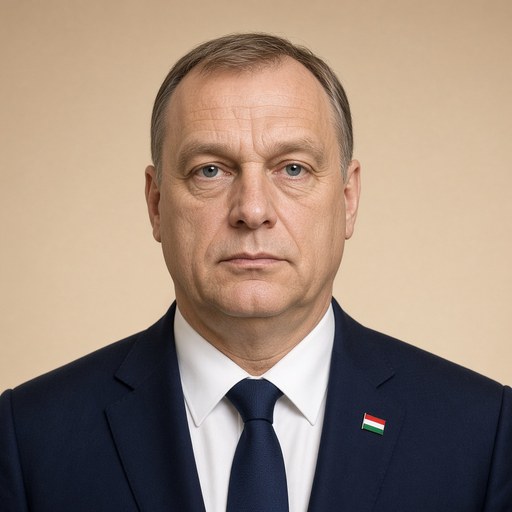
Press statement by Viktor Orbán after his meeting with Wang Chuanfu, the General Director of BYD.
 Viktor Orbán · Prime Minister of Hungary
- Context
- Orbán addressed press after meeting BYD General Director Wang Chuanfu in Budapest on May 15, 2025, following agreements on electric vehicle manufacturing in Hungary.
- Main themes
- Hungary-China strategic partnership, BYD electric vehicle manufacturing in Hungary, electromobility and automotive industry transition, connectivity strategy, Chinese investment in Hungary, Belt and Road Initiative, EU-China trade tariffs, infrastructure projects, bilateral trade growth, Hungarian industrial development
- Duration
- ~8 min
- Words
- 970
- Sentences
- 52
- Readability
- 46
- Grade
- 11.4
- Syntax
- 3.00
- Vocabulary
- 2.04
Translated from German
The broad sphere of national life a sentence belongs to. Every sentence has an Arena, so it is the denominator the other indices are read against.
Other52 sentences in 9 paragraphs
Good day, ladies and gentlemen!
I warmly welcome the Governor and the Director General! Two years ago, I visited you, and now you are reciprocating that government visit. As the agreements show, we have worked hard over the past two years. I thank both of you very much for the partnership and cooperation!
Ladies and gentlemen!
The agreement now concluded with the BYD plant means that the cars of the future will also be manufactured in Hungary. Every Hungarian remembers that we successfully entered global automobile production in 1990. We have created a solid industrial and technological base, and perhaps I should also thank the engineers and factory workers who have built this solid industrial foundation over the past thirty years. The fact that the Hungarian automotive industry can now enter the next phase is thanks to the Hungarian engineers and workers who have established this foundation of trust through their work.
But that is the past, which cannot sustain us. Now we must talk about the future, and we live in a time of change. New technologies, new customer needs, and new manufacturers have emerged, and we Hungarians do not want to be left out in this new era. We have made a strategic decision that the Hungarian industry must enter the field of electromobility. With this, we also state that market, short-term, and cyclical influences will not affect this strategic decision of ours. When introducing a new technology, there are always ups and downs that one must endure. The most important thing is that we know: this is the future, and Hungary must not miss out on this future. Entering a new technological era with electromobility is unthinkable for Hungary without our own strength. We need partners for this, as we can only enter this new era through strategic cooperation between China and Hungary, since China is technologically leading in this industry.
We all know, dear Governor, that Hungarian-Chinese relations have a 76-year history. It is an old, long-standing relationship, but right now we are experiencing its most intense phase. Here in Budapest, together with the economic ministers sometime between 2010 and 2011, we initiated cooperation between China and Central Europe, and Hungary has joined the "Belt and Road Initiative" and has remained loyal to it – unlike several other European countries. I would like to remind you that President Xi invited Hungary to participate in the modernization of the Chinese economy during his visit to Budapest, thus offering us economic opportunities. We said yes to that.
It logically follows that Hungary is now pursuing a connectivity strategy in the world economy and global trade and maintaining intensive and pragmatic relations with all global power centers. In order for the Hungarian economy to achieve its goals, we must also nurture and expand our relations with China at a strategic level. With this connectivity strategy, we are modernizing the Hungarian economy and making it more resilient at the same time. Our goal is for Hungary to become a hub for investments, capital flows, technology, and trade from both the West and the East.
The value of our trade has doubled in the last ten years, and China is one of our three largest investors alongside the United States and Germany. There have been years when China was the largest investor in Hungary. More precisely: there are years when China is the largest investor in Hungary. This means that Chinese investments have become an important, even indispensable engine of Hungarian economic growth. I have always believed that this would happen. We are working with China on huge infrastructure projects that promote cooperation between the West and the East as well as economic collaboration. Soon, the Budapest-Belgrade railway line will be put into operation, we will soon begin construction of the V0 railway ring line, and the construction of the oil pipeline connecting Serbia with our country will also begin soon. You all know that China also plays an important role in financing large modernization projects in Hungary.
I must also speak about the position we occupy in the European Union. Here too, I would like to say that we have always rejected EU tariffs against China. We are also urging the European Union to abolish these tariffs. We believe that we must return to economic cooperation based on mutual respect, and we expect the opening of new chapters of cooperation between the EU and China. We are convinced that the future of Europe lies not in confrontation, but in partnership. Our goal is for foreign investors to also bring development capacities to Hungary. So not just production capacities, but also development capacities. We have always had the idea that first the factories come, then the development centers of the factories, and finally the research centers. It does not work the other way around. First comes production, then development, and then research. That is why today's meeting and the agreement are so important, because BYD is now ushering in a new era and bringing its development center to Hungary; BYD is not only building a factory but also bringing its development center here. This shows that our plan, our grand plan, is working. I would like to remind everyone that before BYD, companies like Audi, Apollo Tyres, Bosch, Continental, Knorr-Bremse, Mercedes, Samsung, Schaeffler, SEGA, Stellantis, or just ZF brought their research and development centers to Hungary. Before BYD, several thousand highly qualified engineers were already working in these centers, but now BYD represents a leap in quality, as the BYD center alone will create 2,000 new jobs, for which 2,000 new employees will be needed, most of whom are highly qualified, have a university degree, and fundamentally possess engineering knowledge. And I am sure that after BYD, more players will follow. This is a beautiful task; thank you for your attention!
The original German. The tags above are read on the English translation's sentences.
Guten Tag, meine sehr geehrten Damen und Herren!
Ich begrüße den Herrn Gouverneur und den Herrn Generaldirektor herzlich! Vor zwei Jahren war ich bei Ihnen zu Besuch, nun erwidern Sie den damaligen Regierungsbesuch. Wie die Vereinbarungen zeigen, haben wir in den letzten zwei Jahren viel gearbeitet. Ich danke Ihnen beiden sehr für die Partnerschaft und die Zusammenarbeit!
Meine sehr geehrten Damen und Herren!
Die jetzt mit dem BYD-Werk geschlossene Vereinbarung bedeutet für Ungarn, dass auch die Autos der Zukunft in Ungarn hergestellt werden. Jeder Ungar erinnert sich daran, dass wir 1990 erfolgreich in die weltweite Automobilproduktion eingestiegen sind. Wir haben eine solide industrielle und technologische Basis geschaffen, und vielleicht sollte ich an dieser Stelle auch den Ingenieuren und Fabrikarbeitern danken, die in den letzten dreißig Jahren diese solide industrielle Basis geschaffen haben. Dass die ungarische Automobilindustrie nun in die nächste Phase eintreten kann, ist den ungarischen Ingenieuren und Arbeitern zu verdanken, die mit ihrer Arbeit diese Vertrauensbasis geschaffen haben.
Aber das ist Vergangenheit, von der man nicht leben kann. Jetzt müssen wir schon über die Zukunft sprechen, und wir leben in einer Zeit des Wandels. Es sind neue Technologien, neue Kundenbedürfnisse und neue Hersteller aufgetaucht, und wir Ungarn wollen in dieser neuen Ära nicht außen vor bleiben. Wir haben eine strategische Entscheidung getroffen, die lautet, dass die ungarische Industrie in die Elektromobilität einsteigen muss. Damit sagen wir auch, dass Markt-, kurzfristige und konjunkturelle Einflüsse diese unsere strategische Entscheidung nicht beeinflussen. Bei der Einführung einer neuen Technologie gibt es immer Höhen und Tiefen, die man durchstehen muss. Das Wichtigste ist, dass wir wissen: Das ist die Zukunft, und Ungarn darf sich diese Zukunft nicht entgehen lassen. Der Eintritt in ein neues technologisches Zeitalter mit Elektromobilität ist für Ungarn nur aus eigener Kraft undenkbar. Dazu brauchen wir Partner, denn wir können nur mit einer strategischen Zusammenarbeit zwischen China und Ungarn in dieses neue Zeitalter eintreten, da China in dieser Branche technologisch führend ist.
Wir alle wissen, sehr geehrter Herr Gouverneur, dass die ungarisch-chinesischen Beziehungen auf eine 76-jährige Geschichte zurückblicken. Es handelt sich um eine alte, langjährige Beziehung, aber gerade jetzt erleben wir ihre intensivste Phase. Wir haben hier in Budapest zusammen mit den Wirtschaftsministern irgendwann zwischen 2010 und 2011 die Zusammenarbeit zwischen China und Mitteleuropa ins Leben gerufen, und Ungarn ist der Initiative „Neue Seidenstraße“ beigetreten und ist ihr auch treu geblieben – im Gegensatz zu mehreren anderen europäischen Ländern. Ich möchte daran erinnern, dass Präsident Xi während seines Besuchs in Budapest Ungarn eingeladen hat, sich an der Modernisierung der chinesischen Wirtschaft zu beteiligen, und uns damit wirtschaftliche Möglichkeiten angeboten hat. Wir haben dazu Ja gesagt.
Daraus folgt logischerweise, dass Ungarn heute eine Konnektivitätsstrategie in der Weltwirtschaft und im Welthandel verfolgt und intensive und pragmatische Beziehungen zu allen globalen Machtzentren unterhält. Damit die ungarische Wirtschaft ihre Ziele erreichen kann, müssen wir auch unsere Beziehungen zu China auf strategischer Ebene pflegen und ausbauen. Mit dieser Konnektivitätsstrategie modernisieren wir die ungarische Wirtschaft und machen sie zugleich auch widerstandsfähiger. Unser Ziel ist es, dass Ungarn zu einem Treffpunkt für Investitionen, Kapitalflüsse, Technologie und Handel aus dem Westen und dem Osten wird.
Der Wert unseres Handels hat sich in den letzten zehn Jahren verdoppelt, und China ist neben den Vereinigten Staaten und Deutschland einer unserer drei größten Investoren. Es gab Jahre, in denen China der größte Investor in Ungarn war. Noch genauer gesagt: Es gibt Jahre, in denen China der größte Investor in Ungarn ist. Das bedeutet, dass chinesische Investitionen zu einem wichtigen, ja sogar unverzichtbaren Motor des ungarischen Wirtschaftswachstums geworden sind. Ich habe immer auch daran geglaubt, dass es so kommen wird. Wir arbeiten mit China an riesigen Infrastrukturprojekten, die die Zusammenarbeit zwischen West und Ost sowie die wirtschaftliche Zusammenarbeit fördern. Bald wird die Eisenbahnstrecke Budapest-Belgrad in Betrieb genommen, bald beginnen wir mit dem Bau der Eisenbahnringlinie V0, und auch der Bau der Ölpipeline, die Serbien mit unserem Land verbindet, wird bald beginnen. Sie alle wissen, dass China auch eine wichtige Rolle bei der Finanzierung großer Modernisierungsprojekte in Ungarn spielt.
Ich muss auch über den Platz in der Europäischen Union sprechen, den wir einnehmen. Auch hier möchte ich sagen, dass wir die EU-Zölle gegenüber China schon immer abgelehnt haben. Wir drängen auch darauf, dass die Europäische Union diese Zölle aufhebt. Wir sind der Meinung, dass wir zu einer auf gegenseitigem Respekt basierenden wirtschaftlichen Zusammenarbeit zurückkehren müssen, und wir erwarten die Eröffnung neuer Kapitel der Zusammenarbeit zwischen der EU und China. Wir sind überzeugt, dass die Zukunft Europas nicht in der Konfrontation, sondern in der Partnerschaft liegt. Unser Ziel ist es, dass ausländische Investoren auch Entwicklungskapazitäten nach Ungarn bringen. Also nicht nur Produktions-, sondern auch Entwicklungskapazitäten. Wir hatten immer die Vorstellung, dass zuerst die Fabriken kommen, dann die Entwicklungszentren der Fabriken und schließlich die Forschungszentren. Umgekehrt geht das nicht. Zuerst kommt die Produktion, dann die Entwicklung und dann die Forschung. Deshalb sind das heutige Treffen und die Vereinbarung so wichtig, denn BYD läutet nun eine neue Ära ein und bringt sein Entwicklungszentrum nach Ungarn, BYD baut nicht nur eine Fabrik, sondern bringt sein Entwicklungszentrum hierher. Das zeigt, dass unser Plan, unser großer Plan, funktioniert. Ich möchte alle daran erinnern, dass vor BYD Unternehmen wie Audi, Apollo Tyres, Bosch, Continental, Knorr-Bremse, Mercedes, Samsung, Schaeffler, SEGA, Stellantis oder gerade ZF ihre Forschungs- und Entwicklungszentren nach Ungarn gebracht haben. Vor BYD arbeiteten bereits mehrere tausend hochqualifizierte Ingenieure in diesen Zentren, aber jetzt bedeutet BYD einen Qualitätssprung, denn allein im BYD-Zentrum entstehen 2.000 neue Arbeitsplätze, für die 2.000 neue Mitarbeiter benötigt werden, von denen die meisten hochqualifiziert sind, einen Hochschulabschluss haben und grundlegend über Ingenieurskenntnisse verfügen. Und ich bin mir sicher, dass nach BYD weitere Akteure folgen werden. Dies ist eine schöne Aufgabe, ich danke Ihnen für Ihre Aufmerksamkeit!