




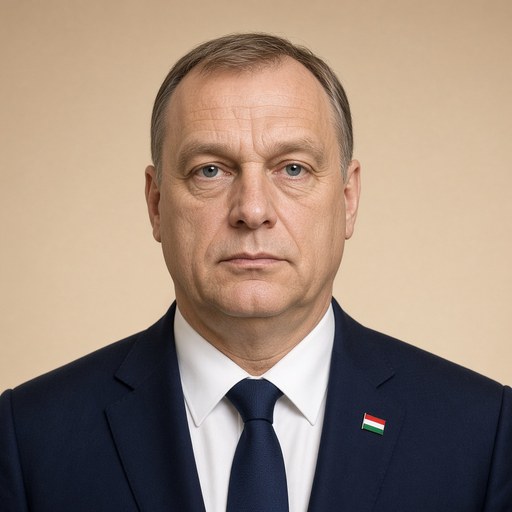
Prime Minister Viktor Orbán's Speech at the Foundation Stone Laying Ceremony of the Dyke to be built between Komárom and Almásfüzitő
 Viktor Orbán · Prime Minister of Hungary
- Context
- Orbán addressed a ceremony on 20 February 2014 laying the foundation stone of a new dyke between Komárom and Almásfüzitő to improve Hungary's flood defenses.
- Main themes
- Flood defense and dyke construction, volunteer solidarity in disaster response, reconstruction after natural disasters, Hungarian economic recovery, 2014 election campaign, public utility price reductions, family support systems, state institutions and disaster management, infrastructure investment
- Duration
- ~8 min
- Words
- 906
- Sentences
- 37
- Readability
- 51
- Grade
- 12.2
- Syntax
- 3.14
- Vocabulary
- 2.12
The broad sphere of national life a sentence belongs to. Every sentence has an Arena, so it is the denominator the other indices are read against.
Other37 sentences in 11 paragraphs
Ladies and Gentlemen,
This is what I would like to say a few words to you about, if you will allow me. It may be true, and General Bakondi [Commander of the Disaster Management Authority] spoke of this with modest resolve, that state institutions must always perform their duties to the full, because if there are no good water management experts, if the disaster management services do not do a good job, if there are no good firefighters, if the railways don't help us and if the police do not mobilise, then the country cannot defend itself properly. But there is another side to the coin: no matter how well General Bakondi performs his duties, if there is trouble then without volunteers, the state alone cannot defend the country. We need volunteers, and from where I am sitting it is thanks to the volunteers that during the floods last year we were not swept away by the water and succeeded in keeping the Danube in its bed, or at least behind the dykes.
Ladies and Gentlemen,
Continuing on from General Bakondi's recollection of events, let us quickly think back to the year 2000, when the flooding of the Tisza Rover almost swept away the city of Szolnok. And then there was the flooding of the river Bereg in 2001, when 42 settlements were undermined by the water and had to be rebuilt. And then there was the flooding of the river Borsod in the summer of 2010, I think, which was the result of huge quantities of melting snow rushing down from the mountains. And then we were beset by the red sludge disaster in Kolontár, after which came the great Danube flood.
Ladies and Gentlemen,
I would recommend to everyone, if you have the opportunity, to go down to Devecser and Kolontár and see for yourselves the new settlements that have sprouted up there following the reconstruction. If you have the strength, visit the river Bereg and have a look at those 42 settlements, at what a country should look like after a flood and at how a settlement should be rebuilt. And I can also tell you that we will be keeping to the deadline, and in August 2015 you will be able to come out here and see how a country should construct a dyke, if it does not want to once again have to live through exciting times such as the ones we had to live through together last summer.
Ladies and Gentlemen,
People draw different conclusions from the events. I see only a single conclusion, and that is that nobody should tell us that something is impossible. That is what they said about last year's flood of the century, that it was impossible to stop. They said about the reconstruction at the river Bereg, that it was impossible to perform within a year. They said about Kolontár, that it could never again be rebuilt, and the list goes on. And we succeeded in doing all of them. And the reason we succeeded, Ladies and Gentlemen, is that after 2010, and thinking back, during the period before 2002 also, there was solidarity. And if there is solidarity then we are also capable of seemingly impossible feats. There is something else I would also like to mention, because we are in the middle of an election campaign after all, and this is that the 7 billion forints which we will be spending here had to be generated by the Hungarian economy. It is very important to note that we can only be capable of building dykes and of magically rebuilding settlements after a disaster, if the economy is working properly, if people are working, if there are available jobs, and if everyone performs their duties properly.
Ladies and Gentlemen,
Today, Hungary is in a situation that we can call promising. It would be a big mistake to say that everything is as it should be, but Hungary is in a promising state. We are travelling on a path, of which it has been proven, that it is taking us forwards from day to day. And what I would like to ask of you, Ladies and Gentlemen, in view of the fact that it was difficult to find this path – I would not like to talk about the past now, we all remember what things were like before 2010 – it was a difficult task to find the path, about which we can state that we are capable of taking a step forward along it each and every day. Now that we have found it, what I would like to ask of you is that we do not stray from that path. What I ask of you is that we protect what we have achieved, what we have realised. Let us protect our opportunities for investing in development projects, let us protect our family support systems and the family allowance extra scheme, let us protect the reduction in public utility prices and let us protect the favourable economic positions we have achieved I the face of the banks and the big service providers. And generally, what I ask of you is that we protect the future of Hungary together.
I am glad to have had the opportunity to be with you here again today. Congratulations on this development project. I hope to have the opportunity to be here again with you next year.