




- Context
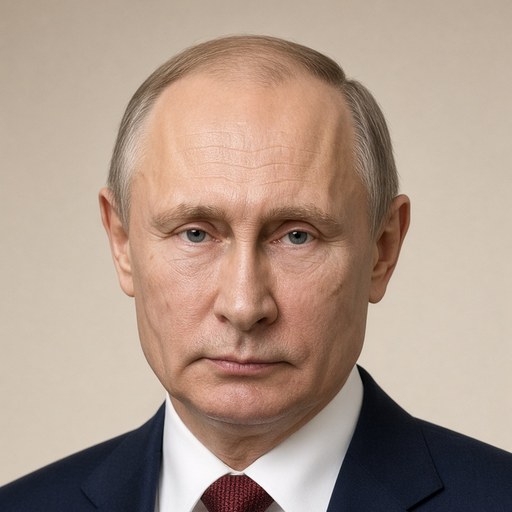
- Putin addressed the session on inclusive global governance at the 18th BRICS Summit in New Delhi on September 12, 2026, urging a multipolar order and proposing BRICS payment, reinsurance, investment and grain exchange initiatives.
- Main themes
- Inclusive global governance and strengthening multilateralism, BRICS as the world's largest association, multipolar world order, intellectual and technological potential of BRICS, criticism of tariff wars and sanctions, central role of the United Nations, UN Security Council expansion, reform of the IMF, World Bank and WTO, new institutions for platform economy and digital trade, World Artificial Intelligence Cooperation Organisation, Russian initiatives on payment infrastructure and grain exchange, BRICS Business Forum
- Duration
- ~9 min
- Words
- 1,020
- Sentences
- 47
- Readability
- 27
- Grade
- 14.9
- Syntax
- 3.14
- Vocabulary
- 2.26
The broad sphere of national life a sentence belongs to. Every sentence has an Arena, so it is the denominator the other indices are read against.
Other47 sentences in 20 paragraphs
Mister Prime Minister Modi,
Colleagues,
Friends,
As has been emphasised, BRICS countries continue to deepen their interaction in all key areas. This concerns politics and security, the economy and finance, as well as the cultural and humanitarian spheres. My colleagues have already noted that BRICS is now, in fact, the world’s largest association. They also said that we cover a third of the Earth’s surface, account for 40 percent of global GDP, and are home to nearly half of the planet’s population.
However, I also want to draw your attention to a circumstance, which in contemporary conditions, I think, may be the key one: our countries possess a huge, enormous intellectual and technological potential. This is what our substantial advantage, to my mind.
Partnership within BRICS is consistently built on the principles of equality, good-neighbourliness, and mutual consideration of interests – along with respect for one another’s cultural and civilisational diversity, history, traditions, and values. It stands to reason, then, that the credibility and influence of BRICS around the globe are steadily growing.
The association has rightly established itself as a key centre of global governance, and the future of international politics, security, the economy, and humanitarian cooperation largely depends on our collective decisions and actions.
Given this, I think that the subject of today’s session, “Inclusive Global Governance and Strengthening Multilateralism, proposed under the Indian chairmanship, is highly relevant. Indeed, amid the emergence of a multipolar international order, it is more important than ever to strengthen genuine multilateralism, involve more countries in global governance mechanisms and the activities of key international political and economic institutions, as well as in the search for responses to acute challenges and threats and in efforts to ensure international peace and stability for the sake of universal prosperity and well-being.
The world is undergoing profound geopolitical, geoeconomic, technological and social transformations. These changes are affecting virtually every aspect of human life, from lifestyles and healthcare standards to environmental quality. The structure of society itself is evolving, along with the global demographic landscape. The unipolar system of international relations, which served the interests of a narrow group of countries, is gradually becoming a thing of the past. The global balance of power is shifting towards new centres of growth in the Global South and East. More and more countries are openly asserting their determination to defend their national interests and take part in addressing global challenges.
However, the transition towards a multipolar world is not without difficulties. As we can all see it, it is being resisted by those who remain accustomed to thinking in colonial terms, dividing the world into a flourishing garden and a wild jungle and seeking to prosper at the expense of others. Unwilling to accept the new realities, they are using every means at their disposal to hold back emerging competitors.
These methods range from tariff wars and illegitimate sanctions to economic pressure and blackmail, interference in the internal affairs of sovereign states and direct use of force. Existing hotbeds of tension are being deliberately fuelled, while new conflicts and divisions are being provoked. As a result, the entire system of international relations is malfunctioning, while multilateral institutions and mechanisms are becoming less effective.
Against this backdrop, Russia considers it particularly important to preserve and strengthen the United Nations’ central role in global affairs. The UN Charter remains the cornerstone of international law, despite the attempts by certain countries to replace it with a so-called “rules-based order,” founded on rules devised by no one knows whom. We believe that, together with our BRICS partners, we must continue working to make the United Nations more effective. Expanding the Security Council, in particular, by ensuring greater representation for countries from Asia, Africa and Latin America, would certainly help achieve this goal.
The need to improve the system of global economic governance has long been evident. Institutions such as the International Monetary Fund, the World Bank and the World Trade Organisation were created in very different political and economic realities and are finding it increasingly difficult to adapt to a world in which economic activity is steadily shifting towards emerging markets.
At the same time, the IMF, the WTO and the World Bank remain important platforms for dialogue among the world’s leading economies, so, it is essential to strengthen coordination among our countries within these institutions. It is worth recalling that, during Russia’s BRICS chairmanship in 2024, a dedicated consultation mechanism on WTO-related issues was established.
I would like to emphasise that, in today’s world, simply modernising existing governance institutions is no longer enough. Entirely new, rapidly developing sectors have emerged, including the platform economy, financial technologies and digital trade. Each requires its own institutions and regulatory frameworks, and our association could take a leading role in shaping them. As has already been noted, work in this area is underway. The People’s Republic of China, Russia and other BRICS countries were among the founding members of the World Artificial Intelligence Cooperation Organisation, established in Shanghai this July.
I would also like to draw attention to several practical Russian initiatives. These include developing payment, settlement and depository infrastructure within BRICS, as well as creating there a new investment platform, a reinsurance mechanism and a grain exchange.
It is encouraging to see the strong interest shown by the business community in deepening economic interaction among BRICS countries. As you know, this was discussed yesterday at the plenary session of the Business Forum. Business leaders and members of the BRICS Business Council have proposed a broad range of initiatives aimed at advancing practical cooperation, and a number of ambitious multilateral projects are already being planned.
In conclusion, I would like to emphasise once again that the BRICS Summit here in New Delhi has demonstrated the considerable potential of our association to further expand mutually beneficial cooperation and improve the global governance system, helping to build a genuinely multipolar and more equitable world order.
Finally, I would like to thank Prime Minister of India Narendra Modi and all our Indian colleagues for creating such a wonderful, hospitable, and welcoming atmosphere for our work.
Thank you very much.