




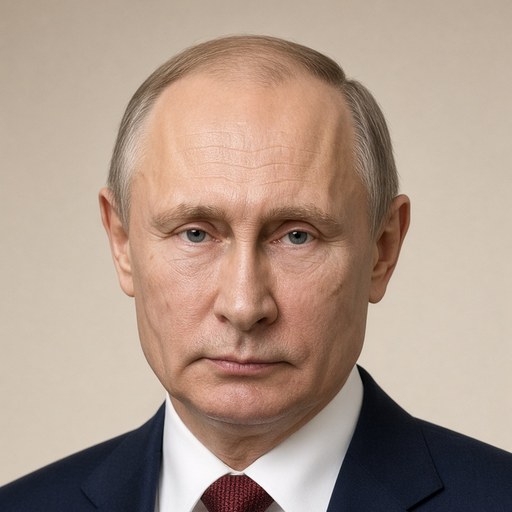
Vladimir Putin received the credentials of ambassadors from 21 foreign countries.
 Vladimir Putin · President of Russia
- Context
- Putin addressed ambassadors from 21 nations at a credentials ceremony in Moscow on September 26, 2012, urging respect for international law amid global instability.
- Main themes
- Diplomatic credentials ceremony, international law and UN Charter, global instability and economic crisis, Middle East and North Africa conflicts, counterterrorism and extremism, bilateral relations, APEC Vladivostok summit, regional integration and Customs Union, Russia's international forum leadership, cultural and religious tolerance, peaceful conflict resolution
- Duration
- ~13 min
- Words
- 1,550
- Sentences
- 90
- Readability
- 30
- Grade
- 13.3
- Syntax
- 2.77
- Vocabulary
- 2.34
Translated from Russian
The broad sphere of national life a sentence belongs to. Every sentence has an Arena, so it is the denominator the other indices are read against.
Other90 sentences in 36 paragraphs
Dear ladies and gentlemen!
You have been entrusted with an honorable and responsible mission – to represent your countries in the Russian Federation, to promote the development of bilateral relations and mutually beneficial cooperation in all areas. We have a common interest in ensuring that your work is effective and successful.
You are leading embassies during a challenging period, when the situation in the world is becoming increasingly unsettled and, unfortunately, unstable. Disruptions in global finance and the global economy are escalating, and the crisis is unfortunately taking on a protracted, systemic nature.
Recently, the next session of the United Nations General Assembly opened. In the current complex international situation, this is a good opportunity to recall the enduring significance of the UN Charter. It enshrines the principles of collective governance of international relations, the establishment of a just world order while respecting the sovereignty and equality of all states. These principles aim to resolve any problems through negotiations without external interference.
Strict adherence to these principles is more necessary today than ever. The rule of law must be ensured on the international stage just as it is within states themselves. This directly relates to processes in the hotspots of the planet, primarily, of course, in the Middle East and North Africa. Incitement in various forms and the continuation of violence aimed at regime change only lead the situation into a dead end. Violence begets violence.
We see the way out in coordinated actions by the international community aimed at peaceful political-diplomatic resolution of crises, urging opposing sides to cease armed confrontation. The value of human life is above all, and it should not be a bargaining chip in geopolitical games.
We believe it is necessary to increase joint efforts to counter terrorist threats and extremism wherever they may be: in Libya, Iraq, Yemen, Syria, Egypt, Afghanistan. There is no place for double standards here. Terrorists must be met with a firm and unanimous response.
At the same time, cultural values and religious sentiments of any people must be respected. The entire history of multinational and multi-confessional Russia testifies to the necessity of maintaining civil peace and harmony in society.
I would like to emphasize once again: without reliance on international law, it is impossible to conduct affairs in the modern world. Attempts to substitute universal principles of the UN Charter with unilateral actions or some block agreements, and even more so to use force bypassing the UN Charter, as we know, lead to no good. Such actions are fraught with destabilization and chaos, and so-called crisis management does not work. Recently, life has provided us with further proof of our correctness. It is time to learn lessons from what is happening.
Here are the ambassadors of countries whose leaders recently participated in the Vladivostok summit – the Asia-Pacific Economic Cooperation forum. I want to say right away that we are satisfied with the results of our joint work in Vladivostok. We managed to lay a good foundation for further work on developing trade, investment activities, transport infrastructure, ensuring food security, and promoting innovation.
I would like to draw special attention to the importance of integration processes involving Russia, Belarus, and Kazakhstan. The potential of the Customs Union is very large. In the coming years, Russia will chair leading international forums, such as the G20, the G8, BRICS, and the Shanghai Cooperation Organization. We will do everything to promote positive trends in the global economy and in world affairs.
I note that we will continue to actively pursue a unifying and open foreign policy. And how this policy is perceived and interpreted in the capitals of your countries largely depends on you as heads of diplomatic missions. I hope that you will monitor what is happening in Russia and assess everything that is happening here objectively.
Dear ladies and gentlemen! We highly value our interaction with the Kingdom of Thailand, which is based on sincere friendship between our peoples and a rich experience of trade and economic cooperation. We held a productive meeting in Vladivostok with Prime Minister Chinnawat, and agreed to activate our ties.
The atmosphere of mutual understanding also characterizes Russian-Maltese relations, contributing to stability in the Mediterranean and in Europe.
Our important partner in Latin America and the Asia-Pacific region is the Republic of Peru. I am confident that the results of the recent negotiations in Vladivostok with President Humala will serve to deepen bilateral contacts and relations.
We are set on further developing cooperation with the Eastern Republic of Uruguay, paying great attention to promoting joint business projects.
We are satisfied with the progress in relations with the Republic of Singapore. Indeed, these relations are gaining momentum, primarily in the areas of modernization and innovation in energy, training personnel, and managing special economic zones.
Interaction with Bulgaria is based on the traditions of friendship and mutual sympathy between our peoples. Next year, we will jointly celebrate the 135th anniversary of Bulgaria's liberation from Ottoman rule. Major economic projects are being implemented. Preparations are underway for the construction of the Bulgarian section of the South Stream gas pipeline.
On the agenda is multifaceted interaction with Kyrgyzstan, fulfilling the important agreements reached in Bishkek. I am confident that they will serve not only to deepen bilateral strategic partnership but also to strengthen stability and security in Central Asia.
An example of true neighborliness is our relations with Finland, where long-standing trade and investment ties are expanding, along with a trusting political dialogue. Our state constructively interacts within the framework of the Russia-EU partnership at the UN and in international regional structures: in the Baltic, Northern Europe, and the Arctic.
The strategic partnership and alliance between Russia and Kazakhstan is successfully developing. The development of relations in this direction is undoubtedly one of the priorities of Russian foreign policy. Our countries actively advocate for deepening integration processes in the post-Soviet space. We are convinced that the success of the project to create the Eurasian Economic Union largely depends on the coherence of these efforts.
Relations with the Federal Democratic Republic of Nepal are free from any problems and are based on the closeness of interests and approaches on a wide range of regional and global political issues. We support the peaceful, constitutional development of the situation in Nepal.
Our interaction with Turkmenistan is becoming increasingly rich in political, trade-economic, investment areas, as well as in the cultural and humanitarian sphere. We are preparing to participate in the CIS summit to be held in Ashgabat in early November.
Building relations with the young state of the Republic of South Sudan is an important part of Russia's efforts to promote development in Africa. I hope that the establishment of the South Sudanese state and economy will create many opportunities for the implementation of joint projects.
The peoples of Russia and Montenegro have long sympathized with each other. Bilateral relations are developing dynamically, particularly as Russian capital willingly flows into the Montenegrin economy, and the flow of our tourists is increasing.
There are good prospects for activating cooperation with the state of Brunei Darussalam. Given Brunei's chairmanship in ASEAN in 2013, we expect an intensive exchange of views on regional security and sustainable development.
We attach great importance to relations with the Federal Republic of Nigeria, which plays a significant role on the African continent. We are ready to expand and deepen our contacts, including in countering terrorism and regional extremism.
Our ties with Guatemala are developing. We welcome Guatemala's upcoming presidency in the UN Security Council in October. We look forward to working together on pressing international issues.
An important place in Russian policy in the Balkans is occupied by relations with Bosnia and Herzegovina. As a guarantor of the peace agreement for BiH, Russia advocates for its strict observance, which is a starting point for building a modern and democratic Bosnia and Herzegovina. We have good groundwork for cooperation in the economic sphere, primarily in energy.
Special, fraternal relations bind Russia with Belarus – our closest neighbor and reliable partner. Intensive interaction within the framework of the Union State and integration structures in the post-Soviet space is aimed at further increasing the competitiveness of our national economies and the quality of life of citizens of both countries. We are ready to further deepen diverse and trusting contacts and dialogue with Minsk, working together on the international agenda.
We intend to develop ties with the Republic of Honduras in the interests of stability in the Central American region.
This year marks the 40th anniversary of the establishment of diplomatic relations with the Republic of Niger. I am confident that the positive experience of cooperation will be used for our further interaction.
We are ready to continue building bilateral contacts with Burkina Faso in a constructive and mutually beneficial manner. We welcome this country's intentions to open its embassy in Moscow.
Dear ladies and gentlemen! You represent 21 countries, covering almost all continents: Asia, Europe, America, and Africa. We value and cherish good relations with each country. The Russian authorities will provide you with all possible support and assistance in your work.
I hope that your stay and work in our country will be associated not only with intense activity but will also leave pleasant memories.
I wish you success. Thank you.
The original Russian. The tags above are read on the English translation's sentences.
Уважаемые дамы и господа!
На вас возложена почётная и ответственная миссия – представлять ваши государства в Российской Федерации, содействовать развитию двусторонних отношений и взаимовыгодного сотрудничества во всех областях. У нас общая заинтересованность в том, чтобы ваша работа была эффективной и успешной.
Вы возглавляете посольства в непростой период, когда ситуация в мире становится всё более неспокойной и, к сожалению, нестабильной. Нарастают неурядицы в мировых финансах, в глобальной экономике, и кризис приобретает, к сожалению, затяжной, системный характер.
На днях открылась очередная сессия Генеральной ассамблеи Организации Объединённых Наций. В нынешней сложной международной обстановке это хороший повод, чтобы вспомнить о непреходящем значении Устава ООН. В нём заложены принципы коллективного управления международными отношениями, учреждения справедливого мироустройства при уважении суверенитета и равенства всех государств. Эти принципы нацеливают на решение любых проблем через переговоры без вмешательства извне.
Строгое следование этим принципам как никогда востребовано сегодня. Верховенство права должно быть обеспечено на международной арене точно так же, как и в самих государствах – внутри государств. Это напрямую относится к процессам в горячих точках планеты, прежде всего, конечно, на Ближнем Востоке и в Северной Африке. Подстрекательство в разных формах, продолжение насилия с целью смены режима заводит ситуацию только в тупик. Насилие порождает насилие.
Выход видим в скоординированных действиях международного сообщества, нацеленных на мирное политико-дипломатическое урегулирование кризисов, на побуждение противоборствующих сторон к прекращению вооружённого противостояния. Ценность человеческой жизни превыше всего, и она не должна быть разменной монетой в геополитической игре.
Считаем необходимым наращивать совместные усилия по противодействию террористическим угрозам и экстремизму где бы то ни было: в Ливии, Ираке, Йемене, Сирии, Египте, Афганистане. Двойным стандартам здесь не может быть места. Террористам надо дать жёсткий и единодушный отпор.
При этом следует уважать культурные ценности и религиозные чувства любого народа. Вся история многонациональной и многоконфессиональной России свидетельствует о безальтернативности сохранения гражданского мира и согласия в обществе.
Ещё раз подчеркну: без опоры на международное право невозможно вести дела в современном мире. Попытки подменить универсальные принципы Устава ООН односторонними действиями или некими блоковыми договорённостями и тем более применять силу в обход Устава ООН до добра, как известно, не доводят. Такие действия чреваты дестабилизацией и хаосом, и так называемое управление кризисом не работает. И в последнее время жизнь ещё дала нам доказательство нашей правоты. Пора извлекать уроки из того, что происходит.
Здесь присутствуют послы стран, чьи руководители участвовали недавно во Владивостокском саммите – форуме «Азиатско-тихоокеанское экономическое сотрудничество». Хочу сразу сказать, что мы удовлетворены результатами нашей совместной работы во Владивостоке. Удалось заложить неплохую основу для последующей работы по развитию торговли, инвестиционной деятельности, транспортной инфраструктуры, обеспечению продовольственной безопасности и поощрению инноваций.
Хотел бы обратить особое внимание на важность интеграционных процессов с участием России, Белоруссии и Казахстана. Потенциал Таможенного союза Краткая справка Таможенный союз России, Беларуси и Казахстана и Единого экономического пространства Краткая справка Единое экономическое пространство (ЕЭП) (в перспективе – Евразийского экономического союза) – очень большой. В ближайшие годы Россия будет председательствовать в ведущих международных форумах, таких как «двадцатка» Краткая справка Группа двадцати (Group of Twenty – G20) , «восьмёрка» Краткая справка Группа восьми (Group of Eight – G8) , БРИКС Краткая справка БРИКС (англ. BRICS) и Шанхайская организация сотрудничества Краткая справка Шанхайская организация сотрудничества (ШОС) . Мы сделаем всё, чтобы способствовать укреплению позитивных тенденций в глобальной экономике и в мировых делах.
Отмечу, что в целом мы будем продолжать активно проводить объединительную и открытую внешнюю политику. И от вас как глав дипломатических представительств во многом зависит, как эта политика будет восприниматься и трактоваться в столицах ваших государств. Надеюсь, что вы будете отслеживать происходящее в России и оценивать всё, что у нас происходит, объективно.
Уважаемые дамы и господа! Мы высоко ценим взаимодействие с Королевством Таиланд, в основе которого – искренняя дружба между нашими народами, богатый опыт торгово-экономического сотрудничества. Провели во Владивостоке полезную встречу с Премьер-министром Чиннават, условились активизировать наши связи.
Атмосфера взаимопонимания характеризует и российско-мальтийские отношения, способствующие обеспечению стабильности в Средиземноморье и в Европе.
Наш важный партнёр в Латинской Америке и АТР – Республика Перу. Уверен, что итоги также состоявшихся во Владивостоке переговоров с Президентом Умалой послужат углублению двусторонних контактов и отношений.
Настроены на дальнейшее развитие сотрудничества с Восточной Республикой Уругвай, уделяя большое внимание продвижению совместных бизнес-проектов.
Удовлетворены прогрессом в отношениях с Республикой Сингапур. Действительно, эти отношения набирают обороты, прежде всего в сфере модернизации и инноваций в энергетике, подготовке кадров, в управлении особыми экономическими зонами.
Взаимодействие с Болгарией опирается на традиции дружбы и взаимной симпатии наших народов. В следующем году мы совместно отметим 135-летие освобождения Болгарии от османского ига. Реализуются крупные экономические проекты. Ведётся подготовка к строительству болгарского участка газопровода «Южный поток».
На повестке дня – многоплановое взаимодействие с Киргизией, выполнение достигнутых в Бишкеке важных договорённостей. Они, уверен, послужат не только углублению двустороннего стратегического партнёрства, но и укреплению стабильности и безопасности в Центральной Азии.
Примером подлинного добрососедства служат наши отношения с Финляндией, расширяются давние торговые и инвестиционные связи, доверительный политический диалог. Наше государство конструктивно взаимодействует по линии партнёрства Россия – ЕС на площадке ООН и в международных региональных структурах: на Балтике, Севере Европы, в Арктике.
Успешно развивается стратегическое партнёрство и союзничество России и Казахстана. Развитие отношений на этом направлении, работа на этом направлении, безусловно, относится к одному из приоритетов российской внешней политики. Наши страны активно выступают за углубление интеграционных процессов на постсоветском пространстве. Убеждены, что от слаженности этих усилий во многом зависит успех проекта создания Евразийского экономического союза.
Отношения с Федеративной Демократической Республикой Непал освобождены от каких‑либо проблем, основаны на близости интересов и подходов по широкому кругу вопросов региональной и мировой политики. Поддерживаем мирное, конституционное развитие ситуации в Непале.
Всё более насыщенным становится взаимодействие с Туркменистаном в политической, торгово-экономической, инвестиционной областях, а также в культурно-гуманитарной сфере. Готовимся принять участие в проводимом в начале ноября в Ашхабаде саммите СНГ Краткая справка Содружество Независимых Государств (СНГ) .
Выстраивание отношений с молодым государством Республикой Южный Судан – важная составляющая усилий России по содействию развитию в Африке. Надеюсь, что становление южносуданского государства и экономики создаст немало возможностей для реализации совместных проектов.
Народы России и Черногории издавна симпатизируют друг другу. Двусторонние отношения динамично развиваются, в частности российский капитал охотно идёт в черногорскую экономику, растёт поток наших туристов.
Просматриваются хорошие перспективы активизации сотрудничества с государством Бруней-Даруссалам. С учётом председательства Брунея в 2013 году в АСЕАН Краткая справка Ассоциация государств Юго-Восточной Азии (АСЕАН) рассчитываем на интенсивный обмен мнениями по вопросам региональной безопасности и устойчивого развития.
Большое значение придаём отношениям с Федеративной Республикой Нигерия, которая играет значительную роль на Африканском континенте. Мы готовы расширять, углублять наши контакты, в том числе по противодействию терроризму и региональному экстремизму.
Развиваются наши связи с Гватемалой. Приветствуем предстоящее в октябре председательство Гватемалы в Совете Безопасности ООН. Рассчитываем на совместную работу по актуальным международным вопросам.
Важное место в российской политике на Балканах занимают отношения с Боснией и Герцеговиной. Как гарант мирного соглашения по БиГ, Россия выступает за его неукоснительное соблюдение, что является отправной точкой для строительства современной и демократической Боснии и Герцеговины. У нас имеются хорошие заделы для сотрудничества в экономической, в первую очередь в энергетической сфере.
Особые, братские отношения связывают Россию с Белоруссией – нашим ближайшим соседом и надёжным партнёром. Интенсивное взаимодействие в рамках Союзного государства интеграционных структур на постсоветском пространстве направлено на дальнейшее повышение конкурентоспособности наших национальных экономик и качество жизни граждан обеих стран. Готовы и дальше углублять разноплановые и доверительные контакты и диалог с Минском, вместе работать по международной повестке дня.
Намерены развивать связи с Республикой Гондурас в интересах стабильности в Центрально-Американском регионе.
В этом году исполнилось 40 лет со дня установления дипломатических отношений с Республикой Нигер. Уверен, что положительный опыт сотрудничества будет использован для нашего дальнейшего взаимодействия.
Готовы и далее выстраивать двусторонние контакты с Буркина-Фасо в конструктивном взаимовыгодном ключе. Приветствуем намерения этой страны открыть своё посольство в Москве.
Уважаемые дамы и господа! Вы представляете 21 страну, практически все континенты: Азию, Европу, Америку и Африку. Мы ценим и дорожим добрыми отношениями с каждой страной. Российские власти будут оказывать вам всяческую поддержку и содействие в вашей работе.
Надеюсь, что ваше пребывание и ваша работа в нашей стране будут ассоциироваться не только с напряжённой деятельностью, но и оставят приятные воспоминания.
Желаю вам успехов. Спасибо.