




- Context
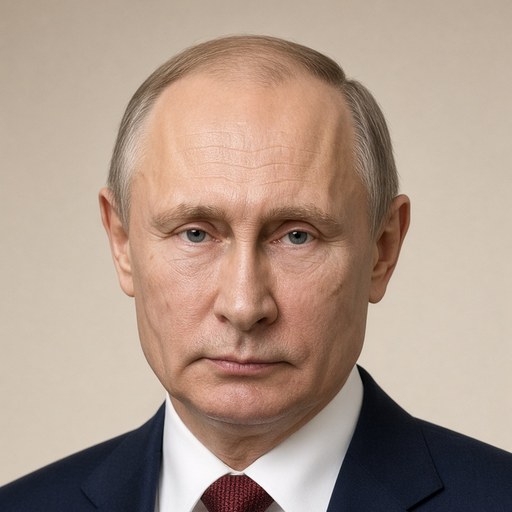
- Putin addressed a joint press conference with German Chancellor Merkel on August 18, 2018, following bilateral working talks covering economic, energy, and international issues.
- Main themes
- Russian-German bilateral relations, Nord Stream 2 pipeline, energy cooperation, trade and economic ties, German investment in Russia, Syrian conflict and humanitarian aid, Iran nuclear deal, refugee crisis, cultural and humanitarian cooperation, inter-parliamentary contacts, Ukrainian gas transit, regional security
- Duration
- ~8 min
- Words
- 944
- Sentences
- 52
- Readability
- 45
- Grade
- 11.4
- Syntax
- 2.89
- Vocabulary
- 2.04
The broad sphere of national life a sentence belongs to. Every sentence has an Arena, so it is the denominator the other indices are read against.
Other52 sentences in 24 paragraphs
First, I would like to thank Ms Federal Chancellor for the invitation and the opportunity to have this working meeting. We are ready to discuss both Russian-German relations and pressing international issues.
I would like to point out that Russia places major importance on the development of mutually beneficial cooperation with Germany in the political, economic and other spheres. I am proceeding from the idea that we will discuss the state of and the prospects for trade and economic relations.
Germany is one of Russia’s leading partners in this area. Last year mutual trade increased by 22 percent to reach $50 billion, and from January to June there was another 25 percent increase. The volume of accumulated German investment in the Russian economy exceeds $18 billion.
There are about 5,000 German companies in Russia with a total turnover of more than $50 billion and with around 270,000 employees. There are also about 1,500 enterprises with a Russian stake in the Federal Republic of Germany that have invested over $8 billion in various segments of the German economy.
One of the priority areas is energy, as is well known. Germany is the largest buyer of Russian energy resources. In 2017, we supplied some 53.8 billion cubic metres of gas, which is more than 30 percent of the German market; Russian gas consumption is constantly growing and has increased by 13 percent this year.
Germany is not just a big market for us, for Russian hydrocarbons, but it is also an important transit link to other European countries. Actually, June marked the 50 th anniversary of the beginning of gas shipments from the Soviet Union to Western Europe.
During this period, our country has reliably ensured a continuous supply of energy and has made a significant contribution to energy security of the entire European continent.
Together with our German partners, we are working on a new main gas pipeline, Nord Stream 2. This pipeline will improve the European gas transport system, diversify supply routes and minimise transit risks, and most importantly, will satisfy the growing demand for energy resources in the European economy.
In this regard, I would like to underline once again that Nord Stream 2 is an economic project only; it does not exclude the possibility of continued gas transit through Ukraine. I know the position of the Federal Chancellor, who regularly raises this issue.
I would like to stress that Ukrainian gas transit, which is our traditional route, needs, most importantly, to be based on economic needs; it should be economically justified in every sense.
There are good prospects for extending cooperation in other directions. This includes Russian-German industrial cooperation, the localisation of German high-tech manufacturing in Russia. Such projects were discussed at the St Petersburg International Economic Forum.
Cooperation in the cultural and humanitarian spheres continues to be developed. Many events will be held as part of the Year of Regional-Municipal Partnerships between the two countries. This autumn the Cross Year of Academic Partnerships will take on the torch. A large concert programme entitled Russian Seasons is planned for 2019 in Germany.
Contacts between the two countries’ parliaments are being restored. A strong delegation from the German Bundestag was in Moscow in June. Initiatives to create a large inter-parliamentarian commission with the participation of the leadership of the Russian State Duma and the Bundestag are being worked on, and cooperation between civic societies as part of the St Petersburg Dialogue, the Potsdam Meetings, and the German-Russian Forum are also being carried out.
As for the international agenda, Ms Federal Chancellor has just stated. Of course, we will discuss issues of interest to us. We will discuss the Joint Comprehensive Plan of Action to settle Iran's nuclear programme. Of course, this will not be omitted.
It is very important to preserve the multilateral agreement aimed at strengthening regional and global security and nuclear non-proliferation approved by the UN Security Council.
We will naturally discuss the situation in the Middle East, primarily that in Syria. We need to enhance the humanitarian component of the Syrian conflict, primarily rendering humanitarian aid to the Syrian people and helping the areas where refugees, who are in other countries, might return.
When I say other countries, I do not mean European countries, although some refugees might return from Europe as well. But I would like to remind you that there are around a million refugees in Jordan, a million refugees in Lebanon, and 3 million refugees in Turkey. This is a potentially huge burden for Europe, so it is best to do everything we can for these people to return.
What needs to be done to accomplish this? Basic things: we need to help restore the water and sewage systems, and restore medicine, the most basic things. I believe everyone is interested in this, including Europe.
We will of course talk about Ukraine, as Ms Federal Chancellor said, in the context of the Ukrainian crisis’ settlement, where unfortunately, there is little progress, given the lack of alternatives to the Minsk Agreements; we will highlight our interest in participating in the Normandy Format and the contact group, and our readiness to further support the UN’s special monitoring mission. I hope we will see progress in these areas.
In a word, we have a lot to talk about, quite a few issues. I would like to say that I am grateful to Ms Federal Chancellor for the opportunity she has provided for this today.
Thank you for your attention.
Question: Mr President, I am sorry, could you briefly describe your trip to Austria.
It was a very good trip, with a warm atmosphere. This was a private visit.
Thank you.