




- Context
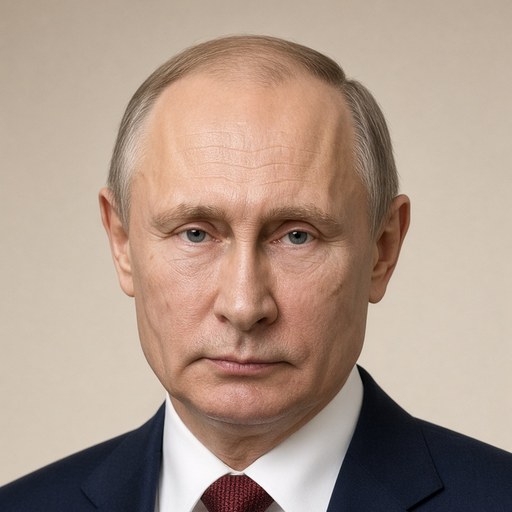
- Putin addressed the World Congress on Perinatal Medicine in Moscow on June 22, 2013, welcoming delegates from 59 countries and highlighting Russia's progress in maternal and child health.
- Main themes
- Perinatal medicine, maternal and child health, demographic policy, infant and maternal mortality reduction, Russia's healthcare investment, perinatal centers, UN Millennium Development Goals, birth rate trends, neonatal intensive care, international scientific cooperation
- Duration
- ~9 min
- Words
- 1,063
- Sentences
- 64
- Readability
- 53
- Grade
- 10.0
- Syntax
- 2.75
- Vocabulary
- 2.04
Translated from Russian
The broad sphere of national life a sentence belongs to. Every sentence has an Arena, so it is the denominator the other indices are read against.
Other64 sentences in 26 paragraphs
Dear ladies and gentlemen! Dear friends!
It is a great pleasure for me and all my Russian colleagues, and it is a great honor for us, to welcome such a representative delegation, such a representative forum of leading scientists, researchers, practicing physicians, and healthcare organizers from 59 countries of the world in the capital of Russia.
The World Association of Perinatal Medicine has been around for more than 50 years. Thanks to the enthusiasm and dedication of your predecessors and you, dear friends, especially those, of course, who were at the origins of this movement, attention has been drawn to this most important area of medicine. Today, it is not only in demand but has also received wide development and significant public resonance.
Improving maternal and child health and reducing maternal and child mortality have become two of the eight priorities of the Millennium Development Goals adopted by the United Nations in 2000. This initiative was supported by the member states of the UN, and, of course, Russia was undoubtedly among them.
And now we see the results of these joint efforts. Maternal mortality has almost halved worldwide, and child mortality has decreased by more than a third. This is undoubtedly, first and foremost, your achievement and that of your colleagues. We bow low to you for this. Thank you very much.
Your congress is taking place in Moscow, and we view this choice as a high international recognition of Russia's contribution to the development of perinatal medicine.
I would like to emphasize that in the demographic policy of our country, special emphasis is placed on encouraging families who wish to have children and on improving the system of maternal and child health protection.
In the 1990s, our country faced a profound demographic crisis. We have not yet felt the consequences of this crisis, but they will manifest themselves in the economy, in the social sphere, and in industrial development.
Unfortunately, we will face this in the coming years. Currently, nearly two million children are born in Russia each year. Last year, the birth rate reached the average European level. For us, this is the best indicator in the last 19 years.
Infant mortality has decreased by 50 percent over the past 10 years. A huge role in these achievements belongs to perinatal medicine. For domestic healthcare, it has already become a key – at least one of the key – important areas. Our duty is to fight for the life of every child.
Last year, Russia adopted the birth registration criteria recommended by the World Health Organization. I will say frankly, just a few years ago, we would not have been able to save such weakened and premature children. Special conditions are needed for this, and necessary measures have been taken over the past five years to create them.
We have begun to invest significant state funds in this most important sector of healthcare. And we will continue to do so. I repeat, the protection of motherhood and childhood is one of the key priorities of our state and social policy.
Currently, 58 modern perinatal centers are actively operating in the regions of the country. Perhaps this is still not enough. It is probably insufficient and certainly still too little, but it is nonetheless a significant, noticeable movement forward.
In recent years, we have implemented a whole program for the creation of such centers. They are equipped with the most advanced medical and diagnostic equipment.
I will tell you frankly, when I visit these centers, especially when I first arrived at one of them, I opened my eyes wide. I have never seen anything like it in my life. It is, of course, impressive. It looks very much like some kind of space systems. And this, of course, is also done in direct contact with the specialists who work in this field, that is, together with you.
In the departments of resuscitation, intensive care, and treatment of newborn pathologies, dedicated and qualified people work. We, for our part, will continue to build perinatal centers so that specialized medical assistance becomes increasingly accessible for mothers and for babies living in the remote regions of our vast country.
In addition, next year, a large federal perinatal center will open in Moscow as part of the leading scientific center named after Academician Kulakov [Scientific Center for Obstetrics, Gynecology, and Perinatology named after Academician V.I. Kulakov].
We certainly did not start all this enormous work from scratch. The system of medical institutions where the foundations of perinatology were born was formed back in Soviet times, and the most advanced technologies for that period were implemented not only in capital clinics. The true flagships of this direction were also medical centers in other cities: Ivanovo, Sverdlovsk, Rostov-on-Don, Leningrad, and some others. They continue to actively develop this direction even now.
We are proud that domestic specialists have achieved outstanding results in this field, especially in saving low-birth-weight newborns.
Great attention is paid to diagnostics, including prenatal diagnostics, in the first three months of pregnancy. In addition, all newborns are screened for five hereditary diseases. If such diseases are detected, the children receive the necessary treatment.
In this representative audience, dear friends, there is no need to explain how important it is to provide timely medical assistance to a child. It is often critically needed, not only in the first days – but in the first hours of a child's life, and sometimes even before birth.
Our talented doctors and specialists successfully perform such complex operations and save up to 80 percent of children. Therefore, we will fully support the development of neonatal surgery.
Dear ladies and gentlemen! I would like to emphasize once again: the development and implementation of perinatal technologies is one of the top priorities in healthcare. And your congress will undoubtedly be beneficial for specialists working in this most important field.
Professional communication will enrich knowledge, allow for the exchange of experience, and will undoubtedly lead to the implementation of the most advanced ideas and technologies. I have no doubt that the conclusions and recommendations arising from your joint work at the congress will be of utmost importance not only for Russian healthcare but also for the entire global medical science and practice.
Allow me to wish you success and, of course, health. Medical professionals need it no less than everyone else.
Thank you.
The original Russian. The tags above are read on the English translation's sentences.
Уважаемые дамы и господа! Дорогие друзья!
И мне, и всем моим российским коллегам очень приятно, для нас это большая честь, принять в столице России такую представительную делегацию, такой представительный форум ведущих учёных, исследователей, практикующих врачей и организаторов здравоохранения из 59 стран мира.
Всемирной ассоциации перинатологов уже более 50 лет. Благодаря энтузиазму и подвижничеству ваших предшественников и вас, дорогие друзья, особенно тех, конечно, кто стоял у истоков этого движения, было привлечено внимание к этому важнейшему направлению медицины. Сегодня оно не просто востребовано, но и получило широкое развитие, значимое общественное звучание.
Улучшение охраны здоровья матери и ребёнка, сокращение материнской и детской смертности стали двумя из восьми приоритетов «Целей развития тысячелетия», принятых Организацией Объединённых Наций в 2000 году. Эта инициатива была поддержана государствами – членами ООН, и, конечно, безусловно Россия была в их числе.
И сейчас мы видим результаты этих общих усилий. В мире почти наполовину снизилась материнская смертность и более чем на треть – детская. Это, безусловно, в первую очередь заслуга ваша и ваших коллег. Низкий вам поклон за это. Большое спасибо.
Ваш конгресс проходит в Москве, и мы рассматриваем этот выбор как высокое международное признание вклада России в развитие перинатальной медицины.
Подчеркну, что в демографической политике нашей страны особый акцент сделан на поощрение семей, стремящихся иметь детей, на совершенствование системы охраны материнства и детства.
В 90‑х годах наша страна столкнулась с глубочайшим демографическим кризисом. Последствия этого кризиса мы ещё не ощутили на себе, но они дадут о себе знать и в экономике, и в социальной сфере, и в промышленном развитии.
Мы, к сожалению, столкнёмся с этим в ближайшие годы. А сейчас в России ежегодно рождается почти два миллиона детей. В прошлом году уровень рождаемости достиг среднеевропейского. Для нас это лучший показатель за последние 19 лет.
Младенческая смертность сократилась за последние 10 лет на 50 процентов. Огромная роль в этих достижениях принадлежит перинатальной медицине. Для отечественного здравоохранения она уже стала ключевым – во всяком случае, одним из ключевых, – важнейшим направлением. Наш долг – бороться за жизнь каждого ребёнка.
В прошлом году Россия перешла на критерии регистрации рождений, рекомендованные Всемирной организацией здравоохранения. Скажу прямо, ещё несколько лет назад мы не могли бы выхаживать таких ослабленных и недоношенных детей. Для этого нужны специальные условия, и для их создания в течение пяти лет были предприняты необходимые меры.
Мы стали вкладывать в эту важнейшую отрасль здравоохранения значительные государственные средства. И впредь будем поступать именно так. Повторю, охрана материнства и детства – один из ключевых приоритетов нашей государственной и социальной политики.
Сейчас в регионах страны активно работают 58 современных перинатальных центров. Может быть, этого пока и недостаточно. Наверное, недостаточно и точно ещё мало, но это всё‑таки весомое, заметное движение вперёд.
В последние годы мы реализовали целую программу создания таких центров. Они оснащены самым передовым лечебно-диагностическим оборудованием.
Скажу вам откровенно, когда я посещаю эти центры, особенно когда приехал в один из этих центров впервые, я широко открыл глаза. Ничего подобного никогда в своей жизни не видел. Это, конечно, впечатляет. Очень похоже на какие‑то космические системы. И это, безусловно, тоже делается в прямом контакте со специалистами, которые работают в этой сфере, то есть вместе с вами.
В отделениях реанимации, интенсивной терапии и лечении патологий новорождённых трудятся преданные своему делу и квалифицированные люди. Мы со своей стороны будем и дальше строить перинатальные центры, чтобы специализированная медицинская помощь становилась всё более доступной для мам, для малышей, живущих в отдалённых регионах нашей огромной страны.
Кроме того, в следующем году в Москве в структуре ведущего научного центра имени академика Кулакова [Научный центр акушерства, гинекологии и перинатологии имени академика В.И.Кулакова] откроется крупный федеральный перинатальный центр.
Всю эту огромную работу мы начали, конечно же, не с чистого листа. Система медицинских учреждений, где зарождались основы перинатологии, сформировалась ещё в советское время, и самые передовые для того периода технологии внедрялись не только в столичных клиниках. Настоящими флагманами этого направления были и медицинские центры других городов: Иванова, Свердловска, Ростова-на-Дону, Ленинграда и некоторых других. Они и сейчас продолжают активно развивать это направление.
Мы гордимся тем, что отечественные специалисты достигли выдающихся результатов в этой отрасли, особенно в выхаживании новорождённых с низким весом.
Большое внимание уделяется диагностике, в том числе дородовой, в первые три месяца беременности. Кроме того, все новорождённые обследуются на наличие у них пяти наследственных заболеваний. Если такие заболевания выявляются, дети обязательно получают необходимое лечение.
В этой представительной аудитории, дорогие друзья, не надо объяснять, насколько важно оказать ребёнку своевременную медицинскую помощь. Она бывает крайне нужна, причём не то что в первые дни – в первые часы жизни ребёнка, а иногда даже до рождения.
Наши талантливые врачи, специалисты успешно делают такие сложнейшие операции и спасают до 80 процентов детей. Поэтому мы будем всемерно поддерживать развитие неонатальной хирургии.
Уважаемые дамы и господа! Ещё раз подчеркну: разработку и внедрение перинатальных технологий мы считаем одной из приоритетнейших задач в здравоохранении. И ваш конгресс, безусловно, будет полезен специалистам, работающим в этой важнейшей отрасли.
Профессиональное общение обогатит знания, позволит обменяться опытом и, безусловно, приведёт к реализации самых передовых идей и технологий. Не сомневаюсь, что выводы, рекомендации в ходе вашей совместной работы на конгрессе будут иметь важнейшее значение не только для российского здравоохранения, но и для всей мировой медицинской науки и практики.
Позвольте пожелать вам успехов и, разумеется, здоровья. Медикам оно нужно не меньше, чем всем остальным.
Спасибо.