Mansour Khalid 
Minister of Foreign Affairs of Sudan
- Speeches
- 5
- Est. Time
- 3 hrs
- Words
- 22k
- Nationality
- Sudan
- Born
- 1931
- Died
- 2020
- Biography
- Mansour Khalid (17 January 1931 - 22 April 2020) was a Sudanese lawyer, scholar and diplomat born in Omdurman. Educated at Khartoum, Pennsylvania and Paris, he served under President Nimeiry as Minister of Foreign Affairs (1971-1975) and represented Sudan at the United Nations, including as a Security Council president, helping negotiate the 1972 Addis Ababa Agreement. Later a leading northern member of the SPLM and critic of successive governments, he wrote extensively in Arabic and English. He died in 2020. Wikipedia ↗
- Public voice archetype
- N Nation 49% 52% World W
- U Unity 19% 81% Conflict C
- F Freedom 60% 40% Tradition T
- H Heart 43% 57% Mind M
Tentative. From 5 tagged speeches, each read against comparable speeches: 50% is a typical speech of its kind. With so few speeches, a letter near 50% could change. How it is measured
Profile on the twelve indices
OtherThe average of Mansour Khalid’s 5 tagged speeches: the share of sentences carrying each option, each speech counting equally, leaving out the sentences that carry none of them (turn on Other to see them). Beneath it, the same for the other leaders of Sudan (domestic peers, 66 speeches) and for the leaders of every other nation (global peers, 52,261 speeches).
Content
What the speaker talks about: the sphere of national life, the lever of national power, and how far the speech reaches in space and time.
Actors
Who is in the story and how they are cast: whose actions a sentence is about, the part they play, where the speaker stands, and the people against the elite.
Style
How it is said: the act a sentence performs, how sure it sounds, the feeling it appeals to and the moral value it rests on.
Volume
Speeches, sentences and words in the corpus by year.
The broad sphere of national life a sentence belongs to. Every sentence has an Arena, so it is the denominator the other indices are read against.
OtherMost recent first. The bar beside each speech is its sentences on the chosen index.
Prose
Across the 5 speeches with a score, weighted by their length; beside each, the same for every speech in the corpus.
- Readability
- 46.3
- Grade level
- 12.3
- Syntax
- 2.96
- Vocabulary
- 2.31
All speeches 43.9 · +2.4
Flesch Reading Ease, 0 to 100; higher is easier.
All speeches 13.1 · −0.7
Flesch–Kincaid grade: years of schooling needed; lower is simpler.
All speeches 3.06 · −0.09
Mean dependency distance in words; higher is more intricate.
All speeches 2.20 · +0.11
Lexical rarity (7 − Zipf frequency of content words); higher is rarer.
Prose over the years
Each index over the years for Mansour Khalid: on the left, every option's share of the sentences, as a five-year average; on the right, the same split to 100 per cent.
OtherContent
What the speaker talks about: the sphere of national life, the lever of national power, and how far the speech reaches in space and time.
Arena
The broad sphere of national life a sentence belongs to.
Capability
The lever of national power a sentence discusses, in the nine domains of the GINC National Capability Framework, grouped as hard, soft and economic power.
Scope
How far a sentence reaches beyond the speaker's borders.
Horizon
Where in time a sentence points, on one ordered seven-step scale with the present at zero.
Actors
Who is in the story and how they are cast: whose actions a sentence is about, the part they play, where the speaker stands, and the people against the elite.
Actor
Whose actions a sentence is about.
Role
The part a sentence gives its main character, as if the speech were a story.
Stance
Where the speaker stands towards the audience.
Populism
Whether a sentence pits a virtuous people against a corrupt elite, as the ideational school defines populism.
Style
How it is said: the act a sentence performs, how sure it sounds, the feeling it appeals to and the moral value it rests on.
Expression
The speech act a sentence performs, after Searle's taxonomy.
Conviction
How sure the speaker sounds: the force of the claim, not its content or truth.
Emotion
The feeling a sentence appeals to in the listener, not the speaker's own state.
Foundation
The moral value a sentence invokes to claim right or wrong, after Moral Foundations Theory.
Sudan 10
The other leaders of Sudan who spoke in the same years (1970–1974, give or take five): those with a portrait first, the best-known first.
Africa 6
Leaders of the other nations of Africa in the same years, the best-known first.
 South Africa
 Algeria
 Nigeria
 Mozambique
 Morocco
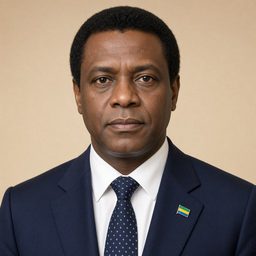
 Gabon
The world 38
Leaders elsewhere in the world in the same years, the best-known first.
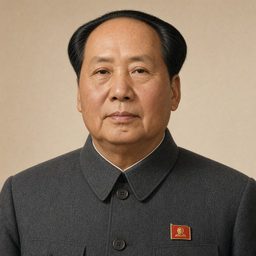
 China
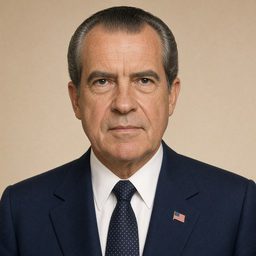
 United States
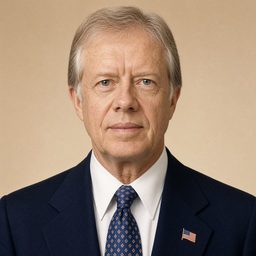
 Cuba


 Israel

 Jordan
 Iran
 Singapore
 Germany
 Russia

 Cambodia
 Saudi Arabia

 Kuwait
 Papua New Guinea
 Netherlands
 Philippines
 Indonesia
 India

 Oman
 Bulgaria
 Maldives
 Bahrain
 Czechoslovakia

 Mongolia

 Bhutan
 Romania
 Belarus