





- Context
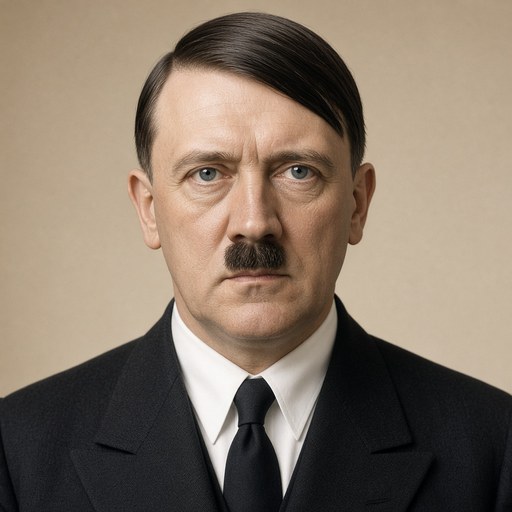
- Hitler addressed a crowd of Volksgenossen at the Lustgarten in Berlin on May 1, 1937, defending National Socialist economic policy and the Four-Year Plan and presenting the regime's leadership as drawn from the working people.
- Main themes
- German living space and territorial confinement, National Socialist economic policy, production over money and capital, the Four-Year Plan, wages and prices, working hours and output, order established in four years, rejection of prejudice and class privilege, Hitler's own origins as a worker and soldier, Reichsstatthalters and Gauleiters of working-class origin
- Duration
- ~5 min
- Words
- 610
- Sentences
- 29
- Readability
- 51
- Grade
- 10.3
- Syntax
- 3.01
- Vocabulary
- 2.13
The broad sphere of national life a sentence belongs to. Every sentence has an Arena, so it is the denominator the other indices are read against.
Other29 sentences in 4 paragraphs
The problems of our life are worse than those of other peoples. Perhaps there are peoples who can afford the luxury of waging war at home, of wrangling and bashing each other’s heads in. Where Nature has given human beings everything in abundance, they will perhaps accord less importance to the necessity of uniform action and thus of a uniform will. Yet Nature has not been very kind to us Germans here on earth. A great Volk, an infinitely competent Volk, an industrious Volk, a Volk who has a will to live and a right to make demands on life, is living in a space much too tight and too confined to possibly provide to it everything it needs, even given the greatest diligence. When we sometimes hear foreign politicians say, “Why do you need a further, broader scope for life?” we might respond by asking them in turn, “Then why do you place such great emphasis on it?” It is for the very reason that our life-struggle is so much more difficult than elsewhere that we must draw specific conclusions from this fact which constitutes our fate. We cannot exist on phrases, cliches and theories, but only on the fruits of our labor, our ability and our intelligence.
[…] For at the fore of our National Socialist economic leadership stands not the word “theory,” nor the word “money,” nor “capital,” but the word “production.” Believe me, my Volksgenossen: it requires more brain-work, more effort and more concentration to draw up and implement a Four-Year Plan to secure for our Volk the requisite vital goods for the future than to start up the rotary press to print more paper money.
It is very easy to stride before the public and say, “We’re raising salaries, earnings and wages”-and then tomorrow we shall raise prices. And it is very easy to say, “We’ll shorten working hours-that means output-and raise wages instead.” That may be popular at the moment. But the collapse is inevitable, for the individual does not live on a paper wage but on the total sum of the production of his Volksgenossen. That is the foremost precept of National Socialist economic policy.
[…] Life itself puts every generation under an obligation to wage its own battle for that life. Yet what centuries of prejudice and irrationality have built up cannot be completely eliminated within four years’ time. Everything cannot be accomplished at once! But we have the will to master this problem and, armed with this will, we shall never capitulate! And we are applying ourselves thoroughly to our task; you will have to admit that. In these four years, we have established order; we have ensured that it is not the undeserving who walk off with the wages in the end, but the millions comprising the upright working masses in the cities and the countryside who are able to gain their just reward! In Germany we have truly broken with the world of prejudices. I may regard myself as an exception. I, too, am a child of this Volk, and did not issue from some palace; I come from the work site. Neither was I a general; I was a soldier like millions of others. It is a miraculous thing that, here in our country, an unknown man was able to step forth from the army of millions of German people, German workers and soldiers, to stand at the fore of the Reich and the nation! Next to me stand German people from every class of life who today are part of the nation’s leadership: former agricultural workers who are now Reichsstatthalters; former metalworkers who are today Gauleiters, etc.